Five things to pay attention to when caring for Phalaenopsis orchids
The genus Phalaenopsis is a famous cut flower type, with more than 50 species in the whole genus. It is a monopodial epiphytic orchid with a short stem, large leaves, and one to several arched flower spikes. Its flowers are large and named for their butterfly-like shape. Its flower form is graceful and its colors are gorgeous, making it a treasure among tropical orchids, with the reputation of being the “queen of orchids.”
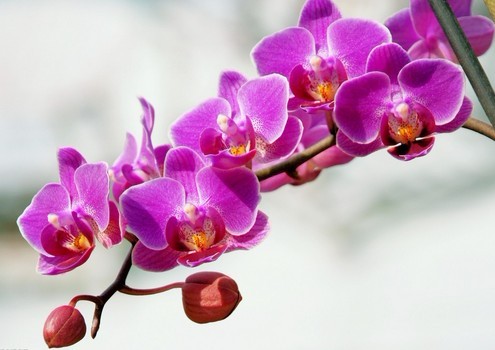
The Phalaenopsis orchid fills a home with a joyful atmosphere and reflects a home style that yearns for happiness. As we all know, there are many kinds of Phalaenopsis orchids; the genus Phalaenopsis is a famous cut flower type. The Phalaenopsis orchid is a monopodial epiphytic orchid with a short stem, large leaves, and one to several arched flower spikes. Its flowers are large and named for their butterfly-like shape. Its flower form is graceful and its colors are gorgeous; the most attractive are blue, pink, red, yellow, and pink. With so many color choices, if viewed together they create a colorful effect that can fill a home with a festive atmosphere. How can you grow Phalaenopsis orchids well so that this festive atmosphere continues? The following will introduce five things to pay attention to in Phalaenopsis orchid care.
First, pay attention to choosing a suitable growing medium. Generally, use seaweed-type media such as sphagnum moss and moss, which have relatively high permeability and also retain water and nutrients. If the growing time is too long (more than 2 years), replace the medium at the appropriate time, choosing the time when new leaves emerge.
Second, pay attention to ensuring a suitable growing temperature. Growth is best at temperatures from 18°C to 28°C; it must not be lower than 15°C, and must not be higher than 33°C. When watering, the water temperature should be close to room temperature. When flowering, the temperature can be appropriately lowered to extend the flowering period.
Third, pay attention to choosing a suitable light environment. In summer, autumn, and spring, a semi-shaded environment with no direct light is best; in winter, place it in a sunny spot facing south.
Fourth, follow the correct watering method. Let the potting soil dry and become moist alternately; too much watering easily causes root rot. In the north, where the air is dry, you can often spray water on the leaves to maintain a high humidity state of 70% to 80%. When the flowers are open, be careful to avoid spraying mist onto the flowers.
Fifth, pay attention to mastering reasonable fertilizing principles. Fertilize less, and apply dilute fertilizer. Usually, apply orchid-specific fertilizer to the roots about once a month. Before flowering, apply phosphorus fertilizer about once a week by spraying it on the leaves. During the flowering period and when the temperature is relatively low, fertilizing is strictly prohibited. After flowering, promptly cut off the flower spikes, strengthen fertilizer and water, and apply fertilizer to the roots, which can be done once every half month.