Four major taboos to avoid when growing Phalaenopsis orchids at home
Phalaenopsis is one of the most favored and fastest-growing flower varieties in China's and the international flower market in recent years. Because of its brilliant colors, rich flower colors, long flowering period (30--90d), and elegant flower posture, it has long been known as the queen of orchids. Using potted Phalaenopsis as decoration and gifts for public relations and celebratory weddings is regarded as an elegant and noble courtesy. Between work units, relatives and friends, and lovers, giving Phalaenopsis to exchange heartfelt feelings without falling into convention has become fashionable. Phalaenopsis has a wide range of uses and is also a high-end material for VIP corsages, bridal bouquets, and flower basket arrangements.
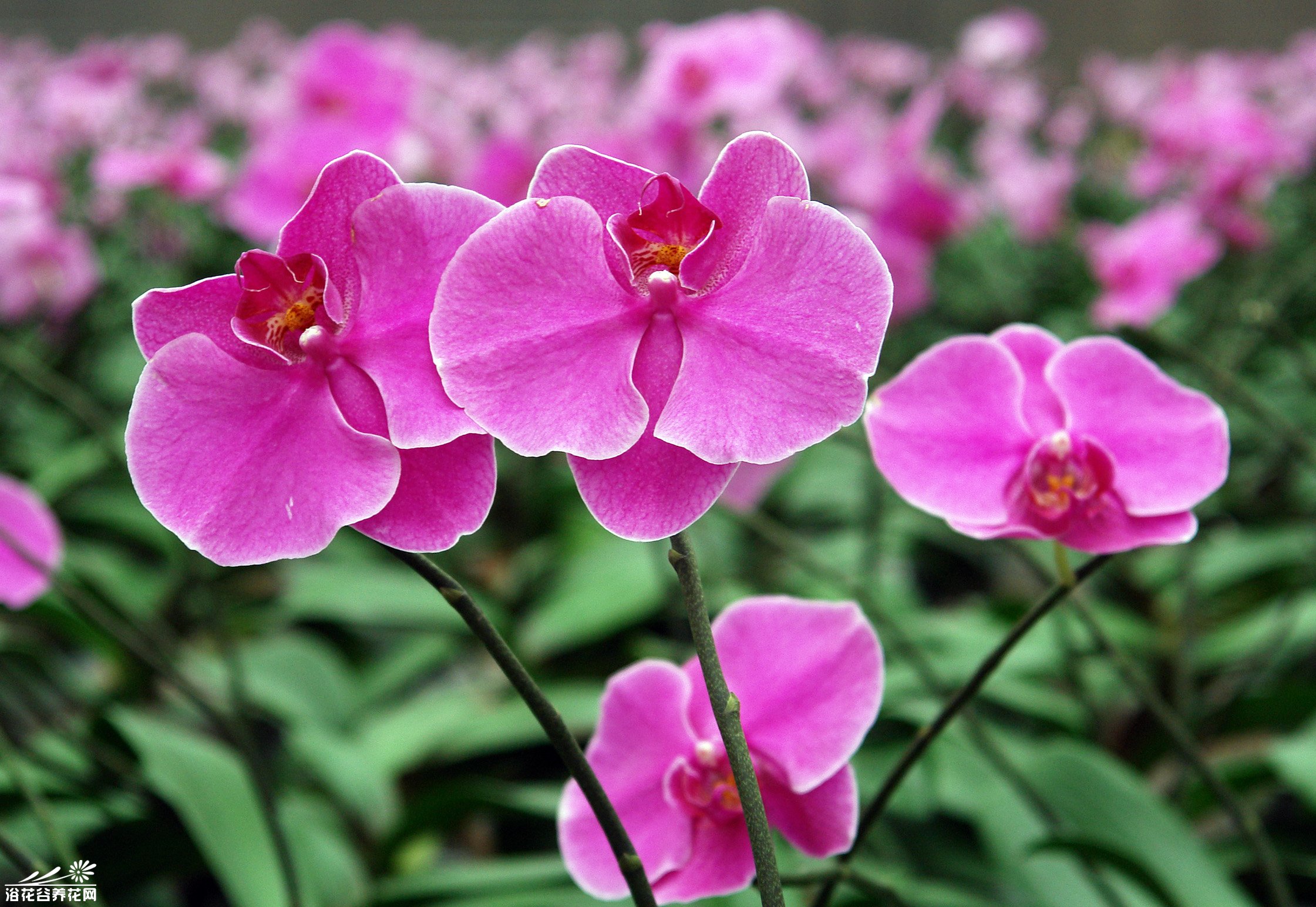
Phalaenopsis likes humid and semi-shady environments, requires the space to maintain humidity of 50%-70% regularly, and the pot must not be drenched with too much water. If it is grown on a home balcony, on sunny days it is best to wet the ground three or four times a day so that the plant can absorb the evaporated moisture. In summer and autumn, it must not be exposed to direct sunlight. But the morning sun is best for its growth) and should be fully utilized. If there is too much cloudy and rainy weather in spring, use a light tube at night to increase lighting for it, so as to facilitate later flowering. The fertilization method is about the same as for growing dancing-lady orchids.
The four major taboos of growing Phalaenopsis at home:
1. Watering too frequently: Friends who grow Phalaenopsis always worry that the orchid lacks water, and regardless of whether the growing medium is dry, they water it every day, causing severe root rot.
2. Temperature too low: Usually the flowering plants of Phalaenopsis are mostly put on the market in early spring, and after being bought and taken home they are generally placed in places such as the living room for appreciation. Although the daytime temperature in these places is sufficient, the nighttime temperature is somewhat on the low side. On the other hand, professionally cultivated orchids are mostly in well-equipped greenhouses. By comparison, the temperature and humidity at home are somewhat insufficient, so the plant's growth tends to weaken day by day. Therefore, sometimes no matter how well the orchid is cared for, there are still times when it does not bloom.
3. Overfertilizing: Applying fertilizer whenever there is fertilizer, and not paying attention to concentration, thinking that applying fertilizer will make it grow faster. You should know that Phalaenopsis is suitable for light fertilizer, and it should be applied in small amounts many times. Remember that "tonic feeding" must not be excessive, otherwise it will backfire.
4. Planting a small plant in a large pot: Thinking that using a large pot can give Phalaenopsis a more spacious environment and sufficient material. In fact, after using a large pot, the sphagnum moss is not easy to dry. You should know that Phalaenopsis likes ventilation, and when air flows freely it thrives.