Orchid growers' years of accumulated experience in orchid leaf care, shared
Since most varieties of Chinese orchids bloom only once a year, the orchid leaves have become an important object of appreciation, and there is even a saying that "watching the leaves is better than admiring the flowers." The leaves on each pseudobulb of an orchid grow out only once and cannot regrow new leaves, which makes the care of orchid leaves all the more important. Based on years of practical orchid-growing experience, the author has summarized a few key points for orchid leaf maintenance, for everyone's reference.
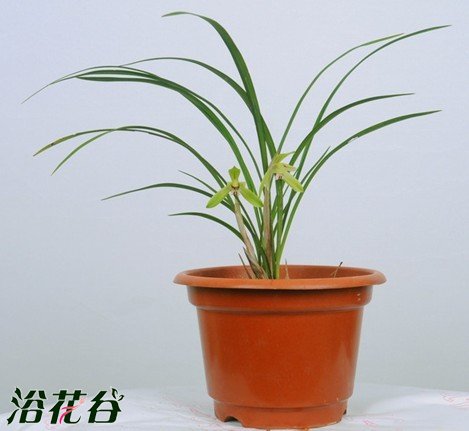
First, avoid damage caused by pests and diseases. Especially during the plum rain season, in the middle and lower reaches of the Yangtze River and areas to the south where there is more rain and higher temperatures, great attention must be paid to preventing waterlogging and the occurrence and spread of diseases such as scab and southern blight, which mainly damage the leaves, causing spots of varying degrees on the front or back of the leaf surface that are difficult to eliminate, and in severe cases the entire leaf withers, so disease prevention must be emphasized.
In early spring, use a solution of thiophanate-methyl diluted with 800 times water, or a chlorothalonil solution diluted with 500 times water, for control, once every 10 days. At the same time, keep the orchid-growing site and pots well ventilated, with appropriate spacing. When orchids develop disease, promptly cut off diseased leaves and old leaves, and the pointed angle formed after cutting should be less than 30 degrees. Leaves damaged by insects can be kept; simply remove the pests. The cut orchid leaves must not be thrown away in the orchid planting site; they should be burned or buried deep.
Second, preserve the leaf tips and prevent the occurrence of tip burn. The tips of orchid leaves should be preserved as much as possible and not easily cut off. Once the leaf tip is lost, the orchid leaf becomes a sword without a point and appears dull. The key to preserving leaf tips lies in careful daily maintenance and management. If the pot is too wet, old plants are prone to tip burn; if too dry, new plants will have withered tips; excessive heat in the pot, poor ventilation, over-fertilization, incomplete trimming of rotten roots during repotting, unclean potting medium, etc., will all cause orchid tip burn. As for the external environment, air humidity that is too high or too low, and poor ventilation with muggy heat, will also cause tip burn.
In addition, there is bacterial tip burn with shrinking heads. When disease spots appear on the leaves, if the scissors are not thoroughly disinfected, bacteria will be introduced into the wound when cutting. The time for cutting off burnt tips should be at noon on a clear, dry day, when the wound heals faster. Never water after cutting, and do not prune on cloudy or rainy days.
The source of tip burn lies in the roots, so to cure tip burn at its root, the pot must be repotted, the root disease source cleaned up, and carbendazim powder applied directly to the wound. For orchid leaf tip burn, "treating" is passive; even after treatment, the leaf is already damaged. Therefore "prevention" is the active approach: improve management and cultivate carefully.
Third, maintain the normal growth posture of orchid leaves and restore their cleanliness. During transportation and daily maintenance and management, orchid leaves are easily damaged by external forces, such as breaking, twisting, and tangling, so we must be meticulous in our operations. When spraying water, prevent the water pressure from being too high, which would fold the orchid leaves over; when sweeping the floor or walking, avoid bumping into the leaves; when twisted leaves are found, straighten them promptly to restore their normal growth state; avoid contamination of the leaves by soil, dust, insect urine, and bird droppings, because once contaminated, over time it easily leads to leaf diseases, so once contamination occurs, it should be washed off immediately.
Fourth, the shade net must be handled properly. The support frame for the shade net should generally be no lower than 2.5 m, so as to ensure ventilation and air permeability. At the same time, the shading index of the shade net must reach 70% or more; long-term use of low-density shade netting will cause part or all of the orchid leaves to turn yellow and withered, and it is difficult to restore their green color. However, the orchid shed should avoid being both dark and hot; it should be shaded so that it is both bright and cool, and it is best if a person feels cool under the orchid shed.