What to Do After a Phalaenopsis Orchid Finishes Blooming? Post-Bloom Care Methods
Many flower lovers don't know what to do after a Phalaenopsis orchid finishes blooming, and some even throw the orchid away after blooming, thinking it can't survive in the north. In fact, post-bloom care for Phalaenopsis is very simple and doesn't require much time or effort. Generally in the north, where there is heating, a Phalaenopsis can bloom twice in one spring.
1. If your Phalaenopsis was bought by yourself or given by a friend around Chinese New Year, and it was already blooming when purchased, it will basically have no flowers left by now (around the end of March). If you want it to continue blooming, you can choose to keep the flower stalk, take it out of the pot to check the root condition, promptly cut off any rotten or dry roots, check whether the sphagnum moss has rotted, become moldy or developed other problems, and consider whether it needs replacing; still use a transparent pot, water and care for it normally, watering when dry and letting it dry out between waterings. If your home is more humid, that is naturally ideal (and it doesn't matter if it isn't), and if you have a liquid specialty fertilizer at home, giving some is naturally better (and it doesn't matter if you don't). If the plant is very strong, it will quickly continue to grow new flower buds at the front end of the original flower stalk; if the plant is rather weak after blooming and has used up a lot of energy, with normal care until around May, it will grow side stalks on the original flower stalk and produce flower buds, continuing to bloom until around the end of June (this blooming period will be shorter because the weather gradually becomes hotter). After the flowers fade, cut off the flower stalk and just care for it normally.
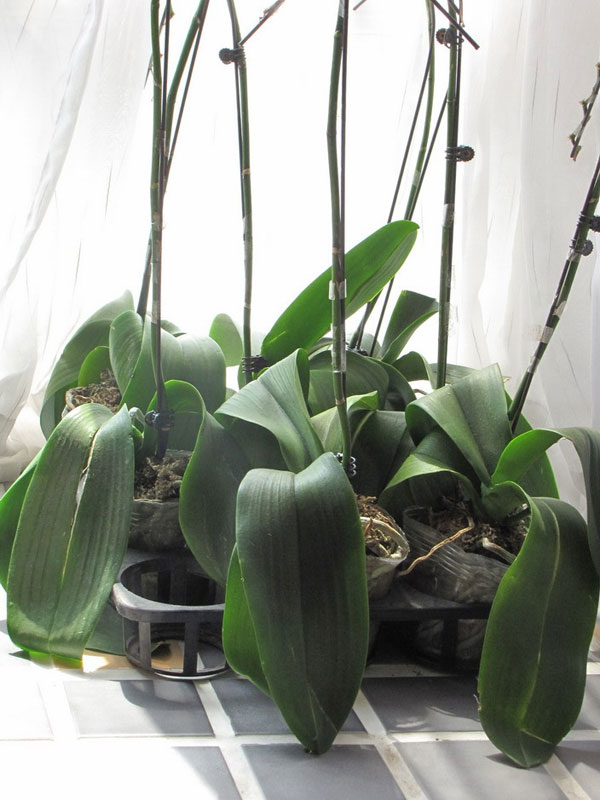
2. If it is one you grow at home, it generally begins to grow flower stalks and flower buds around December of the previous year (in a room with heating), and generally opens gradually around the end of February to early March, with the blooming period lasting until around the end of May. Then the method is the same as in (1). If you want to see the flowers again, keep the flower stalk and care for it normally, and it will quickly grow side stalks on the flower stalk, produce buds and bloom.
3. Whether purchased or home-grown, if after the first blooming you don't want it to bloom again (this can conserve the plant's energy), promptly cut off the flower stalk, still check the roots and potting medium, and then care for it normally. By the end of the year, new stalks will naturally sprout and flower buds will appear frequently.
4. Many people think Phalaenopsis is difficult to care for because they feel it needs a warm, highly humid environment, and in fact this is true. Having such an environment is naturally a blessing for Phalaenopsis. But Phalaenopsis is very tough, and even without such an environment, it is still easy to care for in the north. You can pay attention to the following points:
(1) First, it must get through the summer smoothly. If possible, place it in a spot with bright light but not direct sunlight; reduce water supply (although summer temperatures are high, if there is too much water, the roots can easily rot and cause the plant to die); if you feel you don't know how to fertilize (apply weak fertilizer frequently, preferably a liquid specialty fertilizer for Phalaenopsis), you can always care for it with plain water, especially in summer, and try not to fertilize or fertilize only lightly; after getting through the summer, to be safe, you can check the roots and potting medium again to ensure the basic elements for normal plant growth;
(2) The quality of autumn care is an important factor affecting whether Phalaenopsis blooms. Entering autumn, you can apply weak fertilizer frequently to make the plant strong. At this time, you can appropriately increase light. In the north, autumn weather brings temperature differences between day and night, which is just right to prompt Phalaenopsis to develop flower buds. Autumn is dry, so maintain appropriate moisture. If conditions allow, you can use misting to increase air humidity (and it doesn't matter if you don't mist).
(3) In a normal winter, around the end of December, new flower stalks should grow and gradually produce flower buds. During care, it is strictly forbidden for wind to blow directly onto the flower buds, and it is best to stop fertilizing and control water to prevent improper fertilizer and water application from causing bud drop. If the heating indoors is too high, you can increase misting to maintain humidity (and it doesn't matter if you don't mist).
(4) Usually pay attention to observing root growth. Vigorous roots are the basic element for maintaining plant growth. Roots that are green, robust, firm, with red root tips, indicate strong vitality; if you find roots escaping the pot, it means there is a problem with the potting medium or care and adjustment is needed; if roots turn black and rot, it means there is too much water; if some roots show symptoms of drying out, it means there is excessive lack of water. Under normal conditions, the leaves are bright, glossy, thick and firm, indicating good growth, and new shoots will continuously grow.