What causes bud drop in Phalaenopsis orchids?
Recently many colleagues and friends have asked why the flower buds of a healthy-looking Phalaenopsis orchid inexplicably shrivel and drop. The reasons come down to the following points: (Winter edition)
1. Poor air circulation. From the emergence of a flower spike to blooming, a Phalaenopsis orchid generally takes about 2 months. In the north, this period falls right in winter. Outdoor cold intensifies, often accompanied by strong winds. If indoor ventilation is neglected and the orchid stays in such an environment for a long time, the buds at the tip of the flower spike will turn yellow and wither;
2. Cold wind exposure. If you open a window for ventilation in winter and the outdoor wind is strong, with the window open only a crack that happens to blow directly onto the buds, the local temperature drops too low, easily causing bud drop.
3. Dry indoor air. Phalaenopsis orchids prefer a high-temperature, high-humidity environment. Indoor heating in the north easily makes indoor humidity too low, causing buds to dry up and drop;
4. Indoor temperature on the low side combined with overwatering, making the pot too wet. Phalaenopsis orchids like a high-temperature, high-humidity environment. But high temperature and high humidity are twin brothers and cannot be separated. High temperature alone or high humidity alone will both cause abnormal bud growth and yellowing and bud drop;
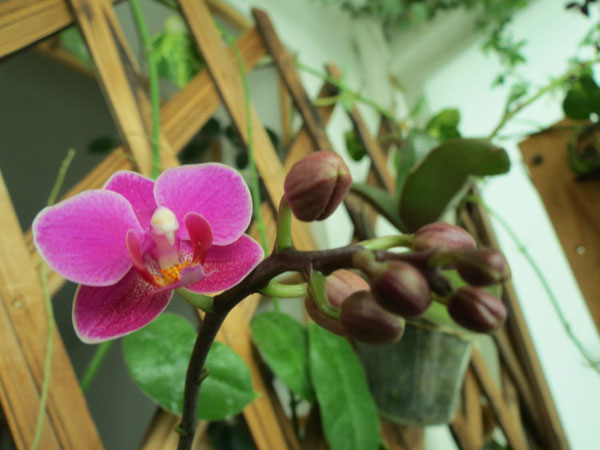
5. Indoor temperature too high or too low. The suitable temperature during the flowering period of Phalaenopsis is 20—28℃. During the flowering period, a nighttime temperature below 15°C or a daytime temperature above 30℃ will cause poor bud development or halted growth;
6. Light too strong or insufficient. Depending on the variety, Phalaenopsis orchids have different light requirements. Moderate light can promote bud growth, while light that is too strong or too weak will both lead to poor bud development;
7. Fertilizing too heavily or too much during the flowering period. Heavy fertilizer is taboo during the flowering period. When fertilizing during the flowering period, it is best to apply dilute fertilizer frequently. Fertilizing too heavily or too often during the flowering period very easily causes bud drop;
8. Accidental injury. Flowers are the reproductive organs of plants and are rather delicate. An accidental bump can injure the buds, thereby affecting development and causing yellowing and bud drop.
9. Pests and diseases. During the bud growth period, plants are more susceptible to pest and disease attacks. Growth is disrupted, nutrient accumulation is affected, and this is also a cause of flower and bud drop.
When the first flush of flowers fades in May or June, if you want to keep enjoying flowers, keep the original flower spike. In about a month, side branches will grow from the original spike, continue to sprout and form buds, and bloom a second flush, lasting until mid-to-late October. This is right in summer, and the main cause of bud drop is the season itself.
(Causes of bud drop in Phalaenopsis orchids: Summer edition)
1. Temperature too high, poor ventilation, muggy and stuffy. Root moisture evaporates slowly, root respiration is impeded, causing bud drop;
2. If placed outdoors, being battered by wind and rain is also a cause of poor bud development and bud drop;
3. Fertilizing. The summer climate is hot, so try not to fertilize or fertilize less.
4. Excessive light, scorching the buds. This causes the buds to turn yellow and drop.
5. Accidental injury and pests and diseases.