What are the key points to note when propagating Hoya by cuttings in autumn?
Although Hoya can be propagated from cuttings in any season except winter, the points to watch differ from season to season. This article walks fellow flower growers through the main things to note when taking Hoya cuttings in autumn, as a reference for your own Hoya propagation.
1. Growing medium: In autumn, temperatures gradually drop and the difference between day and night temperatures increases. So a growing medium is more suitable for cuttings, and water propagation is not recommended. If you are an old hand, that is another matter. Because temperatures are low, rooting in water takes a long time, which not only tests your patience but also easily leads to surprises due to water quality problems. Compared with water propagation, cuttings in a growing medium can better ensure the roots have enough warmth, which helps rooting. You can choose vermiculite, peat, or a mix of the first two with perlite, as these hold warmth and moisture well. Of course, the best choice is the growing medium you are used to using (as long as it is an inert medium) rather than what I recommend.
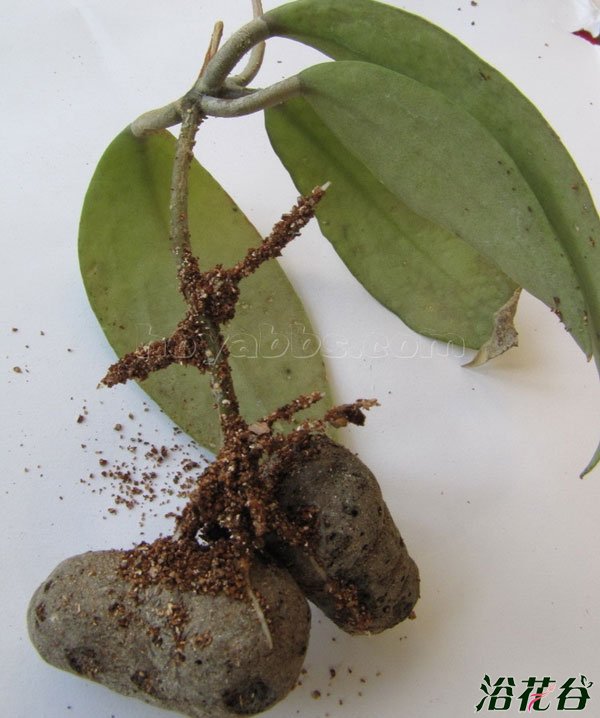
2. Watering: Because temperatures will slowly drop, the watering frequency should be reduced. Take vermiculite as an example: a 30x15cm long trough pot with vermiculite 6cm deep, a cutting pot like this only needs a thorough watering every 10-15 days. Too much water not only makes rooting harder, but even after rooting it easily causes root rot. This is mainly because low temperatures reduce transpiration and weaken the roots' ability to absorb water. At low temperatures, if the roots are too wet, root damage is unavoidable. A drier, looser growing medium is instead favorable for rooting.
3. Light: The cutting pot does not need strong light; just place it somewhere with scattered light and good ventilation. It is best not to put it somewhere the wind blows directly. This prevents a sudden temperature drop in a small area caused by wind from affecting the results of the cuttings.
4. Rooting time: Rooting is slow for autumn cuttings. Take vermiculite as an example: ordinary branches need half a month to a month to root and can then be potted up, and the roots are not as well developed as in spring and summer, but potting up is no problem at all.
5. Common problems with failed autumn cuttings: branches too tender (cuttings need branches at least one year old), growing medium too wet, unhealthy branches, roots chilled during the cutting process, growing medium containing fertilizer, growing medium with poor air permeability and drainage, and so on.