How to grow orchids well? Master five elements and three keys
Orchids are both easy and not easy to grow. To grow orchids well, you need to understand their natural growth attributes and their growth patterns, plant them according to those patterns, learn from others' experience, and based on your own actual conditions, think more, summarize more, and adapt to local conditions. Once you have explored a set of cultivation methods suitable for yourself, you will succeed. Based on more than ten years of practical orchid growing, the author believes that to grow orchids well you must grasp five elements and seize three keys.
Element one: The environment must be suitable. In an excellent environment, orchid cultivation and management are extremely easy, and the best results can be achieved. The environmental conditions orchids need for growth are roughly similar to those of humans, such as being cool in summer and warm in winter. To grow orchids well, you must understand the natural environment and growth habits of orchids in the wild, and according to the orchids' growth habits, create a good cultivation environment. The cultivation environment must fully take into account factors such as ventilation, light, and temperature and humidity regulation. Creating a good environment for orchid growth is the basic condition for growing orchids well, and also the most important condition.
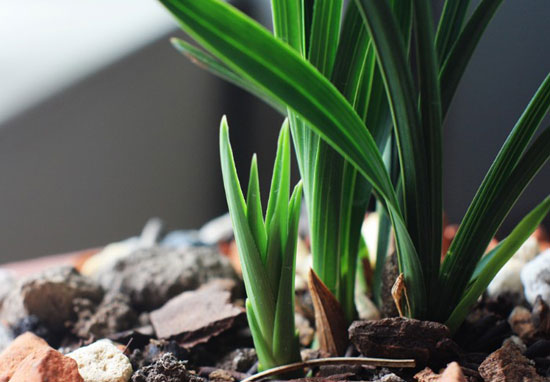
Element two: The temperature must be appropriate. Orchid growth is greatly affected by temperature, and orchids especially like high temperatures during the day and low temperatures at night. The suitable temperature for the reproductive growth of most orchids is between 18-28°C. If it is above 30 degrees, measures should be taken to cool it down; if it is below 10 degrees, keep it warm. A daily temperature difference of 8-10 degrees is especially beneficial to orchid growth. Therefore, the location of the orchid garden must allow proper temperature control and adjustment.
Element three: The humidity must be moderate. Humidity is one of the five major elements for orchid growth. High air humidity is beneficial to orchid growth, and generally an air humidity of 60-80% is best. When increasing humidity, some people mistakenly think it refers only to how much or how little water is poured into the orchid pot. In fact, humidity refers to two parts: the air humidity in the orchid garden and the humidity of the growing medium in the pot. Orchids like air with higher humidity, because the roots, stems, and leaves exposed outside the pot all have the ability to absorb moisture from the air, so you should try to raise the air humidity in the orchid garden to above 60%.
Element four: The light must be suitable. Orchid growth requires sufficient but not excessive light. Light means rays of light, and especially sunlight is a necessary condition for the growth of all things. The organic matter in green plants is produced by sunlight, water, and carbon dioxide, so green plants cannot grow without sunlight. But orchids need to grow in an environment with relatively good light. In short, the principle for orchid lighting should be sufficient but not excessive, and to achieve the above conditions requires artificial regulation. You can use shading methods, that is: shade when hot and sun when cold, shade at noon and sun in the morning, shade more in summer, sun less in autumn, no shading needed in winter, shade more on sunny days, and no shading on rainy days.
Element five: Ventilation must be good. Ventilation is the key to growing orchids well and effectively preventing pests and diseases. So-called ventilation refers to the degree of good air flow. Only with good air flow can the metabolism of orchid cells and tissues be promoted and the ability to produce nutrients be increased. Ventilation can also reduce air humidity and temperature, reduce the harm of pests and diseases, and promote healthy growth of orchids. For ventilation, it is best to use natural wind, such as being able to catch the southwest wind in summer and block the cold northwest wind in winter. If the natural environment cannot provide ventilation, artificial methods must be used to regulate air flow.
Key one: Mix the growing medium well and choose the orchid pot well. The growing medium is the living space of the orchid plant. To grow orchids, first grow the roots. The growing medium in the pot plays a key role in orchid growth. What kind of growing medium should be used to achieve the best orchid cultivation results? This question is relatively hard to answer. Because our country has a vast territory, the growing media used in different regions and by different people are all different. But no matter what growing medium is used, according to the growth habits of orchids, the basic requirements are common: the growing medium used must be highly safe, easy to use, and low in price, with appropriate coarseness and fineness. The principle is that it is preferably loose, breathable, sterile, well-draining, fertilizer-retaining, and slightly acidic. On the basis of this principle, you should not only learn from others' experience but also combine it with your own actual situation and explore a mixing method of your own; only then is it most effective. For choosing orchid pots, select large, medium, or small pots according to the number of orchid plants. Practice has proved that clay pots are easy to use, and plastic pots can also be used to grow orchids well.
Key two: Watering and fertilizing must be done properly. Plant growth cannot be separated from water, and orchids are the same. For water quality, natural rainwater is best, unpolluted spring water and river water are also fine, and tap water can also be used. Some orchid friends often ask: “How many days apart is best for watering?”, and many writings also make watering sound very complicated. The author believes that as long as the growing medium is mixed well, it does not matter whether you water more or less; the main thing is to grasp the degree of not too dry and not too wet. Specifically, it depends on the season, climate, the coarseness and fineness of the growing medium, the size and breathability of the orchid pot, and the number of orchid seedlings, and should be determined according to your own environment and cultivation methods. Do this: keep the pot moist in the dry season, not excessive in the rainy season, water when too dry in winter, control when too wet in summer and autumn, sufficient in spring, enough in summer, not dry in autumn, and not wet in winter. At the same time, note that you should water more on sunny days, less on cloudy days, and not at all on rainy days. As for the time of watering, in summer you should water in the early morning and evening when the temperature is lower, while in winter you should water in the mid-morning when the temperature rises, which is beneficial to orchid growth. Fertilizing is also very important. Orchids are plants and cannot do without fertilizer. It is impossible for orchids to grow well if they lack fertilizer. The growth and development of orchids require sufficient nitrogen, phosphorus, and potassium, the three elements, in the fertilizer. Selective fertilizing at the appropriate time is a powerful measure to ensure rapid orchid growth. Generally speaking, apply more in summer when orchids grow vigorously, do not apply in winter when orchids are dormant, and apply fertilizer in a timely manner in spring and autumn when new seedlings grow and flower buds appear. The general principle of fertilizing is that the concentration should be low, and the key is to apply lightly and frequently.
Key three: Prevention and control of pests and diseases. At present, orchid garden construction has advanced equipment and improved cultivation and management levels, creating a good growth environment for orchids, and at the same time also creating a suitable space and place for pathogens and pests to survive. Therefore, preventing and controlling diseases in orchid garden orchids is another key link. Preventing and controlling pests and diseases is an important measure for growing orchids well. According to climate changes, the patterns of pests and diseases, and the growth conditions of orchids, the principle should be prevention first, treating early, treating small, and treating thoroughly. The growing medium for planting orchids must be disinfected against insects and sterilized to protect orchid roots. Winter and early spring are the latent periods for pests and pathogens, while summer and autumn are periods of high incidence of pests. In prevention and control, “prevention first, treatment as a supplement” should be adopted, and insecticidal and fungicidal drugs should be sprayed appropriately in each season. At the same time, according to the growth patterns of orchids, use scientific management methods to strengthen orchids and increase their own disease resistance. This is the most fundamental preventive measure.