How do you grow orchids? Listen to a orchid farmer's care experience
As for how to grow orchids, flower enthusiasts who are new to the hobby often ask. It just so happens that a flower enthusiast often has the chance to meet some orchid farmers who grow orchids, so they often shamelessly ask others about their orchid-growing experience, and even more shamelessly wheedle a few of their favorites out of them. In short, every time after meeting the amiable old orchid farmer, they come home with a full haul, wahoo... He is really so easygoing, it feels like the old man is being bullied terribly. I tried this experience at home myself, and sure enough it worked very well, so I am sharing it with everyone:
1. It is not hard at all to grow orchids without root rot, so do not use so many fancy growing media.
When I was still a rookie at growing orchids, I also had a big headache over what growing medium to use when repotting. I flipped through many books, read quite a few forums, and even gathered a whole series of so-called growing media, mixing and stirring all kinds of things... But in the end, no matter what ratio or formula, the orchid roots still rotted just the same, and in the end, whether to water or not to water was a problem either way. Once I went to visit a friend who was in the orchid business, and he took me to meet an orchid farmer. I seized the chance and pestered him relentlessly to let me into his orchid room. Actually, it was just to see what these experts used as growing medium! As a result, I saw that in his orchid room, which was larger than a big warehouse, all the orchids used and only used one kind of growing medium, and I was stunned——bark. He only used bark.
After going home, I pulled out all those half-dead orchids at home, emptied out the growing medium inside, put a layer of stones at the bottom of the pots, and then planted them with large pieces of bark. A week later, green and tender new roots emerged, and from then on, I had confidence in orchids. Later, I even tried it when dividing plants: after disinfecting the divided new plants, I wrapped them with a little sphagnum moss, then tied them to wood, and placed them in a shaded orchid shed. The roots grew like crazy.
The old orchid farmer explained why not to use so many fancy growing media. Because we rookies are all afraid the orchids do not have enough water, we water heavily, but in fact, orchids are more afraid of being too wet than of being dry. Although everyone knows orchids should not be watered when not dry, for beginners, what counts as dry? Surely it is hard to grasp without several years of experience, because it is impossible every time you water to dig open the growing medium and see whether it has dried through, and growing medium dries from the outside inward. Many times, when we see that the outer growing medium is terribly dry, the growing medium in the center is actually still moist, especially when sphagnum moss is used. If you water at this time, it would be strange if the roots inside did not rot.
So, honestly follow the old man and just use bark.
2. If orchids do not bloom, it mostly has nothing to do with fertilizer.
After growing orchids for these past few years, the most troublesome one has been the Phalaenopsis. At first it was a difficult problem, but after solving each issue one by one, there was no challenge left at all, so now there is not a single Phalaenopsis among the orchids I keep at home. Many people surely started with Phalaenopsis when they first encountered orchids, just like me, and surely all felt to varying degrees that Phalaenopsis is not easy to grow, because it just never blooms and never blooms. One habitual way of thinking is that if a plant does not bloom, it is because there is not enough fertilizer. Then comes all kinds of fertilizing, and after that all kinds of root burn, yellow leaves, and plant death. In fact, orchids are not a kind of plant that needs heavy fertilizer. Think about their native state, on rocks, on tree branches; orchids rarely grow on the ground. Where would they get so much fertilizer? In fact, an important factor determining whether orchids send out flower spikes is the temperature difference. The climate in tropical rainforest areas is muggy, hot, and rainy, and the temperature difference between night and day is large. This is what prompts orchids to send out flower spikes.
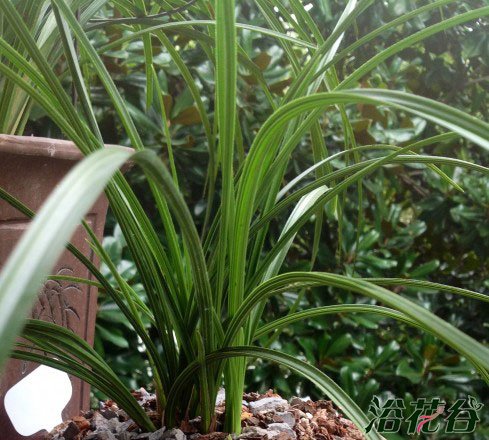
Fertilizing orchids also has many particular requirements. To be honest, I have never seen the orchid farmers here apply root fertilizer to orchids. Their fertilizer is mixed with water and then sprayed regularly in the orchid room, truly weak fertilizer applied frequently. When fertilizing at home, it is best to do the same: mix compound fertilizer for spraying on leaf surfaces with water, dilute it as much as possible, and do not be afraid it is too dilute. Weak fertilizer cannot be concentrated. Then spray it on the leaf surfaces for the orchids to absorb. It is best to do this in the early morning or at dusk, not at noon when the sun is strongest. Before fertilizing, water the plant first, and once the plant is no longer dripping, you can fertilize. Do not pour leftover fertilizer solution into the pots; it should be discarded to avoid burning the roots.
3. If you want orchids to grow well, you cannot dote on them too much.
I understand many orchid lovers' affection for their beloved orchids. I also love them tremendously, so much so that at the beginning I could not put them down, touching the leaves for a while and looking at the flowers for a while, wishing I could carry them with me. As a result, that Phalaenopsis I once loved most was so frightened by me that it did not bloom for three years. Finally, it fell out of favor, was placed in a corner of the orchid room, and was almost forgotten. Then one day I suddenly walked into the orchid room and saw a flower spike emerging from the heart of the orchid. Judging by how thick and strong it was, it was sure to be a string of stunning large flowers, and sure enough, it was exactly as expected. So here I advise orchid fans who love orchids as much as life itself: do not move orchids around all the time. Although orchids do not demand much from the environment, they are extremely sensitive to environmental changes. Even a small change can make them nervous. As long as an orchid is frightened, it is very likely to refuse to bloom. Think about it: even a person cannot stand being made to rush all over the world every day.
4. Should it really be an orchid room or an orchid shed?
When I first started growing orchids, I did not know how to create a good environment for them, and often just hung them under trees in the garden. As a result, as the sun shifted west, some orchids were always sunburned to death. Finally I spent a large sum of money and built an orchid room. At first it was fine, and the flowers grew happily, but before long the nightmare began. The orchids started getting sick, with all kinds of pathogens and pests. During that period I applied medicine almost every day, but still could not turn things around. Later I went to bother the old man again. As soon as he heard about my orchid room situation, he started scolding. It turned out that poor ventilation was the cause.
In fact, understanding how to provide orchids with a good environment is right, but too good an environment only backfires. Although an orchid room is a costly and professional facility for tropical orchids, it is really unnecessary for people who just grow orchids casually. But without shade it also would not work. In the end, I simply removed the plastic from the orchid shed and replaced it with black shade cloth. Unexpectedly, the effect was excellent. The orchids grew happily, and there were rarely any diseases.
5. What orchids need is not lots of water, but moisture.
Here I want to talk about the issue of watering orchids. Many people understand the basic principle of watering orchids——do not water when not dry. But there is no absolute standard for the degree of dryness. Most people, when buying flowers, ask the seller one question: "How many days between waterings?" What I want to say here is, do not completely believe what the seller says. Sellers are just sellers; most of them are not the people who grow the flowers, and the answer they give is only a reference. Even if they are the people who grow the flowers, because the environment at home is surely not as good as the greenhouse environment, the frequency of watering is also surely different.
For newly purchased orchids, if the growing medium still looks wet, do not water for now. When a new orchid enters the home, place it in a cool corner for two or three days, let it settle down, and then water it. When watering, do not pour from high above and soak the whole plant through. Use a relatively gentle stream of water from a lower height to water the orchid thoroughly. So-called thorough watering does not mean watering until water leaks from the bottom of the pot. As long as the orchid's growing medium is not soil, water will quickly leak from the bottom of the pot, but this is not thorough watering. Let the orchid plant stay under the water stream for two to three minutes. After stopping the water, let the water in the pot drain completely. Once it is no longer dripping, it can be put back in place. Never, just to save trouble, sit the orchid, pot and all, in a water tray; the roots will definitely rot.
When you have nothing else to do, you can spray water on the orchid plant several times a day. Just do not spray water when the sun is strong, and try not to leave water droplets on the leaves and flowers, so as to avoid burns, especially on white flowers, which are very susceptible.
Spraying water is to increase air humidity. In fact, compared with frequent watering, frequent humidifying is more reliable. The orchids will be very grateful for your efforts.
6. If an orchid unfortunately becomes infected with pathogens, do not be reluctant; kill it.
It is a very sad thing when a beloved orchid is infected by pathogens, because the chance of saving it is generally not great, and even if it is saved, the orchid plant will be badly weakened. What is even more frightening is that pathogen infection is contagious, especially among orchids of the same genus, which are the easiest to infect.
Well, if you want to treat it, it really takes a lot of trouble, so at this time you must wield the sword of wisdom and reluctantly part with what you love. Gather the diseased plants together——burn them!
7. Do not wait until the flowers fade and bloom again.
Finally, the orchid has bloomed, beautifully, truly pleasing to the eye. Well, under normal circumstances, an orchid's flowering period can last more than two weeks, but do you know that because of these few weeks of flowering, the orchid will be badly weakened, and in serious cases it may not bloom the next year. To keep orchid plants strong, flower farmers actually cut off the flowers as soon as the orchids begin to bloom. Of course, doing that is really unreasonable for us, but we do not have to wait until the flowers fade before cutting off the withered pistil. When the flowers are at mid-bloom, they can be cut as cut flowers, put in a bottle, and they are just as beautiful. Just do not cut all the way down in one snip; leave a section of flower stalk for the orchid plant to slowly take back nutrients, so as not to shock the orchid plant.