How to care for Phalaenopsis orchids? Growers share their experience
Many growers' Phalaenopsis orchids are purchased plants or gifts from others, so how to care for Phalaenopsis becomes the first issue growers need to consider. Although it is not easy to kill a Phalaenopsis, it is indeed difficult to grow one well. Based on growers' experience, this article summarizes the daily care and precautions for Phalaenopsis, for growers' reference.
Grower A:
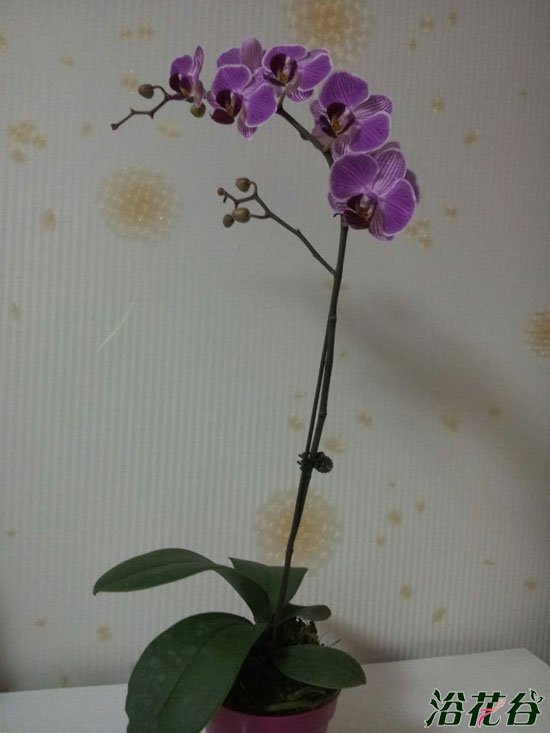
My secret is just two words: no water. For a blooming Phalaenopsis, I do not water it, and place it on a south-facing bay window sill, with light during the day and air conditioning at night in winter. Basically after three or four months, when the temperature turns warmer, the growing medium (sphagnum moss) has dried out, so I water just a little to maintain flowering; the buds will also slowly open, and sometimes new buds appear.
My Phalaenopsis can bloom again the next year. The method is: after all the flowers have faded, cut off the flower spike, water thoroughly, and keep the leaves alive; by November apply a dilute fertilizer solution, and it will produce flower spikes; after mass blooming, stop watering.
Phalaenopsis orchids do not last long around Spring Festival because of improper watering; once watered, the flowers will drop.
Grower B:
1. The common growing medium for Phalaenopsis is mainly sphagnum moss, and choosing the container for growing it is also very important. Mine are all small baskets for artificial flowers and small crates made of wooden strips that I bought; I will show pictures shortly and you will see.
2. Phalaenopsis likes a high-temperature, high-humidity, ventilated and airy environment. The temperature can be kept at around 26°C, the overwintering temperature should not be lower than 15°C, and the air humidity should be 50-80%. If the air humidity is too low, you can use a humidifier, or spray water on the leaves 2 or 3 times a day. Remember, when it is blooming, never spray the flowers, as it easily causes the flowers to wither early and shortens the flowering period.
3. Phalaenopsis is most averse to direct strong light. In winter it can appropriately get more sunlight; in summer place it in a ventilated spot with scattered light, and if outdoors, shade it.
4. Phalaenopsis roots are fleshy roots, and waterlogging easily causes root rot. Below I again mention choosing baskets as containers for growing Phalaenopsis. I soak the pot about once every 20 days (usually I spray the leaf surfaces). After it is soaked through, hang the basket up to drain, then put it back in place. Phalaenopsis fears concentrated fertilizer, so the fertilizer solution concentration should be low. Each time I soak the pot, I mix a small amount of orchid-specific nitrogen-phosphorus-potassium complete nutrient compound fertilizer into the water. During the flowering period, you can water but must not fertilize; in low temperatures or rainy days, it is best not to water or fertilize.