Introduction to the Cymbidium kanran variety 'Diwang Su' and Its Care Key Points
A new wide-leaf variety of Cymbidium kanran 'Hansu' discovered in Guilin. Selected by a local orchid enthusiast in 2011 while in flower, at that time it had three growths and one flower spike; it has bloomed again this year, with a total of 12 growths + 2 (buds), and Lancai had the fortune to purchase most of the plants. Wide-leaf varieties of Cymbidium kanran commonly have chicken-claw petals, long petal tips, slender outer petals, long pointed lips, and tall, imposing plant form, with leaf length commonly greater than...
A new wide-leaf variety of Cymbidium kanran 'Hansu' discovered in Guilin. Selected by a local orchid enthusiast in 2011 while in flower, at that time it had three growths and one flower spike; it has bloomed again this year, with a total of 12 growths + 2 (buds), and Lancai had the fortune to purchase most of the plants.
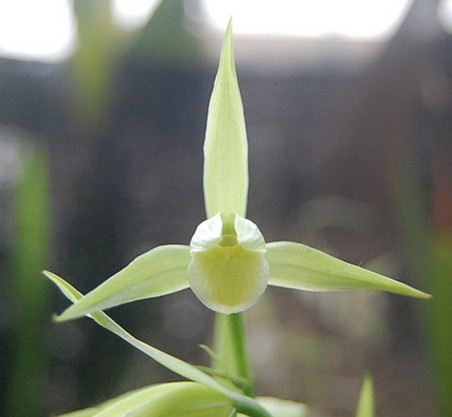
Wide-leaf varieties of Cymbidium kanran commonly have chicken-claw petals, long petal tips, slender outer petals, long pointed lips, and tall, imposing plant form, with leaf length commonly greater than 60CM. Over the past dozen years or so, many short-petaled regular-form or petal-type flowers have appeared among wide-leaf Cymbidium kanran, but plain-color regular-form types are extremely rare. The appearance of this variety fills the gap in fine plain-color wide-leaf varieties. This variety has a leaf length of about 45CM, leaf width of 1.6CM, arching and drooping leaves, large flowers that rise above the foliage, flower form with level shoulders, outer petals short and wide with both restraint and firm structure, petals that remain intact after long blooming, and a large round lip with pouch-like edges that neither curls nor hangs.
Both Cymbidium goeringii and Cymbidium faberi have "Diwang" (Emperor) varieties. The so-called "Diwang" means the bearing of a king, so among plain-color wide-leaf Cymbidium kanran varieties, this flower is named "Diwang Su" (Emperor Plain).
One week of bloom on Cymbidium kanran 'Diwang Su'.