Summary of Orchid Cultivation Methods: Sharing Two Years of Care Experience
When it comes to orchid cultivation methods, there are many versions, each with its own characteristics. This article is a summary by a flower enthusiast based on their two years of experience growing orchids, and it holds very high reference value for beginner flower enthusiasts. Counting the days, it has been exactly two years since I got my first orchid, and I suppose I have just stepped into the beginner stage. Over the past seven hundred-plus days, I have made mistakes, suffered losses, and paid my tuition, and I was fortunate to have the help of fellow orchid growers around me, for which I thank them here.
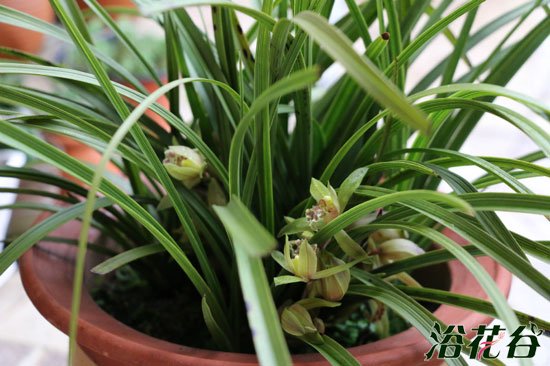
Below is a summary of two years of growing orchids:
I. Potting medium:When it comes to mixing potting medium, this was probably the thing I fussed over most when I first started growing orchids. I would peel off bark whenever I saw it and dig up leaf mold whenever I found it, then bring it home to sift, sun-dry, and boil it, short of frying, sealing, and stewing it. After all that, I would plant the orchid into the pot and water it to settle the roots, and thought that was the end of it, right? Actually no. What did I do after planting? Of course, I posted my homemade potting mix in various QQ groups and forums asking for advice. When I heard others say my potting mix had such-and-such shortcomings, my heart would tighten and I would suddenly feel like an idiot. Then I would search Baidu and Taobao for good mix recipes. When I saw the "Six-in-One," "Eight-in-One," and "Ten-in-One" products on Taobao, I would hurry to buy them and repot, repeating this cycle endlessly, tired but happy. The result was that after all that fussing back and forth, all that was left was soil and pots.
II. Watering and fertilizing:Watering was the second major hurdle when I first started growing orchids. The saying "don't water if it's not dry; when you water, water thoroughly" has stumped so many people. Weighing the pot, the chopstick test, over and over again I just could not get it under control. Later, I read an article in a friend's blog space and finally had some insight. The general content was as follows:
Water is an essential element for plant growth. Water content in plants is very high, reaching up to over 80%. Plants can only grow normally when they have sufficient water. This is because various biochemical reactions within the plant body, such as nutrient conversion, cell division, and photosynthesis, all require water to take part. During growth, plants typically rely on water uptake to make cells elongate or expand. If water is lacking, plant cell turgor pressure decreases, and growth slows or stops.
The main flow of water within the plant body. For terrestrial plants, water is absorbed by the root hairs, flows along the roots to the stem, leaves, flowers, and fruit, participates in various growth activities within the plant body, and is consumed, with some water lost through the surfaces of the stem, leaves, flowers, and fruit into the atmosphere.
The main roles of water for plants. First, it provides the water necessary for plant growth. Second, it acts as a solvent for transporting various nutrients; the organic fertilizers, inorganic fertilizers, and other nutrients that plants need must all dissolve in water and then be transported through water into the plant body. Third, by losing water to the atmosphere, plants dissipate the radiant heat they absorb, avoiding a large rise in body temperature. Fourth, the vaporization of environmental water can carry away a large amount of heat energy and regulate environmental temperature.
Plants' proactive protection regarding water. When water inside the plant body is insufficient, plants instinctively close their surface stomata, reducing the rate of water loss and preventing massive water loss. Plants also close their stomata during dormancy, at night, or during the hot and dry midday of summer, to reduce the rate of water loss and protect the water inside their bodies.
The amount of water plants consume and lose and the amount of water absorbed by the roots must be balanced. When the former exceeds the latter, the plant's water content decreases, and water potential and turgor pressure correspondingly decrease, affecting normal plant growth. When a certain limit is exceeded, the plant's normal physiological processes will be severely disrupted, causing damage to the plant, even to the point of death. This condition of water deficit is theoretically called water stress.
The harm of water to plants. When there is too much water in the soil, the soil becomes waterlogged, blocking the oxygen supply to the root system, hindering aerobic respiration, and causing damage to the plant root system.
In summary, our principle for watering during orchid cultivation is: give as much water as possible without harming the root system, and do not advocate dry growing. Especially during the growth period, do not withhold water, otherwise the seedlings that grow will be toothpick seedlings.
Some people may want to ask: whenever the temperature is high and I give a lot of water, the seedlings collapse; if I don't withhold water, what should I do? As for this question, I personally believe it is not the water's fault, as long as you are using clean, drinkable water. It should be the fertilizer (or pesticide), especially the potting medium, and also the temperature that are at fault. Hehe, shifting the blame to others. Keep reading, and maybe you will understand something.
Now let's talk about fertilizer. Fertilizer is also an indispensable and important element for plant growth. The main fertilizer types in plant growth are nitrogen, phosphorus, and potassium. All other types of fertilizer are trace fertilizers.
The role of fertilizer. The main roles of nitrogen: First, it is the main component of plant proteins. Plant proteins have a very high content in plant cells, reaching about 17%. Second, the composition of plant hormones and plant vitamins also requires nitrogen.
When nitrogen is deficient, the synthesis of organic matter in the plant body is blocked, plant growth is slow, seedlings are short and small, and leaves turn yellow. When nitrogen is excessive, leaf color becomes dark green, branches and leaves grow excessively, the maturation period is delayed, the plant's environmental adaptability is poor, and it is susceptible to pests and diseases.
The main roles of phosphorus: First, it is an important component of plant cells, existing in the cytoplasm and nucleus. Second, it participates in photosynthesis, respiration, and so on during plant growth, and is indispensable in the growth process. Third, phosphate maintains the osmotic potential of cells in the plant cell sap, which can also be simply understood as maintaining the osmotic order of fluids within the plant body, so that osmosis does not get out of order.
When phosphorus is deficient, plant protein synthesis is blocked, affecting cell division; the plant is short and small, with few branches, few flowers, and leaves that are dark green or purplish-red. When phosphorus is excessive, small scorched spots will appear on the leaves (caused by calcium phosphate deposition), and it will also affect the absorption of other trace elements to varying degrees.
The main roles of potassium: First, during plant growth, it acts as an enzyme activator and participates in important metabolism within the plant body. Second, it promotes the synthesis of proteins and carbohydrates within the plant body. Third, it improves the quality of water within the plant body, reduces viscosity, and enhances the water-retention capacity of cells. Fourth, it affects cell turgor pressure within the plant body and participates in controlling cell water uptake, etc.
When potassium is deficient, leaves lose their green color, leaf margins scorch and wither, growth is slow, and drought resistance and cold resistance become poorer.
Although fertilizer is an important element for plant growth, compared with water it is needed far, far less. The fertilizing principle during orchid cultivation is: apply little and apply slowly, and absolutely avoid applying concentrated fertilizer.
"Apply little" means to apply fertilizer as diluted as possible each time; "apply slowly" means to make the interval between two fertilizations as long as possible; "absolutely avoid applying concentrated fertilizer" means never apply concentrated fertilizer. Why? The concept of “osmosis” was mentioned above, so I will start from osmosis.
Osmosis, in simple terms, refers to the process of liquid entering another environment from one environment. Water uptake by orchid roots is also an osmotic process. The principle of osmosis is: liquid flows from the side of lower concentration to the side of higher concentration. According to this principle, if concentrated fertilizer is applied, the water in the orchid roots is very likely to be drawn out by the concentrated fertilizer. Oh my, that powerful! That would be terrible. The same applies to applying pesticides. What? Who said they don't believe it? If you don't believe it, just do an experiment.
Take a white radish, cut it into strips, and divide into two portions. Soak one portion in clear water and the other in salt water; adding more salt makes the effect more obvious. After a while, go look again. I won't say more about the result.
The following is my own summary:
One, potting medium: There is no good or bad potting medium; suitability is most important. Good drainage and moisture retention are key. Fertilizer strength should be determined according to the seedling.
Two, watering: Water is the source of all things and also the foundation of all things. It can be spared neither a little, and even less can it be lacking.
Three, fertilizing: Slow application gives good roots and strong seedlings; concentrated application rots roots and collapses seedlings.
Four, sterilization: Chemicals are ultimately limited; sunlight is the most effective.
Five, pest control: The home environment is very limited; do not treat highly toxic substances as child's play. Matching the remedy to the ailment is what truly matters.