How to Identify Hormone-Treated Orchids? Identification Methods Illustrated
Among orchids there are what growers often call hormone-treated orchids (orchids that have been given a certain hormone). Some growers have put together illustrated guides on how to identify hormone-treated orchids, which is useful reference for beginner growers. This article first looks at how hormone-treated orchids are grown, then at how to identify them.
Hormone-treated orchids are generally sold with new shoots, and the new shoots look very good, but the old leaves look very aged, the roots are yellow, with no crystal tips, and root rot. After the new shoots grow and form pseudobulbs, their stature is noticeably much shorter than the old leaves, and the leaves are somewhat deformed, having grown into a dwarf type. At this point, be careful: the old plant has basically lost its vigor after being tormented by hormones, and depends mainly on the new plant for support, which is also one factor in the new plant becoming short and unable to grow tall.
At this point, the old plant and the new plant should be divided and handled separately. After the old plant is divided off, it will soon collapse. Choose the new plant with the best roots and pot it separately, and throw away the rest that are not good. Of the shoots the new plant sends out, keep the strongest and cull the rest. In this way, the third-generation plant should be able to grow tall and large, and the third-generation plant should be able to shake off the effects of the hormones and successfully regain its vigor.
1. One of the characteristics of hormone-treated orchids: the orchid leaves are mostly of a short, sturdy type, with little difference in sturdiness or weakness from one generation to the next, but the orchid roots are short and thick, not matching the overall plant shape. True short, sturdy orchids actually do not have short roots, and they also have many roots. This point is actually more valuable as a reference when selecting seedlings.
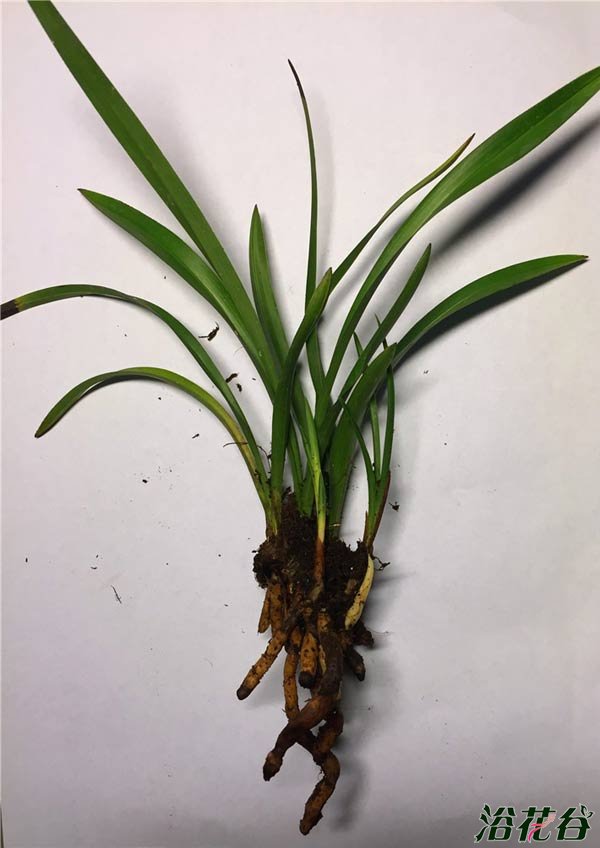
2. The second characteristic of hormone-treated orchids: they send out toothpick-like shoots, differing greatly in sturdiness or weakness from the mother plant. A normal sturdy mother plant will certainly send out sturdy new shoots, even twin dragons. This 'Duanxiu He' (Elegant Lotus) did not send out many shoots, though. Is it because the hormone used was a dwarfing agent?! By the time you notice this characteristic, you have already been taken in!
3. The third characteristic of hormone-treated orchids: the new shoots do not grow roots or do not grow them well, and the root tips of old plants tend to show carbonization.