Key Points and Care Methods for Orchid Management in Summer
Many orchid growers are not very experienced in summer orchid management. The high-temperature, high-humidity climate pattern of summer is the season when pathogens grow most rapidly; with the slightest carelessness, orchid plants may at best develop scorched leaf tips, black spots, and blotches, and in severe cases even soft rot, stem rot, collapse of the plants, and total loss of the orchids. Therefore, as soon as summer arrives, novice orchid growers become panicked and at a loss, deeply afraid that with one moment of inattention their beloved orchid plants will be lost forever.
In fact, the hot summer is the period of most vigorous growth for orchids. New shoots that emerge in spring grow strong during this time, and the flower buds of the orchid plants also differentiate and develop during this period. As long as management is done properly, there is not only no need to worry about disease and plant collapse, but energy can also be accumulated for sending up new shoots again in autumn and for developing flower buds.
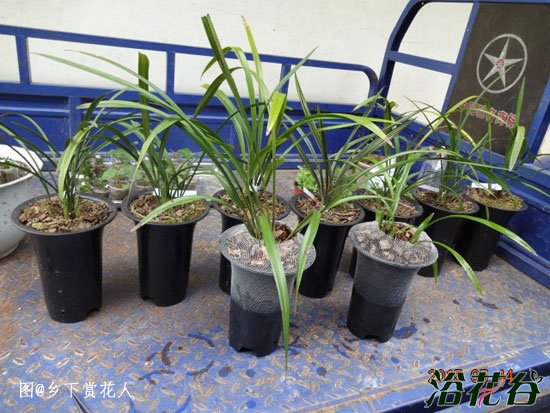
Before discussing summer management methods for orchid plants, let us first talk about the habits of orchid plants. Orchid plants (Chinese cymbidium) belong to the terrestrial orchid genus and grow in shrub forests on high mountains and wild ridges. They prefer soft, filtered sunlight and dislike direct blazing sun; they prefer a dry, airy environment and fear damp, stuffy places. Although orchid plants fear stuffiness and heat, they are not afraid of high temperatures, because high temperatures can induce the thickening of orchid leaves, strengthen the resilience of orchid growth, and thereby improve the orchid's own adaptability to the environment. The orchid masters of ancient times and the old orchid growers in the Jiangsu-Zhejiang region today who train their plants during the dog days of summer every year are precisely deeply familiar with this habit of orchid plants. Letting orchid plants remain slightly dry during the scorching summer not only prevents soft rot and plant collapse caused by high temperature and high humidity, but can also, through water control, prompt the orchid plants to carry out flower bud differentiation and form flower buds in autumn.
Based on many years of experience in growing orchids, my personal management of orchid plants in summer consists of no more than the following key points:
1. Increase ventilation in the orchid house: open all windows in the orchid house to allow full air convection, and turn on all ventilation fans. Set the fans in the upper layer of the orchid house to exhaust mode to expel hot air, and set the fans in the lower layer to supply mode to draw in cool air, truly achieving full air convection inside the orchid house. In this way, even if the temperature inside the orchid house is higher than 35°C to 40°C, there is no need to worry about plant collapse.
2. Keep the orchid house dry and fresh: many novice orchid growers, worried that the high summer temperatures will harm the orchid plants, often spray water on the orchid leaves in summer or use humidifying equipment, hoping to raise the relative humidity of the orchid house so as to achieve a cooling effect. This is a case of loving them enough to harm them, and the result is instead black spots all over the orchid leaves or even soft rot and plant collapse. Although summer temperatures are high, humidity is also relatively higher than in other seasons. If the relative humidity of the orchid house is increased at this time, the high temperature and high humidity will instead turn the orchid house into a place where pathogens multiply rapidly. When air convection is inadequate, transpiration makes orchid plants prone to disease and death. Moreover, I personally believe that the humidity orchid plants need is not necessarily the relative humidity in the environment, but rather the absolute humidity inside the orchid pot in which the orchid grows. Therefore, keeping the orchid house or the orchid-growing area dry and fresh is absolutely the most important key to helping orchid plants get through the scorching summer.
3. Strictly control the timing of watering: summer is the period when orchid plants grow and regain vigor and when flower bud differentiation is nurtured. During this period, the timing of watering orchid plants should be strictly controlled. Daytime temperatures that are too high and potting medium that is not dry are both not good times to water. I personally believe that watering in summer should be carried out at night when the temperature is slightly lower, because orchid plants enter a dormant state when the temperature is above 30°C. If water is given at this time, the orchid plants cannot carry out absorption; instead, water will accumulate in the orchid pot, causing the orchid roots to rot and creating empty roots, and it can easily cause soft rot and plant collapse, leading to irreparable regret. Furthermore, strictly controlling water in summer so that the inside of the orchid pot remains slightly dry can thereby induce a sense of crisis in the orchid plant itself and further promote flower bud differentiation. Therefore, strictly controlling the giving of water and the timing of watering is also an important subject in summer orchid management.