How to grow Cymbidium sinense? Detailed guide to cultivation methods and precautions
The first thing many orchid enthusiasts do after buying a Cymbidium sinense is to look up an article on "Cymbidium sinense Cultivation Methods and Precautions" so as to be fully prepared. This article discusses Cymbidium sinense cultivation methods and precautions together with fellow flower growers, covering multiple aspects such as its habits, environment, watering, and fertilizing.
1. Habits of Cymbidium sinense and its care environment
Cymbidium sinense prefers a warm, humid, and well-ventilated environment. It likes water, dilute fertilizer, and high-humidity air. It dislikes direct light and waterlogging in the pot. It is basically similar to asparagus fern. It grows slowly, and the plant is not prone to aging. Its leaves are deep green, wide, and thick. Its flowering period is from January to March. The fragrance is more noticeable around 10 a.m. and around 7 p.m., and it is also related to the ambient temperature.
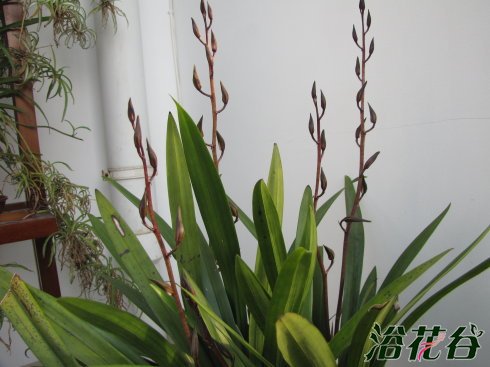
For indoor cultivation of Cymbidium sinense at home, there must be ventilation on all four sides. The indoor relative air humidity should not be lower than 50%, and 80% is most suitable. If the humidity is insufficient, for tall orchid pots, place a water tray at the bottom of the pot to store water and increase local air humidity. A water depth of 1.5 cm to 2 cm is suitable. To prevent the water in the tray from growing bacteria and spoiling, salt can be added to the tray, and the water should be changed at least once every half month. In dry weather, spray the leaves 2 to 3 times a day to increase humidity. However, before closing the windows, make sure there is no standing water on the leaf surfaces and leaf tips (the plant's heart), otherwise the leaves and stems are prone to rot.
During the plum rain season, the air humidity is high, so the above measures can be omitted.
During the winter heating period in northern regions, special attention should be paid to increasing indoor air humidity to prevent leaf tip scorching and bud blight.
Light: Except in winter and spring, it should not be exposed to direct sunlight. In winter and spring, it can be exposed to morning sunlight for about 2 to 3 hours per day. In summer and autumn, shading is required.
Temperature: Not lower than 3°C in winter, and not higher than 30°C in summer. The suitable growth temperature is 20°C to 28°C.
2. Watering and fertilizing methods and specific operations:
Watering Cymbidium sinense is the same as for other orchids. The potting soil must be kept moist without waterlogging, and it should not be watered only after drying out completely. In winter and spring, water in the morning; in summer and autumn, start watering after the sun sets. Generally, in the low-temperature seasons of winter and spring, water once every 4 to 7 days; in the high-temperature and dry seasons of summer and autumn, water once every 2 to 3 days. Adjust the watering frequency flexibly according to the moisture condition of the potting soil, the weather, and the air humidity. Do not follow a fixed pattern.
Note: Generally do not water on cloudy and rainy days (unless the pot has already dried out). Do not rinse or spray water within three days after applying pesticide. The temperature of the watering water and the soil temperature should not differ too much, as this will cause the plant to catch a "cold."
Cymbidium sinense has wide, thick, and tall leaves. Unlike other orchids, it needs more nutrients during the growing period. Therefore, it is necessary to apply dilute fertilizer frequently. A solid granular slow-release fertilizer can be used (refer to Osmocote for the N/P/K ratio), evenly scattered along the pot edge at about 4 to 8 g (depending on pot size). The granules must not touch the roots or pseudobulbs to prevent root burn, and the slow-release fertilizer should be replenished in time according to its effective period. From May to October, apply a compound liquid fertilizer about once every half month (once a week during the peak growing period). For home flower growing, organic fertilizers are not recommended, so as to avoid producing waste gas and pests that affect indoor air and the environment.
Note: Do not fertilize on cloudy and rainy days, do not fertilize during the flowering period, and reduce fertilizing during the high-temperature summer season. If the plant is very weak and must be fertilized, control the concentration by halving it according to the instructions. After applying liquid fertilizer for 24 hours, rinse the potting soil with water to reduce the accumulation of harmful inorganic salts. Plants that have just been potted or just had their soil changed should be fertilized only after 30 days (liquid fertilizer sprayed on the leaves). Before and after flower buds emerge from the soil, stop using compound liquid fertilizer, and spray the leaves with monopotassium phosphate or other phosphorus-potassium fertilizers once every half month until winter begins.
3. Sterilization, anti-rot, and pest elimination:
During the growing period, Cymbidium sinense is prone to bacterial and fungal diseases such as bud rot, root rot, anthracnose, and black spot. From April until the beginning of winter, spraying and root drenching should be carried out once or twice a month for prevention and control. The main chemicals include potassium permanganate (5000 times aqueous solution), carbendazim, thiophanate-methyl, etc. Use them alternately, otherwise resistance may develop. Dissolve them in water according to the instructions before use. It is better to use a weaker solution than a stronger one. Do not fertilize when applying chemicals, and water or spray only after three days.
For home cultivation of Cymbidium sinense, pests are generally very rare. Pay attention to keeping screen windows closed and cleaning out hygiene dead corners to completely prevent pest outbreaks.