How to Grow Orchids? A Detailed Guide to Cultivation Methods and Precautions
Although this article is titled "Orchid Cultivation Methods and Precautions" and should by rights contain more theoretical knowledge, for flower enthusiasts, summarized experience is more valuable. The author has grown orchids for a long time, taken many detours, and gained much insight. What follows is the author's experience.
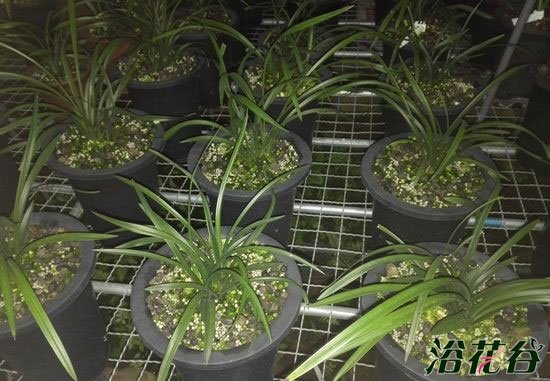
If we want to talk about how to grow orchids, I'm afraid we must first talk about the environment for growing orchids. Some orchid enthusiasts overlook this prerequisite, and right from the start they talk about their potting mix ratios, how to water, and so on, never mentioning their own growing environment. This is actually very misleading, because other people's environment is vastly different from yours. If they follow your methods, the results will certainly be vastly different. Moreover, many orchid enthusiasts have poor discernment; they just say: "Bump! Great post! Learned something!" and accept everything wholesale, regardless of whether it suits their situation, swallowing it all down. It is clear that talking only about potting mix without mentioning the environment has a very negative impact.
I roughly divide orchid-growing environments into two categories: first, ground-level orchid growing; second, elevated orchid growing (balcony, rooftop). The biggest difference between ground level and elevated is that ground-level growing can connect to ground qi, while elevated growing cannot obtain ground qi. What I mean by ground qi is a kind of moist, cool, flowing air. The earth has a breathing and exhalation function, transporting water, nutrients and air through the soil. If you don't believe it, just observe how street trees survive along roadsides in busy downtown areas. Those street trees grow in a patch of ground one meter square, surrounded entirely by concrete pavement. Not only that, but that one-square-meter patch of ground has been trampled by crowds until it is as hard as an iron plate, yet the trees still have lush branches and leaves, full of vitality. If it is not the work of the earth, then what is it? Compared with elevated growing, ground-level orchid growing is closer to the natural growing state. Orchids gain qi and thus grow. Once the aeration problem is solved, more than half of the difficulties in growing orchids are solved. This is the advantage of ground-level orchid growing.
Since ground-level orchid growing (in pots) has such superior conditions, the potting mix does not need to be so particular. As long as the environment has shade, ventilation and not much direct sunlight, even vegetable garden soil will do. For those with slightly poorer conditions, such as poor ventilation, just mix a little granular material into the vegetable garden soil. This is something I have experienced. When I used to live in a single-story house, I did it just like that and never had any problems. Orchids, this thing, have gone through tens of thousands of years of tempering and can still reproduce to this day, so they still have this bit of adaptability. Therefore, it is not mysterious that some people can grow orchids well with vegetable garden soil.
However, when using vegetable garden soil, one principle must still be followed: a layer of coarse granular material must be placed at the bottom of the pot, and then vegetable garden soil added on top. You cannot have coarse material on top and fine material below, with coarse granules above and vegetable garden soil below. Doing so clearly has drawbacks: it blocks ground qi! Moreover, it easily creates a situation where the top is dry and the bottom is wet, which easily causes root rot and frequent disease. This is one of the taboos of orchid growing. What benefit is there to the orchid plant?
Elevated orchid growing is quite different. Without ground qi, you have to solve the aeration problem yourself. In fact, the main thing is to solve the aeration problem around the roots. What should you do? You can only achieve this with granular material. The upper part of the roots is close to the pot surface and easily gets air, so use fine granules. The lower part of the roots is stuffy inside the pot and does not easily get air, so use coarse granules. This fine-on-top, coarse-on-bottom arrangement has many benefits. At least three can be listed:
First, it solves the aeration problem.
Second, it does not accumulate water, and it can also reduce water evaporation, keeping a moist micro-environment inside the pot for a longer time. Moreover, because of this fine-on-top, coarse-on-bottom structure, the humidity in the upper and lower parts remains roughly consistent, which avoids the situation where the upper half has already dried out completely while the lower half is still very wet.
Third, it can reduce disease. I have one insight: if any pot of orchid plants develops black spots or stem rot, then that pot's potting mix definitely has a problem. The potting mix is too fine, or the principle of fine-on-top, coarse-on-bottom was not followed, causing excessive moisture and poor aeration. In short, the contradiction among roots, water and air was not properly resolved. If you follow the principle of fine-on-top, coarse-on-bottom, black spots and stem rot will not appear.
If you do this and still have such diseases, then the potting mix is too fine. Switch to a coarser one, and you can fundamentally eliminate black spots and stem rot. Even if you water too much normally, you don't need to worry! So, does this trick of mine count as a unique secret skill?
Of course, too much water and fertilizer can also cause other problems, but that is not the content discussed in this article.
Vegetable garden soil absolutely must not be used, and even vegetable garden soil plus coarse granular material is not acceptable. Orchid enthusiasts must remember: the biggest taboo in elevated orchid growing is mixing extremely fine powder into the granular material. Such as fine mud; vegetable garden soil undoubtedly contains large amounts of this kind of fine powder. The harm of this fine powder is obvious: it blocks the aeration channels, and the result is equivalent to not using granular material at all. If someone insists on saying, "I use vegetable garden soil plus granular material and it works very well," then I can conclude that your orchid plants grow slowly and will get smaller year after year, and diseases will also be hard to control. Normally, when watering and fertilizing, you will also have to be extra careful. Otherwise, it is the special situation I will mention below, namely that you have a rooftop garden with a very high degree of shade.
However, using purely granular material still has a flaw: because the gaps between the granules are large, the area of contact between orchid roots and the material is small, and the ability to absorb nutrients is weakened. This problem is easy to solve: just apply thin fertilizer frequently. As long as you grasp the two words "thin" and "frequent," you can be assured that you will not have major concerns.
There is a special environment for elevated orchid growing in which you can grow orchids well without using purely granular material. That is when someone makes a garden on a rooftop, planting large trees and vines with a high degree of shade, and there is a lot of soil for growing other flowers and trees, artificially creating a moist and ventilated environment similar to ground level. Placing orchid plants under the shade of vines and trees or in dark corners can also achieve some effect similar to connecting to ground qi, and the orchid plants can grow very well without purely granular material.
Finally, I must state that my home is in the south, and all of the above is experience I have gained from growing orchids locally. It may not be suitable for growing orchids in other regions, especially northern regions.