Key Points and Detailed Care Methods for Orchid Management in Autumn
Autumn has arrived, and some orchid growers need to understand autumn orchid management. Autumn is another golden season for growing orchids. Orchid growers should seize the characteristics of autumn climate and focus on adjusting light, repotting and dividing plants, fertilizer and water supply, and pest and disease control.
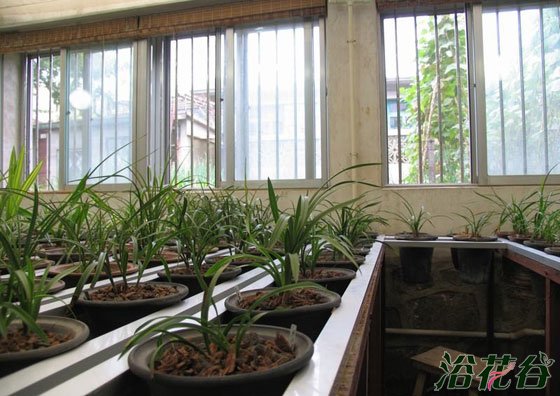
1. Increase light and widen the temperature difference to promote flower buds and strengthen seedlings.
Autumn sunlight can enhance the ability of orchid plants to resist pests, diseases, and severe cold. Therefore, in autumn, the shading level should be reduced as much as possible, and orchids should be exposed to more sunlight. At night, open the windows of the orchid room to allow full ventilation and air exchange, increasing the day-night temperature difference. Orchid growers all know that increasing light and widening the temperature difference in autumn is a quick way to promote flower buds and strengthen seedlings. In nature, orchids bloom more in places with more light, which also illustrates this point.
2. Watering and fertilizing.
In dry autumn with no rain for a long time, more attention should be paid to watering and maintaining moisture. If humidity is too low, misting can be used to keep the environment moist and prevent orchid leaves from drying at the tips. After summer growth, the nutrients in the pot are mostly depleted, so in autumn, more attention should be paid to supplementing fertilizer. The method is to apply organic fertilizer every 10 days, and spray nitrogen fertilizer on the leaves about once every 10 days as well; the two can be alternated. In addition, while applying organic fertilizer to the root system, an appropriate amount of phosphorus and potassium fertilizer can also be mixed in. Phosphorus fertilizer has the function of promoting sturdy orchid plants and flower bud differentiation. If the growing medium lacks phosphorus, it is generally difficult for the plant to produce flowers. Usually, a 0.2% to 0.3% monopotassium phosphate solution can be used for foliar spraying, once every 5 to 7 days, for 2 to 3 consecutive sprays. Fertilization time should be chosen on a sunny evening when the growing medium in the orchid pot is slightly dry and the temperature is below 30°C. The next morning, water once promptly to keep the potting soil moist but not waterlogged, and never let the potting soil become too dry.
3. Pruning and tidying.
For Cymbidium ensifolium that blooms in summer and autumn, after flowering, the flower stems should be cut off promptly and nutrients supplemented to strengthen the orchid plants. For orchids that are growing luxuriantly and are not yet due for repotting, the orchid leaves should be tidied promptly. If the plants are too dense, some weak plants and diseased plants can be appropriately removed, and diseased leaves, dead branches, and scorched leaf tips should be cut off to promote balanced and healthy growth of the orchid plants and maintain their ornamental value.
4. Division and repotting.
Orchids are limited by the flower pot, and vigorous root clusters become coiled and interwoven, making it difficult for them to extend, and they keep arching up toward the pot surface, causing difficulties for watering and fertilizing. Too many plants in the pot create dense, airless conditions, which not only make them susceptible to pests and diseases but are also very unfavorable to orchid plant growth. In such cases, repotting can be carried out. For summer orchids and autumn orchids, late October to mid-November is the suitable period for repotting. When repotting, turn out the mother plant, gently remove the soil clumps, separate according to natural shoots, and prune rotten roots and residual leaves, taking care not to injure leaf buds or fleshy roots. Then wash the roots clean with clear water and place them in a cool, shaded place. Once the roots turn white and appear dry, repot them.
5. Pest and disease control.
Autumn climate is suitable for the occurrence of various pests and diseases. Spider mites, scale insects, and white grubs are several major pests harmful to orchids. A small number of scale insects can be brushed off with a small brush. When there are many, a 40% dimethoate 800-1000 times solution can be sprayed for control. If spider mites are not controlled in time, they can cause orchid leaves to lose green color and scorch. Spraying the pollution-free pesticide Luying 500-600 times solution will eliminate them. White grubs that enter the flower pot will bore into and feed on the orchid's fleshy roots, and severe damage can cause the plant to wilt. A 5% phoxim 1000 times solution can be used as a root drench for control, with 150 ml to 200 ml of pesticide solution per application. In addition, autumn is also a season with high incidence of orchid soft rot, stem rot, black spot, and other diseases. Agricultural streptomycin, chlorothalonil, thiophanate-methyl, and other fungicides can be used alternately for spraying. Not only should the orchid leaves be sprayed, but the surrounding areas should also be sprayed with the solution.