How to prune a Phalaenopsis orchid correctly after the flowers fade
Many flower enthusiasts do not know how to prune a Phalaenopsis orchid after the flowers fade. There are generally two ways to prune: one is if you want it to bloom a second time that same year, and the other is to let it rest and recover that year so it blooms again the following year. When the Phalaenopsis flowers wilt and fade, we should cut off the spent flowers as early as possible, as this reduces the consumption of nutrients.
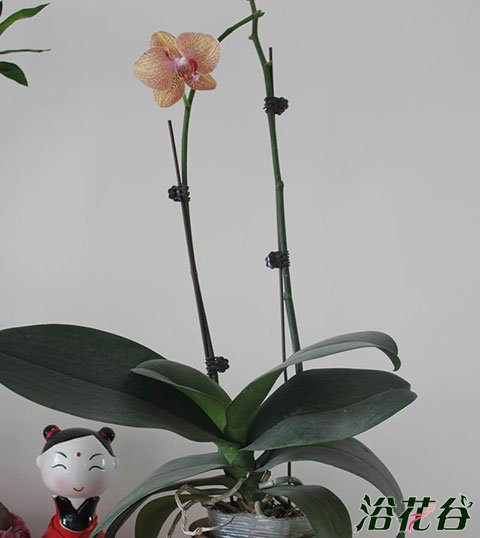
1. If you cut the flower stem at the 4th to 5th node from the base, the advantage of cutting this way is that it can bloom again after 2-3 months. The disadvantage is that the plant consumes too many nutrients this way, which is not good for its growth the following year.
2. If you want it to produce good flowers again the following year, it is best to cut the flower stem off at the base.
In addition, besides pruning the flower stem, we also need to pay attention to this: when the Phalaenopsis growing medium ages, it should be replaced in a timely manner, otherwise the air permeability worsens, which will cause root rot and weaken the plant's growth or even kill it.
Generally, repotting in May (late spring and early summer), when new leaves grow out, is preferable. When repotting, cut off the rotten roots, sterilize, let them dry slightly, plant them in fresh sphagnum moss, and place them in a well-ventilated spot with bright, indirect light. After one month, you can begin applying a dilute fertilizer; orchid fertilizer can be used.
Below are a few key points about Phalaenopsis care (from: Dieyilan):
1. Phalaenopsis likes high humidity, but hates waterlogging in the pot. Lack of water easily causes the leaf surface to turn yellow, and it is difficult to rescue; waterlogging easily causes root rot. Avoid water pooling in the crown of the leaves, otherwise the crown easily rots. You can sprinkle water around the pot to raise humidity, or use a spray bottle to water directly at the roots; it is enough when water flows out of the bottom of the pot. Water when dry and let it dry between waterings, and by all means avoid heavy watering. After the flowers open, do not spray water on the flowers.
2. Phalaenopsis hates direct sunlight and likes bright, indirect light. (I generally move it to the north balcony in summer and to the south bedroom in winter, one meter away from the balcony; the sun from nine to eleven in the morning can shine on it for a while, and winter sunlight is not harsh, so it does no harm.)
3. Although Phalaenopsis likes warmth, it hates being kept in a stuffy, enclosed environment. Good ventilation must be maintained in spring, summer, autumn and winter; do not shut it indoors just because winter temperatures are low. (In winter, I generally open the window for one or two hours to ventilate when the sun is bright at noon, but by all means do not let the draft blow directly on the orchid plant.)
4. When growing Phalaenopsis, by all means, by all means, by all means avoid heavy watering, low temperatures, stuffy enclosed conditions, and poor air permeability in the potting medium.