What Is the Best Fertilizer for Orchids? A Detailed Guide to Scientific Fertilizer Selection
As the saying goes, every orchid grower has their own methods. On the question of what fertilizer is best for orchids, orchid enthusiasts may want to read this article carefully. Besides the author's insights on fertilizer use in orchid growing, it also includes other orchid growers' understanding of fertilizers.
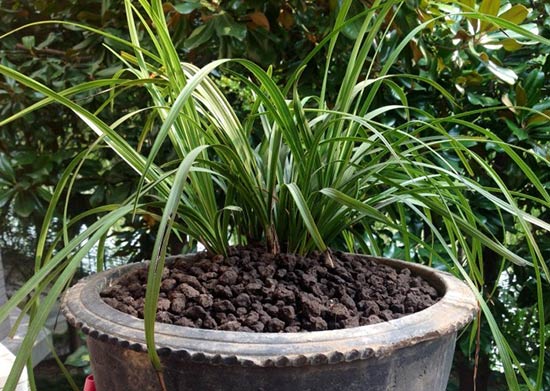
Fertilizer, put simply and plainly, is nitrogen, phosphorus, potassium + trace elements. Based on personal preference and growing environment, potting mix formulas also vary widely, with soft, hard, coarse and fine materials in different proportions. What is discussed here is a formula of soft to hard at 2:1, with granules around 1cm, peanut shells + pine bark (coconut husk) + river stones (crushed stone). This formula is the one used relatively often for growing orchids in bulk. There are also 1:1 formulas, or ones using all bark, peanut shells, coconut husk and other soft materials, or even all gravel. The common trait of these formulas is that they are light and plain, one could say they have no fertilizing effect. So fertilizer use is relatively controllable and the results are intuitive.
Currently the main orchid fertilizer brands include: slow-release fertilizer (controlled-release fertilizer): Osmocote, Hi-Control, Magamp, Multicote, Plantacote; water-soluble fertilizer: Hyponex, Peters...; and some nutrient fertilizers, like seaweed extract and other organic fertilizers. The slow-release fertilizer formulas used relatively often in the orchid world are mainly the high-nitrogen type 16-8-12 (Osmocote), the balanced 13-13-13, and the high-phosphorus-potassium type. Water-soluble fertilizers are (nitrogen-phosphorus-potassium) 20-20-20 and 10-30-20.
Slow-release fertilizer can provide the nutrients orchids need for growth in fixed amounts over a long period, while water-soluble fertilizer can appropriately regulate the growth process and supplement trace elements. Personally, I use a balanced slow-release fertilizer, applied once at the beginning of spring each year, lasting a year, to improve balanced nutrition. Water-soluble fertilizer: from when shoots emerge until they are 70-80% mature, use the 20-20-20 formula, a general-purpose growth fertilizer with a balanced formula that promotes plant growth, suitable for summer application, and can be used for foliar spraying; after 80% maturity and before shoots emerge, use the 10-30-20 formula, which enlarges the pseudobulbs, effectively promotes flower bud differentiation, makes buds plump and increases flower count, with more vivid colors as well.
Orchid grower's view: Any approach of heavy fertilizing with abundant water or sparse fertilizing with clear cultivation is inevitably too one-sided. Being afraid to fertilize orchids is a psychological barrier. In the "Eight-Point Charter for Agriculture," “fertilizer” is the second character, which shows its status among the eight points. Fertilizer must be used; the question is what fertilizer to use, when to use it, what kind of seedling condition and dosage, and the methods and ways of application, etc. These are what should be discussed and studied.
Orchid grower's view: Proper fertilization can promote orchid growth. The plants grow strong and have strong disease resistance. This is not the result of hormone-forced seedlings. If fertilizer is applied in excess, it easily damages the roots, and growth instead becomes less vigorous.