How to care for Cymbidium faberi so it blooms every year
For many flower lovers, after a Cymbidium faberi blooms once, the next bloom may not come for two or three years. So how can Cymbidium faberi bloom every year? We might as well look at what important precautions there are for caring for Cymbidium faberi. Basic care will not be covered in this article; if flower lovers are interested, they can simply search for Cymbidium faberi on the site.
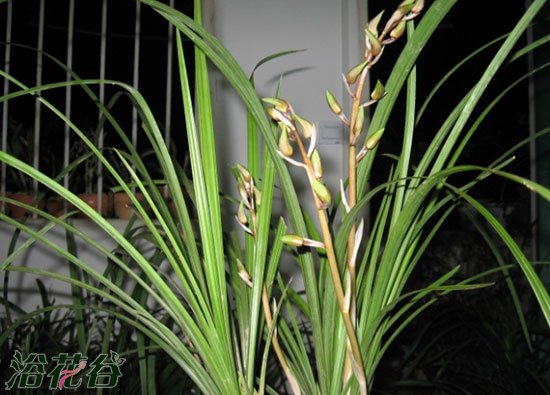
Key point one for Cymbidium faberi blooming every year: sunlight. According to feedback from orchid growers, Cymbidium faberi with good light has a significantly higher flowering tendency than Cymbidium faberi with poor light. Of course, be careful to provide shade in summer.
Key point two for Cymbidium faberi blooming every year: stability. Many orchid growers worry that the potting soil does not have enough nutrients and repot every year, but this is actually wrong. Cymbidium faberi is best repotted once every two years or once every three years. In addition, do not frequently change the care location of Cymbidium faberi; it is best to care for it in a stable place.
Key point three for Cymbidium faberi blooming every year: a potted plant must not have fewer than 3 connected shoots, and each year there should be 2 new shoots, because Cymbidium faberi mostly produces buds from new shoots; more is even better.
The above three points are important matters for Cymbidium faberi blooming every year, but doing only these three points is not enough. In ordinary care of Cymbidium faberi, we must not be careless. For example, watering, fertilizing, and strengthening roots all require attention from orchid growers.