When Do Orchids Bloom? A Detailed Guide to Blooming Times of Different Varieties
If a gardening enthusiast wants to know when orchids bloom, they first need to confirm the variety of orchid they are growing, because different orchids have different blooming times. In addition, because our care environments differ, even orchids of the same variety may have different blooming times, so the blooming times given below are ranges, for gardening enthusiasts' reference!
1. Cymbidium goeringii:
Cymbidium goeringii generally blooms between the end of January and early April, with most areas seeing blooms concentrated in February and March. The flowering period of Cymbidium goeringii lasts about 30 days, so there is still a very long period for enjoying the flowers. In addition, the fragrance of Cymbidium goeringii is beyond description, clear, distant and elegant, seeming to be there and yet not, truly the fragrance of a king.
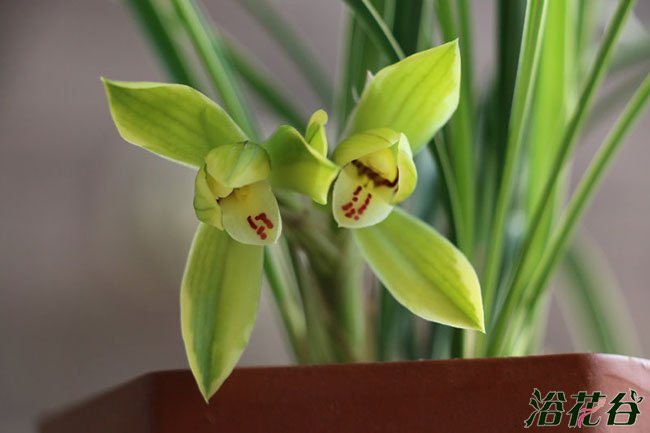
2. Cymbidium sinense
The blooming time of Cymbidium sinense is roughly the end of winter and the beginning of spring each year, about January to March. The flowering period of Cymbidium sinense can last up to 60 days. Generally speaking, low temperatures can keep the flowering period longer, while higher temperatures make the flowers fade relatively faster.
The fragrance of Cymbidium sinense is medium, generally stronger in the morning and afternoon. The flower buds of Cymbidium sinense take a rather long time to develop, so gardening enthusiasts need to be a little patient.
3. Cymbidium kanran
Cymbidium kanran blooms a little earlier than the previous two. Generally speaking, it blooms between the end of October and the end of January, and the flowering period can last about 20-40 days. The factor affecting the length of the flowering period is still mainly temperature, so it is not strange that some gardening enthusiasts' Cymbidium kanran fades after just a few days. One gardening enthusiast's Cymbidium kanran actually kept blooming for 50 days.
4. Cymbidium ensifolium
The blooming time of Cymbidium ensifolium is roughly in summer and autumn, that is, between July and October, but there are exceptions, as it also blooms in winter and spring. However, it blooms more in summer and autumn and less in winter and spring, so it is not hard to understand why Cymbidium ensifolium is also called the four-season orchid.
5. Cymbidium faberi
The flowering period of Cymbidium faberi is roughly between March and May. There is also a kind of large-flowered Cymbidium, whose flowering period is generally from October to April of the following year. Because many large-flowered Cymbidiums come from greenhouses and do not easily rebloom, the blooming time mentioned here is mostly what is seen in flower markets.