China Is Vigorously Developing Modern Agriculture: Farmers' Incomes Will Exceed Those of Urban Residents in the Future
On the evening of December 1, Dai Xiaofeng, director of the Institute of Food Science and Technology of the Chinese Academy of Agricultural Sciences, gave an interview to reporters in Jinan on the eve of the National Agricultural Product Processing Science and Technology Innovation Promotion Event and the Agricultural Product Processing Technology Achievement Trade Fair. China.com, December 7 (In-Depth Reading reporter
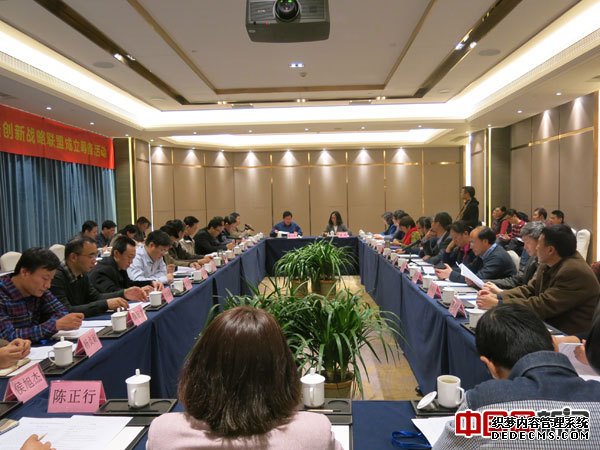
On the evening of December 1, Dai Xiaofeng, director of the Institute of Food Science and Technology of the Chinese Academy of Agricultural Sciences, gave an interview to reporters in Jinan on the eve of the National Agricultural Product Processing Science and Technology Innovation Promotion Event and the Agricultural Product Processing Technology Achievement Trade Fair.
China.com, December 7 (In-Depth Reading reporter Zhang Yanling) “In the future, China's agricultural product processing industry will usher in explosive growth and is expected to become China's first global monopoly industry. Agriculture will become an industry that creates wealth, and farmers' incomes will exceed those of urban residents. And all of this will be achieved in 2049. This is our goal.” Dai Xiaofeng, director of the Institute of Food Science and Technology of the Chinese Academy of Agricultural Sciences, said this in an interview with China.com's In-Depth Reading reporter on the eve of the National Agricultural Product Processing Science and Technology Innovation Promotion Event and the Agricultural Product Processing Technology Achievement Trade Fair in Jinan a few days ago.
China Is at a Critical Stage of Transition from Traditional Agriculture to Modern Agriculture
What is the state of China's modern agriculture? Dai Xiaofeng explained that China's modern agriculture was proposed after China's per capita GDP exceeded 1,000 US dollars in 2000. Before that came traditional agriculture, which corresponded to an agricultural society, an agricultural economy, and agricultural farmers. Modern agriculture is characterized by a full industrial chain integrating agricultural product processing with related fresh-keeping logistics and social services, and is a new type of industry marked mainly by agricultural product processing.
Dai Xiaofeng said that modern agriculture is a product of industrialization and urbanization. It is a new business format after human society entered the era of the industrial economy, industrial society, industrial civilization, and urban civilization. It is of epoch-making significance and differs from the concepts and connotations of traditional agriculture, which was about “planting a little, raising a little, catching a little.”
Modern agriculture has several obvious characteristics: First, the urbanization rate must reach more than 80%. At the end of last year, China's urbanization rate was 54%, and there is still quite a long way to go before reaching an urbanization rate of 80%. Second, one must look at agriculture's share of the total economy of a country or region. For traditional agriculture it is almost 100%, while modern agriculture requires it to fall below 20%. European countries generally range between 3% and 5%, and some are even at 1% or 2%. China's share, however, is still over 30%, which is still quite high. Third, more than 80% of agricultural output value is required to be created by post-production processing, fresh-keeping, logistics, and related social services, with the pre-production portion accounting for less than 20%.
“We are still in a critical period of transition from traditional agriculture to modern agriculture and of accelerated development. When China's per capita income reaches 10,000 US dollars, that will mark a decisive step in China's advance from traditional agriculture to modern agriculture.” Dai Xiaofeng told China.com's In-Depth Reading reporter.
Seven Major Directions, Including the Industrialization of Staple Foods, Will Determine the Future of the Agricultural Product Processing Industry
One of the most important factors determining whether China can successfully enter modern agriculture is the agricultural product processing industry. How should it develop next in order to help China enter the modern agriculture stage as quickly as possible? On this point, Dai Xiaofeng believes that while learning from the advanced experience of developed countries abroad, China's agricultural product processing industry must also take into account national conditions and follow a development path with Chinese characteristics. He said that in the future, efforts must be made in primary processing at the place of production, the industrialization of traditional foods and staple foods (industrialization of staple foods), the cascading utilization of agricultural product resources, functional foods and snack foods, instant foods, and deeply and finely processed foods.
He said that primary processing at the place of production has a large volume, broad scope, and huge potential, and can be further tapped. The industrialization of traditional foods and staple foods has broad prospects, including staple foods, dishes, and local specialty snacks. If we improve and upgrade China's eight great cuisines and foods with culinary culture, turning them into a nutrition industry, then in the coming decades the industrialization of staple foods alone will have a huge space of more than 10 trillion yuan in the Chinese market. The cascading utilization of agricultural product resources is intended to promote the full extraction and utilization of agricultural products, so that one kind of agricultural raw material can create dozens of products, with output value created from what used to require hundreds of jin, thousands of jin, or even tens of thousands of jin of agricultural raw materials. This is conducive to developing a circular economy, protecting the environment, and achieving green and sustainable development.
The Agricultural Product Processing Industry Will Become China's First Global Monopoly Industry
What level is China's agricultural product processing at internationally? Will it form a monopoly position in the world in the future? In response, Dai Xiaofeng used a set of data to illustrate the performance of China's agricultural product processing industry: in 2014, China had 455,000 agricultural product processing enterprises, and the main business income of agricultural product processing industries above a designated size was 18.5 trillion yuan, with an average annual growth of 19.4% over 10 years, accounting for 17% of China's industrial main business income, and paying 1.17 trillion yuan in taxes, making it a foundational and strategic pillar industry of China's national economy.
“However, China's agricultural product processing level is far ahead among the vast number of developing countries, but compared with developed countries, we still have a large gap and are still at a primary stage.” he said frankly.
As for whether China's agricultural product processing industry can go global and become a global monopoly industry, Dai Xiaofeng believes that reform of the farmer household registration system, agricultural land reform, agricultural reclamation reform, and adjustment of the agricultural planting structure will all be reflected in 2016. All kinds of signs indicate that 2016 is destined to be a year of reform for Chinese agriculture. All of these bring major opportunities for the agricultural product processing industry and are also our ice-breaking journey to solve the difficulties in China's agricultural development.
He believes that China's agricultural product processing industry has good technology, a rich industrial labor force capable of making Chinese cuisine, and, moreover, Chinese people around the world have made Chinese cuisine known to people worldwide, giving the agricultural product processing industry an initial global distribution. The next 30 years will be a period of strategic opportunity, a golden period, and a critical period for the development of this industry, and the international community is optimistic about this industry. This is because in this process, the development of China's agricultural processing industry can release enormous market vitality and is a process of creating explosive wealth. It can be foreseen that if in the future China can fully seize the strategic opportunity of the “Belt and Road” and, in addition, give it key support as a national strategy and priority area, China's agricultural product processing industry will surely usher in explosive growth. It is expected that within 5-10 years, it can be made into an industry as renowned as China's silk of 2,000 years ago, ceramics of 1,000 years ago, and spices and tea of 500 years ago, becoming the first global monopoly industry since the founding of New China to create the largest output value.
Speaking of the future of China's modern agriculture, Dai Xiaofeng said: “Farmers will no longer be farming the land, but planting renminbi all over the fields. Farmers' incomes will exceed those of urban residents, and agriculture will become an industry that creates wealth. And all of this will be achieved in 2049. This is our goal.”