Five ministries tackle rural food safety: zero growth in pesticide use by 2020
Recently, in order to vigorously address and solve prominent rural food safety problems and safeguard the “safety of the food on the tables” of the rural masses, the Food Safety Office of the State Council, together with the Ministry of Public Security, the Ministry of Agriculture, the State Administration for Industry and Commerce, and the State Food and Drug Administration, issued the "Opinions on Strengthening Rural Food Safety Governance Work" (hereinafter referred to as the "Opinions").
In terms of source governance of edible agricultural products, the "Opinions" stress that agriculture departments at all levels must, together with relevant departments, strictly implement the registration and use system for agricultural and veterinary drugs, improve standards for agricultural and veterinary drug residues in food, formulate guidelines for the rational use of agricultural and veterinary drugs and codes of good agricultural practice for the cultivation and breeding of edible agricultural products, and establish and improve a traceability system for edible agricultural products covering cultivation and breeding, processing, sales and all other links, with traceable destinations, traceable sources and accountable responsibilities.
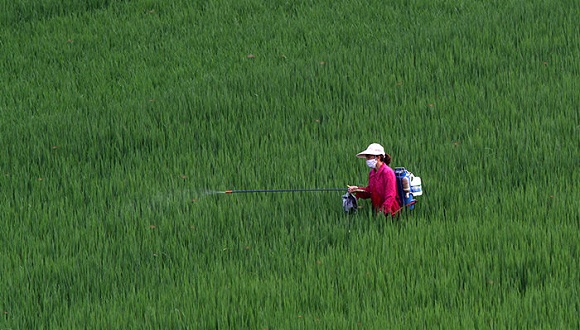
The "Opinions" point out that supervision of edible agricultural products must be strengthened, the use of agricultural inputs such as chemical fertilizers, pesticides and veterinary drugs must be strictly controlled, and the “action to achieve zero growth in the use of chemical fertilizers and pesticides by 2020” must be organized and implemented, speeding up the phase-out of highly toxic, highly toxic and high-residue pesticides, encouraging the use of high-efficiency, low-toxicity and low-residue pesticides, promoting soil testing and formulated fertilization, green pest control and unified pest control, establishing and improving livestock and poultry slaughter management systems, and improving mechanisms for the harmless treatment of dead livestock and poultry.
Sui Pengfei, director of the Institute for the Control of Agrochemicals of the Ministry of Agriculture, said that implementing “zero growth in pesticides” is an internationally common practice after agricultural modernization develops to a certain stage.
“At present, the organizational forms, business methods and service models of China's agricultural production are undergoing profound changes, and the pesticide industry has made considerable progress. These changes have provided the conditions and material basis for solving the traditional problem of excessive and abusive use of inefficient pesticides.” He pointed this out in an interview with the media.
In fact, developed countries in the European Union legislated to carry out pesticide reduction actions as early as the late 1980s.
In 2006, the pesticide reduction plan became a mandatory policy of the European Union. The Netherlands' pesticide use fell from more than 20,000 tons in 1985 to 5,778 tons in 2012; Sweden and Denmark controlled growth in pesticide use by implementing pesticide taxes; South Korea promulgated the “Environment-Friendly Agriculture Support Act” in 1999, proposing a 50% reduction in pesticide use by 2010.
In addition, the "Opinions" also stress that local agriculture, industry and commerce, food and drug supervision, and public security departments at all levels must cooperate closely to achieve seamless connection between administrative law enforcement and criminal justice, effectively form a joint force for cracking down, dig deep into food-related illegal and criminal cases, and severely punish illegal and criminal elements.