New Vegetable Planting Model in Shandong Benefits Farmers, Accelerating the March Toward a Strong Agricultural Province
[Introduction·China Vegetable Network]Shandong Province, driven by new entities and new services, is focusing on improving agricultural production capacity and the economic returns of agricultural products, accelerating its transformation from a major agricultural province to a strong agricultural province. At the start of the new year, the 2016 agricultural machinery purchase subsidy program in Yanzhou District, Jining City was officially launched, and the Xiyantian Agricultural Machinery Cooperative in Xinyan Town submitted an application.
Shandong Province, driven by new entities and new services, is focusing on improving agricultural production capacity and the economic returns of agricultural products, accelerating its transformation from a major agricultural province to a strong agricultural province.
At the start of the new year, the 2016 agricultural machinery purchase subsidy program in Yanzhou District, Jining City was officially launched. The Xiyantian Agricultural Machinery Cooperative in Xinyan Town submitted an application to purchase 5 high-horsepower tractors. Chen Jijun, chairman of the cooperative, said that these 5 140-horsepower tractors will mainly be used for the cooperative's subsoilers and deep plows.
In adding new machinery, the cooperative is focused on new returns. This year, the Xiyantian Cooperative has placed its focus on conservation tillage. According to preliminary estimates, these 5 new machines can directly boost crop income by more than 5% per mu. Power needs to be upgraded, and crop varieties also need to be adjusted and optimized. Among the more than 3,000 mu of land transferred by the cooperative, high-efficiency, high-quality varieties such as Jinan 17 and Xinmai 26 are growing promisingly. Chen Jijun said that there is no problem for these wheat varieties to reach a yield of more than 1,300 jin per mu, and the price is 1 to 2 mao per jin higher than ordinary wheat, which can increase income by more than 200 yuan per mu.
Chen Jijun's confidence for continuous innovation comes from moderate-scale operation. Data shows that Shandong Province currently has the largest number of new-type operating entities such as cooperatives and family farms in the country, and more than 40% of the province's land has achieved scale operation.
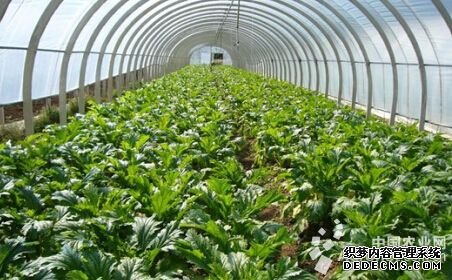
Alongside new entities, new-type socialized service organizations are also gradually changing traditional agricultural production methods. Meidong Agricultural Technology Company in Qihe, Dezhou, has built more than 900 high-standard vegetable greenhouses and rents them to farmers, while itself specializing as a “technical nanny”, guiding farmers through the entire process of standardized production. Local large-scale grower Wang Lanzhong is one of the beneficiaries. He said that the company's technicians provided him with a new ridge cultivation technique. Vegetables formerly planted in furrows are now planted on ridges, which can save 50% of water after planting and also save 60% of pesticides.
The new planting model has given Wang Lanzhong's vegetables a “green” label, and the price is 30% higher. Through service-driven development, the agricultural technology company's sales of agricultural inputs also rose by 60%. Today, this agricultural technology company's service area can already cover several surrounding townships, reaching 42,000 mu, accounting for one-sixth of the county's vegetable planting area.
At present in Shandong, there are already more than 200,000 socialized service organizations of various types like this, covering planting, animal husbandry, aquaculture and other fields. As the service level of these socialized service organizations continues to improve, agricultural products are gradually shifting from the past pursuit of quantity growth to quality optimization and efficiency improvement.
Experts say that Shandong's grain production has already achieved thirteen consecutive increases. A good result is also a new threshold: most land is difficult to continuously improve in yield, and ordinary grain varieties are difficult to sell, low in price and poor in returns, severely restricting farmers' income growth and agricultural and rural development. To cross this threshold, there must be new growth points, and these new growth points come from farmers organizing themselves to venture into the market, from vigorously promoting new technologies and new varieties, from aligning with the market, and from down-to-earth, considerate services delivered to the fields.