Aksu sugar-core apples are back again, still with a sweetness that goes straight to your heart
 |
|
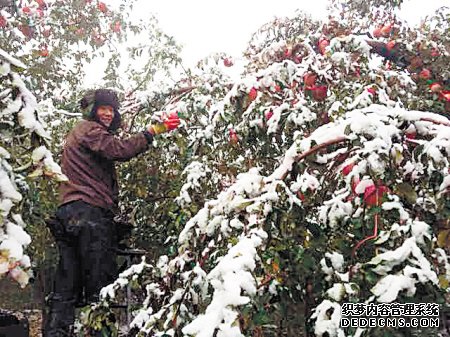
Farmers from the Congzhong Fruit Industry Farmers' Professional Cooperative in Aksu City, Xinjiang, are picking fresh sugar-core apples. All photos are file images.
|
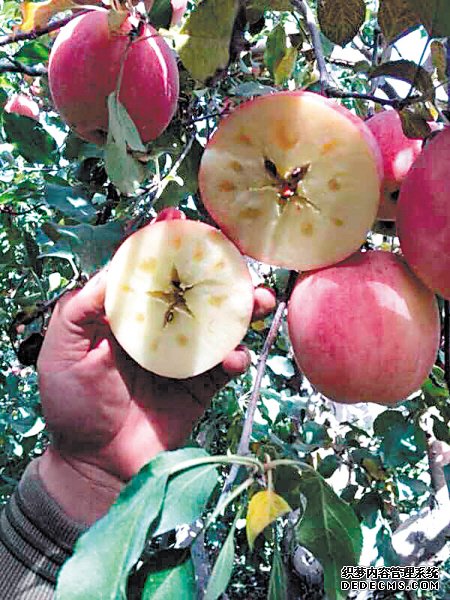 |
| Aksu apples have a glossy color, delicate flesh, and a transparent core. |
Sugar-core apples have a uniquely clear, sweet taste
Aksu apples, also known as Jiali apples, are produced on farms in Aksu, Xinjiang. They are characterized by a smooth skin, glossy color, delicate flesh, and a transparent core, with a rich fruity aroma, deep sweetness, and abundant juice with no grit. Aksu apples are rich in vitamin C, cellulose, and pectin. Sugar-core apples also carry a fruity scent that is more like a floral fragrance. This scent is fresh and elegant, leisurely and intoxicating, not overly rich or cloying. Sugar-core apples have excellent sweetness, with almost no tartness, but they are not cloyingly sweet; rather, they are sweet in just the right way. At first bite, the skin feels slightly sweet-and-sour, and the more you eat, the sweeter it seems, and the more addictive it becomes! Also, authentic sugar-core apples are in short supply, especially toward the end of the year when demand exceeds supply, and they always sell out before the Spring Festival each year. A special reminder: sugar-core apples are best stored at room temperature and should not be kept in an air-conditioned room with the heating on, as high temperatures will melt the sugar core.
Korla fragrant pears are juicy with no grit, richly fragrant, and clear and sweet with plenty of juice. Our fragrant pears are absolutely not waxed, so after receiving them you need to refrigerate them, otherwise they easily turn yellow, especially in places with slightly higher temperatures.
How to identify authentic Aksu sugar-core apples
The person in charge of the Congzhong Fruit Industry Farmers' Professional Cooperative in Aksu City, Xinjiang, told reporters that Aksu sugar-core apples, like apples from Shaanxi and Shandong, are all Red Fuji varieties. The difference is that Aksu has a warm temperate continental climate, with drought and little rain, a long annual sunshine duration, and a large temperature difference between day and night, which favors fruit coloring and sugar accumulation. The sugar in the core of the apple accumulates into a transparent form, creating the world's unique “rock candy core&rdquo.
As Aksu sugar-core apples become more and more well known, imitations have also increased. How should consumers identify them? The person in charge explained that unlike the white flesh of ordinary Red Fuji, the flesh of sugar-core apples is pale yellow, with crystal-clear crystalline formations near the core. “But not every one shows a sugar core. Apples grown on the sunny side have a higher chance of developing a sugar core, while those grown on the shady side may not show an obvious sugar core.” Besides looking at the sugar core, you can also look at the skin. Aksu has little rain year-round and strong windblown sand, so the surface of the apples has a layer of dust; wipe it with your hand and it becomes glossy, with the color distributed in red and yellow patches. Also, sugar-core apples vary unevenly in size, generally squat and plump, with the sunny “shoulder” higher and the shady “shoulder” lower. Red Fuji apples from Shaanxi and Shandong, by contrast, generally have a smooth, beautiful appearance, are mostly pinkish-red, and are uniform in size.
“It is worth noting that the sugar-core apples you receive can be scraped with a knife to produce a little white wax. That is a thin layer of fruit wax the apple grows during its development to prevent insect damage, and it is normal. Authentic Aksu sugar-core apples, due to the severely sandy soil of the producing area, longer sunshine duration than other places, and large temperature differences between day and night, are not only unique in flavor and excellent in sweetness, but also have relatively crisp, tender flesh and relatively thin skin. A very small number of Aksu sugar-core apples develop cracks at the stem joint or the base of the calyx. This is also a very distinctive phenomenon of authentic Aksu apples; it does not mean they have gone bad, so please wash them clean and eat them with confidence.”