-

How to properly store and sun-dry fresh ginseng
Fresh ginseng can be sun-dried directly, without wrapping it in paper. Place it in the sunlight to dry for 1-2 days, turning it 2-3 times a day, and make sure there is good ventilation. This dries out most of the moisture in the ginseng roots. In the traditional processing steps for sun-dried ginseng, after sun-drying the ginseng there is another step called drying, in which the sun-dried ginseng is placed in a specialized
-
Key Techniques and Management Methods for Summer Oyster Mushroom Cultivation
Prepare some corn cobs, sun-dry them for two days, then mix them evenly with wheat bran, carbendazim, lime powder, etc., pile them together for fermentation, turn the pile three times in a row, and when the temperature drops to about 30°C, inoculation can be done. Then put the compost into plastic bags, place them on the mushroom shed at a row spacing of 10*10cm
-
Why should rice seeds be sun-dried before sowing?
Sun-drying rice seeds before sowing can effectively improve the germination rate and germination vigor of the seeds. The main reasons are: 1. Sun-drying seeds can promote after-ripening of the seeds and increase enzyme activity. After rice seeds are harvested, although they are sun-dried, winnowed and cleaned before being stored, because maturity and dryness vary, the air humidity and temperature during storage will also change. If the seeds absorb moisture, respiration becomes vigorous, and nutrients inside the seeds are consumed heavily, which often leads to weakened germination ability and reduced germination vigor. Sun-drying the seeds can enhance the permeability of the seed coat, so that they absorb water evenly during soaking and enzyme activity is increased.
-
Drying Wangtian peppers takes some know-how: master the right method to sun-dry good dried chilies
I. Harvest at the right time. Criteria for harvesting the fruit. The fruit must all turn deep red. In North China, harvesting is generally done from Cold Dew to Frost's Descent. If grown in small arch sheds or with plastic film mulching, harvesting can be done somewhat earlier; if planted late, the harvest period can be slightly postponed, but it must be completed before Frost's Descent arrives. Otherwise, after frost damage, the dried chili products will color unevenly and their quality will be reduced. Wangtian peppers are generally harvested by pulling up the whole plant or cutting the plant. After harvest, lay the pepper plants flat in the field to sun-dry for 3-4 days. During drying, if rain occurs,
-
Loose leaf tea can be dried by sun-drying or oven-drying.
The use of tea began with chewing the fresh leaves of the tea plant, and later developed into boiling the fresh leaves into a soup-like drink; in both cases the fresh leaves of the tea plant were used directly. Before the Tang Dynasty, tea processing was relatively simple: the freshly picked leaves were sun-dried or oven-dried and then stored away. This was the budding stage of the sun-dried green tea process.
-
A Detailed Explanation of the Origin and Development History of Black Tea ⟧2⟧Black tea originated in the Ming Dynasty in the 16th century. During the tea manufacturing process, it was discovered that sun-drying could replace the fixing (kill-green) step
Black tea originated in the Ming Dynasty in the 16th century. During tea manufacturing, it was discovered that sun-drying could replace fixation (kill-green), and after rolling the leaves turned red, thus producing black tea. The earliest black tea production began with Souchong black tea in Chong'an, Fujian. In the Qing Dynasty, Liu Jing's "Pian Ke Yu Xian Ji" records: "At the ninth bend of the mountain there is Xingcun town, where tea experts gather. Tea produced elsewhere in the province such as Shaowu and Jiangxi Guangxin, with black leaves and red soup, locally called Jiangxi Wu, is all privately sold to the various firms of Xingcun." After the appearance of Xingcun Souchong black tea, Congou black tea gradually evolved. In the 1920s, India crushed tea leaves during processing to make broken black tea, and in the 1950s our country also began trial production of broken black tea.
-
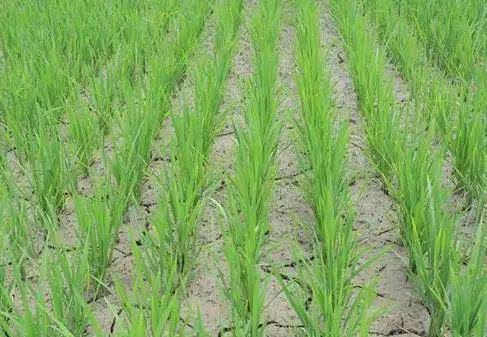
Sun-drying rice paddies has many benefits; how many times of drying is more favorable for rice?
First, because conditions differ from region to region, the situation for drying paddies also varies. However, drying three times is a bit too many; generally, at most two rounds of paddy drying are sufficient for a rice field. Paddy drying is what we common...
-
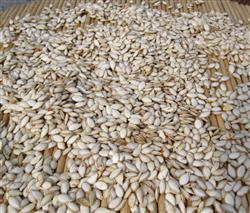
The correct method for harvesting and sun-drying pumpkin seeds
How are pumpkin seeds harvested and sun-dried? Here are the following methods for harvesting and sun-drying pumpkin seeds for reference: 1. Harvesting the pumpkins. Harvest in batches according to the ripeness of the pumpkins, and stack them in batches. 2. After-ripening. The after-ripening of pumpkins is very important for promoting plump seeds and increasing the yield and quality of white pumpkin seeds. Larger pumpkins with better ripeness...
-
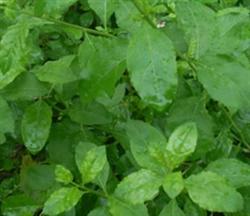
Eight things to avoid when picking and sun-drying goji berries
Goji berry is a perennial deciduous small shrub of the genus Lycium in the Solanaceae family. Its tender shoots and leaves (also known as goji tips) are eaten as a vegetable and can be stir-fried, served cold with dressing, or made into soup. They are nutritious, tasty and refreshing, and are well liked by consumers. Lishui County in Jiangsu Province began introducing and cultivating it in 2002, with the product mainly sold to large and medium-sized cities such as Shanghai, Nanjing and Wuxi...
-
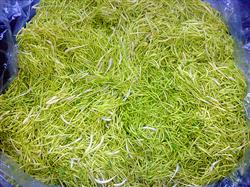
A Detailed Guide to Harvesting and Sun-Drying Honeysuckle
How do you harvest and sun-dry honeysuckle? Here is an introduction. Harvesting and sun-drying honeysuckle can follow the methods below: 1. Harvesting: The harvesting period for honeysuckle is generally in late May, the second flush in mid-July, the third flush around mid-August, and the fourth flush in mid-October. The full bloom of the first flush is relatively concentrated, about 5-7 days, while the second...
条件筛选