Sun-drying rice paddies has many benefits; how many times of drying is more favorable for rice?
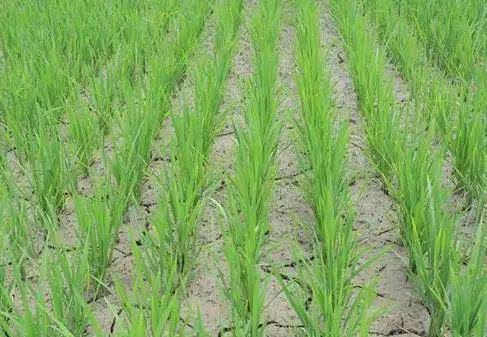
First, because conditions differ from region to region, the situation for drying paddies also varies. However, drying three times is a bit too many; generally, at most two rounds of paddy drying are sufficient for a rice field.
Paddy drying is what we often refer to as rice field roasting, generally carried out during the period from rice jointing to booting, and it plays an important role in rice growth. Do you know why rice paddies need drying? Below, Science Agriculture will share with everyone the issues about paddy drying.
First, what is paddy drying?
Paddy drying refers to a field management activity that must be carried out once rice has grown to a certain stage. In fact, it is simple to understand: it means draining the water from the paddy field and letting the paddy soil dry out.
What are the benefits of paddy drying?
Since rice needs paddy drying, there must be benefits. The ultimate purpose of drying a paddy field is to increase rice yield. Because a paddy field has water for a long time, the oxygen content in the soil decreases. If the rice roots lack oxygen for a long time, it will affect the normal growth of the roots. Proper paddy drying can increase the oxygen content in the soil and promote better growth of rice roots.
Replace with high-definition large image
Second, proper paddy drying can reduce the occurrence of excessive vegetative growth in rice. Paddy drying can promote thicker rice straw and control the upward growth rate of stems and leaves, naturally also improving the rice's ability to resist lodging. In this way, it lays the foundation for high rice yields later.
Third, through paddy drying, the increase of ineffective tillers in rice can be reduced. When the paddy is dried, the excessively rapid development rate of rice can be lowered, thereby achieving the purpose of reducing ineffective tillers. With fewer ineffective tillers, fewer nutrients are lost, and naturally, later on, the spike-forming rate and seed-setting rate of rice can be improved.
Finally, through paddy drying, rice fields can be sterilized and disinfected, reducing the occurrence of some bacterial diseases in rice, and it can also play a certain role in advancing the ripening time of rice.
Replace with high-definition large image
How is paddy drying carried out? How should the timing be grasped?
Paddy drying still has certain operational requirements. In addition, it must be comprehensively considered based on the local rice planting environment, the growth condition of the rice, weather conditions, and many other factors. The operation methods of other regions cannot be completely copied; paddy drying needs to be carried out flexibly according to local conditions.
The time for paddy drying is generally around forty days after rice transplanting, when the rice is generally in the period from the late tillering stage to the young panicle differentiation stage. Paddy drying is generally divided into "light drying" and "heavy drying." Light drying generally requires only two or three days, while heavy drying generally takes about a week.
These two paddy drying methods need to be determined according to the growth condition of the rice and soil fertility. Generally, paddy fields with vigorous growth and strong soil fertility need heavy drying, while paddy fields with relatively weak growth and weak fertility need light drying.
Second, if the weather is hot, dry, and the air humidity is low, paddy drying should be appropriately reduced and the drying time shortened. Conversely, for plots with more rainy and cloudy weather and high humidity, the drying time and frequency need to be increased. In addition, when rice enters the young panicle differentiation stage, the paddy field should be rewatered in time to prevent the development of the rice from being affected.
This is Science Agriculture. You are welcome to add a follow and learn together with us.