-

How to Select a Site and Build an Orchard for Orah Mandarins? Detailed Explanation of the Latest Technical Points
Orah mandarin is a late-maturing hybrid citrus variety, with the advantages of vigorous growth, little winter fruit drop, strong fruiting capacity, and a long fruit-bearing harvest period, and its market season falls right around the Spring Festival, so its cultivation returns are excellent. In China, quite a lot of people grow Orah mandarins, and planning the
-
What month is the suitable planting time for late-maturing watermelons?
Watermelons are delicious and thirst-quenching, and once summer comes, a steady supply of watermelons hits the market. According to certain standards, watermelons can also be divided into three maturity types: early, mid, and late. Which month are late-maturing watermelons planted? 1. Which month are late-maturing watermelons planted? Late-maturing watermelons are generally concentrated in mid-to-late April
-
Detailed Explanation of Key Points for Late-Maturing Watermelon Cultivation Techniques
Late-maturing watermelons are an important source of supplementing the shortage of watermelons in the market around the Mid-Autumn Festival and National Day. Autumn-extended watermelons have the advantages of excellent quality, good taste, low input and high benefits. Now let's learn about its cultivation techniques together with the editor! Late-maturing watermelon planting techniques
-
Late-maturing citrus successfully overwinters, high-quality fruit becomes a hot commodity in the market
Late-maturing high-quality citrus successfully overwinters and becomes a hot commodity
-
Late-maturing varieties come late but sell well
Late-maturing varieties: they come late but sell well
-
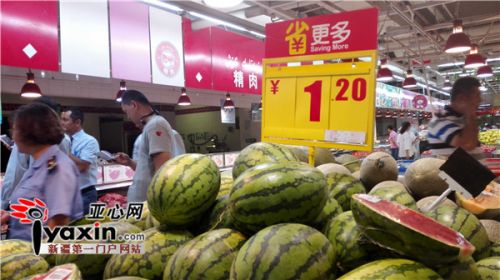
Late-maturing watermelons and Hami melons become hot sellers on the market
**Late-maturing watermelons and Hami melons become "hot favorites"
-
Excellent new late-maturing peach varieties successfully bred in Huaning, Yunnan
The Science and Technology Development Company of Huaning County, Yunnan Province, leased 400 mu of land in Dongjiashan, Ningzhou Town, to establish a high-quality economic fruit science and technology demonstration orchard, screen, breed and trial-plant excellent economic fruit varieties, explore high-yield cultivation techniques for economic fruits, and provide the public with strong seedlings of excellent economic fruits. After six years of breeding experiments, from 54 peach varieties, excellent late-maturing autumn and winter peach varieties suitable for promotion and planting in areas at an altitude of 1600-1800 m were selected and bred, with 350 mu under demonstration cultivation. Excellent autumn and winter peaches
-
A Complete Analysis of the Key Points of Cultivation and Management Techniques for Late-Maturing Peaches
I. Orchard Site Conditions Late-maturing peaches and winter peaches require environmental conditions similar to those of ordinary peaches. In Yunnan, areas at an altitude of 1800-2100 m, with an average temperature of 12°C-15°C, an annual accumulated temperature of ≥10°C of 4000°C-4500°C, annual rainfall of 800-1000 mm, annual sunshine of about 2000 hours, good irrigation and drainage conditions, convenient transportation, gentle terrain, deep soil layers, and sandy loam or light gravelly loam that is loose and fertile with abundant organic matter and a pH value of 5-6.5 can all be planted. II.
-
Introduction to the high-quality late-maturing pear variety Jinshui No. 1
Jinshui No. 1 is a new variety bred by the Fruit and Tea Research Institute of the Hubei Academy of Agricultural Sciences, with the parents Changshilang X Jiangdao. It won awards from the Hubei Provincial and National Science Conferences in 1978, was rated as a high-quality fruit of Hubei Province in 1999, and was designated a key variety for promotion. It has now been promoted for planting in Hubei, Jiangxi, Hunan, Sichuan, Fujian, Chongqing and other provinces and cities, and in southern regions it shows high yield, high quality and strong disease resistance, with promising prospects for development and application. 1. Fruit economic traits: the fruit is round, with an average single fruit weight of 290 grams, and the largest
-
Cultivation Techniques and Key Points for the Red Late-Maturing Pear Hong Anjou
The Hong Anjou late-maturing pear is a new deeply red bud sport variety discovered in Washington State, USA, from the Anjou pear. Shandong Province introduced it in 1997 from the USDA National Pear Germplasm Repository. Cultivation trials in various locations have proven that this variety has strong adaptability, is easy to cultivate, has high fruit firmness, and is tolerant of storage and transport, making it a late-maturing pear variety with relatively good overall traits. The fruit of this variety is gourd-shaped, with an average single fruit weight of 230 grams and a maximum single fruit weight of up to 500 grams. The skin is purplish-red, the fruit surface is smooth with a waxy luster, and the fruit dots are moderately numerous, small, and obvious
条件筛选