-

Grape Ripening Season and Key Points of Hardwood Cutting Propagation Technology
There are many grape varieties with varying degrees of sweetness, and they can also be distinguished by the color of their skins. Generally, everyone prefers large, sweet, seedless grapes. So what season are grapes the fruit of? What are the key points of hardwood cutting propagation technology during cultivation? Let's take a look below.
-
Hardwood cuttings and root sucker propagation are both methods of cutting propagation
Blackberry can refer either to the blackberry plant or to the blackberry fruit. The blackberry plant belongs to the raspberry group (Rosaceae, Rubus genus), is a widely distributed and well-known shrub; it can grow up to 3 m tall and produces soft fruit, namely blackberries, commonly used in desserts, jam, seedless jelly, and sometimes also to make fruit wine.
-
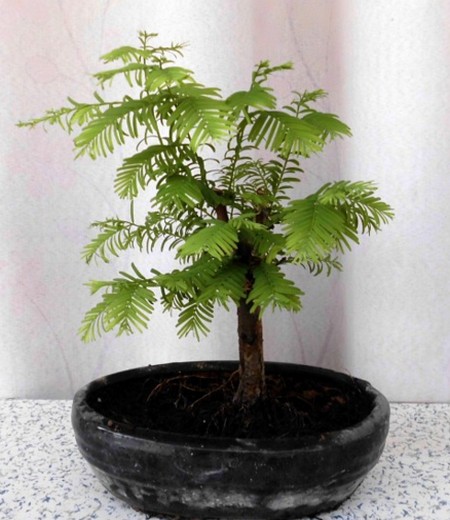
Detailed Explanation of Key Techniques for Hardwood Cutting Propagation of Dawn Redwood
The time for hardwood cuttings of dawn redwood (Metasequoia glyptostroboides) is from mid-to-late March to early April. After preparing the seedbed, insert the cuttings while watering, mainly using the mud-insertion method. Insert 2/3 of the cutting into the soil, leaving 1/3 exposed above ground. After finishing planting one bed, water thoroughly again. One week later, due to the insertion, soil compaction or cracking will occur between the rows of the seedbed.
-
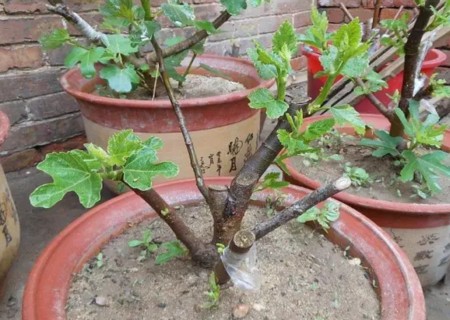
A Detailed Guide to Propagating Figs by Hardwood Cuttings
Figs grow vigorously, with large leaves and a graceful tree form, giving them high ornamental value, so they are often used in garden planting and as household potted plants. Figs can be propagated in many ways, including cuttings, division, and layering. By comparison, cuttings are the most convenient propagation method
-
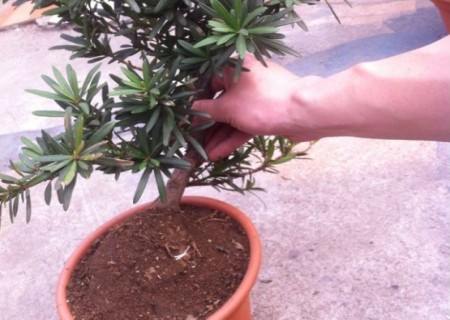
Illustrated Guide to Softwood and Hardwood Cuttage Techniques for Buddhist Pine (Podocarpus macrophyllus)
Good evening, fellow bonsai enthusiasts. I have a bit of free time again today, so I've come back up to discuss with everyone the knowledge of propagating Buddhist pine (Podocarpus macrophyllus) through cuttings. Perhaps, when it comes to propagating Buddhist pine, some enthusiasts grab a hoe and head out to dig up wild mountain-collected stumps, but today this editor is still staying at home practicing basic skills.
-
Semi-hardwood green shoot cutting propagation technique for Schisandra chinensis
In early to mid-June, collect semi-hardwood new shoots of Schisandra chinensis varieties or superior lines as test material for cutting propagation. Generally, it is more suitable to collect cuttings before 10:00 a.m. The cuttings should be 15-20 cm long and more than 0.3 cm thick, retaining the leaves on the middle and upper parts, removing the leaves 3-5 cm above the base (cut end), with the lower cut made on a semi-hardwood node and the cut surface slanted. Soak the cuttings in 0.1% carbendazim solution for 1-2 minutes, shake off the water droplets, then use 1000 mg/kg naphthaleneacetic acid (NAA) or 100 mg/kg ABT
-
Asexual propagation and seedling cultivation method for Schisandra chinensis: hardwood cuttings with young shoots
In early to mid-May, cut 1-year-old branches from the mother tree into 8-10 cm long cuttings, leaving 1 young shoot 3-5 cm long on the upper part; soak the base of the cuttingundefinedundefinedundefinedundefined in 200 mg/kg a-naphthaleneacetic acid for 24 hours, or dip it in 2000 mg/kg a-naphthaleneacetic acid solution for 3 minutes. The formula and treatment method of the upper substrate are the same as for semi-lignified green cuttings, with a thickness of 5-7 cm; the lower layer is about 10 cm thick
-
Hardwood cleft grafting method for asexual propagation and seedling raising of Schisandra chinensis
After leaf fall and before bud break, collect 1-year-old branches as scions; before the ground freezes, lift 1- to 2-year-old seedling stock as rootstock, and store them at low temperature for cleft grafting during the next year's bud break period (or graft in place without lifting the seedlings). Before grafting, soak the scions and rootstocks in clean water for 12 hours. Cut off the bud-bearing portion at the hypocotyl of the rootstock. For scions, choose fully mature branches with a diameter greater than 0.4 cm, cut them to a length of 4-5 cm, keep 1 bud eye, leave 1.5 cm above the bud, and keep about 3 cm below the bud; use a grafting knife to cut down on both sides of the scion bud eye
-
Detailed Explanation of Full-Sun Nursery Technique for Hardwood Cuttings of Dawn Redwood
Dawn redwood (Metasequoia glyptostroboides) cutting propagation mostly uses shading methods. This requires shade netting and daily uncovering and covering of the shade shed. Experimental research on full-sun nursery of dawn redwood hardwood cuttings shows that with appropriate methods, the survival rate generally reaches over 90%. The method is described below: Fine land preparation. The nursery site needs flat terrain, deep soil, and convenient drainage and irrigation. Generally, the land is deep-plowed before winter, and after thawing the soil is broken up fine and leveled flat, with 10 to 15 kg of phosphate fertilizer applied per mu, bed width 1.5 to 1.7 m, bed length depending on the number of cuttings, row spacing 12 to 15
-
Detailed Explanation of Hardwood Cutting Propagation Techniques for Dawn Redwood
The hardwood cutting propagation technique for dawn redwood (Metasequoia glyptostroboides) is as follows: in spring, select 1- to 3-year-old mother trees to take cuttings, or collect scion wood from a cutting orchard; 1-year-old seedling stems and their side branches can also be used as cuttings. Cuttings cut from the tip section and middle section of the scion wood have a higher survival rate. Generally, cuttings are 10 to 12 cm long, and tip sections are cut to 15 to 18 cm long. Before cutting, soak the lower 2 cm of the cuttings in 50 mg per kg of NAA for 20 to 24 hours, or quick-dip in 500 mg per kg of NAA for 3 to 5 seconds; alternatively, soak in 100 mg per kg of ABT rooting powder for
条件筛选