-
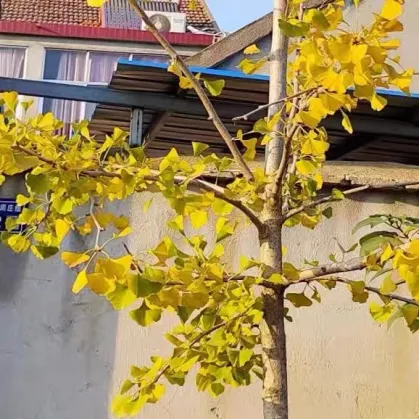
What are the implications and symbols of the ginkgo tree?
The ginkgo tree is a very distinctive ancient tree species. The ginkgo tree is a deciduous tree of the genus Ginkgo in the Ginkgoaceae family. It has a
-
What are the symbolic meanings and effects of the ginkgo tree?
The ginkgo tree is a highly distinctive ancient tree species. The ginkgo is a deciduous tree in the family Ginkgoaceae, genus Ginkgo. Its trunk is straight, with grayish-brown bark that has irregular vertical fissures, and mature trees can reach dozens of meters in height. Its fan-shaped leaves are pale green with long stalks, and in autumn they turn golden yellow like golden fans hanging from the branches, dazzling in the sunlight, with great ornamental value. The ginkgo tree is
-

What are the characteristics and value of the ginkgo tree? How do you care for and manage a ginkgo tree grown indoors as a potted plant?
Today we introduce a "ginkgo" whose leaves are tender green in spring and summer but turn yellow in autumn; after it fruits, the fruit is white, so some people also call it the white fruit tree. In addition, its fruit is rich in substances such as protein, fat and starch, so in traditional Chinese medicine, ginkgo fruit is believed to have effects such as moistening the lungs and stopping coughs, and strengthening the brain and boosting intelligence.
-

How to Plant a Ginkgo Tree: Latest Planting Techniques and Methods Tutorial
The ginkgo tree is an excellent tree species valued for both its fruit and its timber. It has a tall and beautiful form and is also a graceful ornamental tree. Ginkgo has strong adaptability to soil, tolerating acid, alkali and drought, and can live for several hundred years, even over a thousand years; people call it the "gong-sun tree" (grandfather-grandson tree). Its fruit is rich in
-
What are the characteristics of the ginkgo tree? A clear explanation in one article with the latest analysis
The branches and trunk of the ginkgo are tall and straight. The bark is shallowly fissured and light gray when young. As the tree ages, both the fissures and the color gradually deepen. The shape and length of the fissures differ noticeably from tree to tree. They range from linear to intersecting forms, with lengths varying from 40 cm to 100 cm. Seed-grown ginkgo, tree
-
What are the uses of the ginkgo tree? The latest detailed explanation of ginkgo tree uses
The ginkgo tree, also known as the white fruit tree, grows relatively slowly and has an extremely long lifespan. Under natural conditions, it takes more than twenty years from planting to bearing ginkgo fruit, and only after forty years can it produce a large amount of fruit. Therefore, it is also called the "grandfather-grandson tree," carrying the meaning of "the grandfather plants and the grandson eats," and is the old longevity star among trees, called "white fruit" in ancient times.
-
What are the characteristics of the ginkgo tree? Read the latest analysis in one article
The ginkgo tree, also known as the white fruit tree, grows relatively slowly and has an extremely long lifespan. Under natural conditions, it takes more than twenty years from planting to fruiting, and only after forty years can it bear fruit in large quantities. Therefore, it is also called the "grandfather-grandson tree," meaning "planted by the grandfather and eaten by the grandson." It is the old longevity star among trees. The ginkgo tree has ornamental
-
How do you care for the latest potted ginkgo tree?
The ginkgo tree is an ancient tree species unique to our country, also known as the white fruit tree, gongsun tree, duck-foot tree, etc. It is a deciduous tree of the Ginkgoaceae family, genus Ginkgo. Its form is elegant and beautiful, and it is often made into bonsai for appreciation. The resulting bonsai has a thick trunk, curved branches, exposed roots, a unique shape, and is vigorous and unrestrained.
-
A Complete Analysis of the Latest Growing Regions and Distribution of the Ginkgo Tree
Ginkgo is a deciduous tree of the genus Ginkgo in the family Ginkgoaceae, and is the oldest relict plant among the gymnosperms left over after the Quaternary glaciation, growing relatively slowly with an extremely long lifespan; under natural conditions it takes more than twenty years from planting to bearing ginkgo nuts, and only after forty years can it bear fruit in large quantities
-
A Detailed Guide to the Latest Methods for Planting Ginkgo Seeds
Ginkgo is the oldest relict plant among the gymnosperms left over after the Quaternary glacial movement. Seed propagation is mostly used for large-scale landscaping seedlings or for making clump-style bonsai. Usually, after harvesting the seeds in autumn, the outer seed coat is removed, and the seeds with the fruit coat still attached are sun-dried. In the same year
条件筛选