-

How to manage cotton during the flowering and boll-setting stage? Apply flowering and boll fertilizer heavily, use chemical regulation and pruning to prevent premature senescence
The flowering and boll-setting stage of cotton is the peak period of fertilizer and water demand and the critical period for yield formation. This article introduces the topdressing rate of flowering and boll fertilizer, the standards for irrigation and drainage, the dosage of mepiquat chloride for chemical regulation, the timing of pruning and topping, and pest and disease control techniques, to help cotton growers set more bolls and prevent premature senescence and boll rot.
-
Weed control in summer sesame fields: master three stages and use the right herbicides to prevent weed infestation
The seedling stage of summer sesame coincides with high temperatures and frequent rain, making weed infestation likely. This article explains the dosage and methods for three stages: soil-closing treatment after sowing but before emergence, non-selective paraquat weed control before emergence, and selective quizalofop-p-ethyl weed control after emergence, helping you effectively control grass weeds.
-
How to Read Air-Assisted Sprayer Basic Parameters: Choose the Right Model to Save Chemicals and Labor
Air-assisted sprayers are commonly used machinery for pest and disease control in orchards and field crops. This article explains the working principle of air-assisted sprayers, the meaning of basic parameters such as tank volume and fan air output, and key points for selection and use, helping growers choose the right model for effective chemical savings, labor savings, and good control results.
-
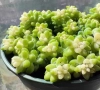
Is That Succulent a Chemically-Induced Variegation? Here Are a Few Ways to Tell
Do you always get drawn to those super-vivid variegated succulents when browsing the succulent market? Don't rush to buy! Many succulents that look absolutely gorgeous may be chemically-induced variegations. Today I'll walk you through, step by step, how to tell whether a succulent is a chemically-induced variegation, so you can avoid falling into the trap! Characteristics of chemically-induced variegated succulents 1. Color The colors of chemically-induced variegations are very strange - the white looks like wall paint, the yellow is bright
-
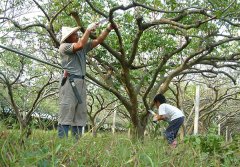
No pesticides, no chemical fertilizers: Lin Yilong's 16 years of farming with stable income
Lin Yilong's home sits on the mountainside of Luye Highland, where time paces between the Coastal Range and the Central Range. In the morning, he watches the mist drift through the Beinan River Valley; at night, he observes the moon wax and wane, letting the stars lull him to sleep. Dulan Mountain and Luye River sing in harmony, a performance of "The Four Seasons" he never tires of hearing.
-
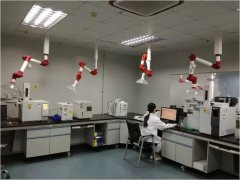
Japanese Tea Exceeds Pesticide Limits? Japan Crop Protection Association Rebuts Weekly Magazine Report
The Crop Protection Association rebutted eight points in the weekly magazine article and explained its views. The first point is the article's description of residual pesticide levels: one should not be alarmed simply because they are below domestic residue standard values. The residue pesticide standard values for Japanese tea are currently the highest in the world
-
What chemicals are used to kill edible mushroom pathogens in mushroom sheds?
Which chemicals are used to kill edible mushroom pathogens in mushroom sheds?
-
Preparation and use methods of chemical disinfectants commonly used in edible mushroom production
Preparation and use of chemical disinfectants commonly used in edible mushroom production
-
Chemical pesticides halved in ten years? Only down 1.7% in 3 years; plant doctors to double next year
Has "halving chemical pesticides in ten years" become just a slogan? Only down 1.7% in 3 years; Council of Agriculture: number of plant doctors to double next year
-
40 Years of Weed Management: Chiang Yung-cheng of the Agricultural Chemicals and Toxic Substances Research Institute Retires but Stays Active, Sharing Her Wisdom
Weed Queen 01: From "Spray It Dead" to Falling in Love with It - Chiang Yung-cheng of the Agricultural Chemicals and Toxic Substances Research Institute Retires but Stays Active, Revealing 40 Years of Weed Management Wisdom
条件筛选