-

How to manage sesame during the capsule-setting stage? A detailed explanation of the latest management key points
The capsule-setting stage of sesame is a period when its vegetative growth and reproductive growth advance side by side, and management during this period is the key to achieving high yields. So what measures should be taken during the capsule-setting stage of sesame to increase yield? Follow the editor to take a look at the management key points for the capsule-setting stage of sesame.
-
When is the best time to harvest Gastrodia elata seed capsules?
After the Gastrodia elata flower is pollinated, the ovary gradually enlarges, and the capsule is light brown or pink, elongated ovoid, with 6 longitudinal ridges. Each capsule contains 10,000 to 50,000 seeds, up to a maximum of 80,000 seeds. The seeds are tiny. They are powdery, and their size and shape are difficult to distinguish with the naked eye
-
Occurrence and Control Methods of the Sesame Capsule Borer
The sesame capsule borer is one of the major pests of sesame. It mainly damages sesame. It commonly occurs in China's major sesame-producing areas such as Henan, Hubei, Anhui and Jiangxi, generally reducing yields by 10%-20%, and by up to 30% in severe cases, significantly lowering sesame quality. In response to its occurrence, a
-
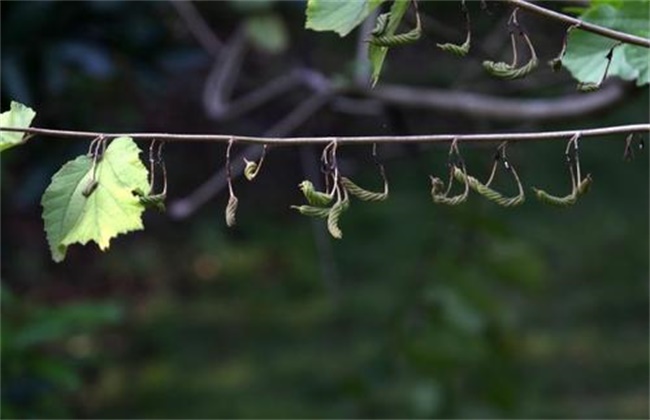
How to manage sesame during the capsule-setting stage? These key points you need to master
Key management points for sesame during the capsule-setting stage
-
-
Key Techniques for High-Yield Cultivation of Dense-Capsule Sesame
Dense-capsule sesame Yizhi No. 1 is one of the higher-yielding types of sesame today. It is drought-tolerant and lodging-resistant, with extremely dense capsules, 3 to 7 capsules per leaf, layer upon layer so thick that the stems are hidden from view. The seeds are pure white, with an oil content of over 55%. The growth period is 110 days for spring sowing and 85 to 90 days for summer sowing. It yields 100 kg to 150 kg of sesame per 667 sq m, and up to 220 kg per 667 sq m in high-yield fields. 1. Land preparation and fertilization: Before plowing, apply 1000 kg of farmyard manure, 40 kg of superphosphate, and 10 kg of potassium sulfate or potassium chloride per 667 sq m
-
When is the best time to harvest Gastrodia elata capsules
After the flowers of Gastrodia elata are pollinated, the ovary gradually enlarges, and the capsule is light brown or pink, elongated ovoid, with 6 longitudinal ridges. Each capsule contains 10,000 to 50,000 seeds, with a maximum of 80,000 seeds. The seeds are tiny. They are powder-like, and their size and shape are difficult to distinguish with the naked eye. Observed under a microscope, mature seeds are spindle-shaped, 0.6 to 1 mm long and 0.14 to 0.2 mm wide. The embryo is 170 to 180 micrometers long. The seed coat is white and semi-transparent, wing-like, composed of parenchyma cells, with no endosperm inside; the embryo is light brown or dark brown. Those without dark brown color are immature seeds, called blighted seeds. The transverse and longitudinal sections of mature Gastrodia elata seeds appear elliptical and circular, respectively, under a microscope.
-
Detailed Explanation of the Production and Application Technology of Shiitake Mushroom Capsule Spawn
At the end of the last century, Japan invented capsule spawn and applied it on a large scale to log-cultivated shiitake mushrooms. In 1999, this technology was introduced to our country. After years of research, the Qingyuan County Edible Fungi Research Center overcame the technical difficulties of applying capsule spawn to substitute-material-cultivated shiitake mushrooms and achieved domestic production. Because capsule spawn has the advantages of saving labor, saving effort and a high survival rate, it is very suitable for large-scale production. In the past two years, the amount used has doubled and redoubled, and tens of millions of bags have been promoted and applied so far. It is estimated that in a few years this technology will become common in our country.
-
-
条件筛选