-

What are the alternative names of Chonglou? Latest names summarized
Chonglou is the dried rhizome of Paris yunnanensis or Paris polyphylla, plants of the genus Paris in the Liliaceae family. It has the effects of clearing heat and detoxifying, reducing swelling and relieving pain, and cooling the liver to calm fright. It is often used for boils and swollen painful sores, sore swollen throat, snake and insect bites, bruises and traumatic pain, convulsions and spasms, and so on. Below we will
-
What are the latest propagation methods for Chonglou (Paris polyphylla)?
Chonglou is the dried rhizome of the Liliaceae plant Yunnan Chonglou (Paris polyphylla var. yunnanensis) or Qiyeyizhihua (Paris polyphylla), with effects of clearing heat and detoxifying, reducing swelling and relieving pain, and cooling the liver and calming convulsions. It has high planting prospects. The propagation methods generally include seed propagation and rhizome propagation. Below we will
-
What medicinal herb is Chonglou? The latest answer is here
Chonglou is also known as Hua Chonglou, Qiye Lian, Tiedengtai, etc. Medicinal Chonglou generally refers to the two species recorded in the Chinese Pharmacopoeia, Yunnan Chonglou and Qiye Yizhihua. It grows in shaded, damp places under mountain forests or in grass along roadsides. In China, it is distributed in Yunnan, Guizhou, Guangdong, Guangxi, Hubei and other places
-
What should be noted when planting Chonglou (Paris polyphylla)? A detailed explanation of the latest cultivation points
None of us is unfamiliar with the term Chonglou, because in a very popular TV drama a few years ago there was a character named Chonglou, and everyone felt very sorry for him, but what I am introducing to you today is not this Chonglou. Today I want to
-
What Plant Is Chonglou (Paris polyphylla)? A Detailed Guide to Growing Chonglou
I believe friends who have watched Chinese Paladin 3 are no strangers to Chonglou. In fact, almost all the names in Chinese Paladin 3 are names of traditional Chinese medicines. Chonglou is no exception. Today, the editor will take everyone to get to know what Chonglou is. How should Chonglou be grown? Below
-
A Detailed Guide to Paris polyphylla Planting Techniques and Management Methods
Paris polyphylla, also known as Chonglou, is a medicinal herb. It is commonly used for boils and carbuncles, sore throat, snake and insect bites, bruises and injuries, and convulsions. So, what are the planting techniques for Paris polyphylla? 1. Planting time: Paris polyphylla is generally planted in late April, in a well-prepared field, make beds 1.3 m wide, then open horizontal furrows on the beds, with a furrow spacing of 22-26 cm and a furrow depth of 7-10 cm, and plant 1 tuber every 7-10 cm, with the bud pointing upward.
-
What are the planting time and harvest period for Paris polyphylla (Chonglou)?
Summary Seed sowing: generally carried out in January each year; before sowing, soak the Paris polyphylla seeds in cold water for 24 hours, then mix with plant ash and sow, placing about 2-3 seeds per hole. Seedling transplanting: generally carried out in April each year, and a dry location with a water source needs to be selected.
-
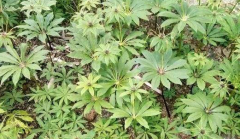
How to grow Paris polyphylla (Chonglou) well? Introduction to planting techniques and cultivation management
Paris polyphylla (Chonglou) is a relatively common and relatively frequently used traditional Chinese medicine, mainly used for snake and insect bites, and for treating conditions such as sore and swollen throat. Because this medicinal herb can often be used, the demand is relatively large, so many people grow it. Do you know how to grow it
-
Paris polyphylla (Chonglou) cultivation techniques and conditions, answers to common questions for beginners
Common questions for beginners growing Paris polyphylla
-
When is the planting time for the medicinal plant Paris polyphylla (Chonglou)?
Paris polyphylla grows on hillside forests and in the shaded, moist areas of thickets. It likes warmth, moisture and shade, but is also cold-resistant and drought-tolerant; it fears frost and direct sunlight. The average annual temperature for growing it is 13-18°C. Sandy soil and loam with a relatively high content of organic matter and humus are both suitable for planting, and riversides, ravine edges and shaded hillsides are especially suitable.
条件筛选