How to grow Paris polyphylla (Chonglou) well? Introduction to planting techniques and cultivation management
Paris polyphylla (Chonglou) is a relatively common and relatively frequently used traditional Chinese medicine, mainly used for snake and insect bites, and for treating conditions such as sore and swollen throat. Because this medicinal herb can often be used, the demand is relatively large, so many people grow it. Do you know how to grow Paris polyphylla?
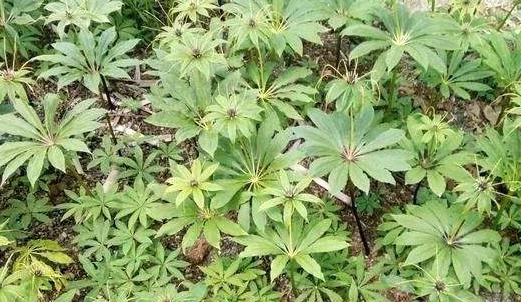
Introduction to Paris polyphylla planting techniques and cultivation management techniques:
1. Site selection and land preparation: The place chosen for planting Paris polyphylla should be in a shaded area with a high degree of cover. Paris polyphylla is a shallow-rooted plant, the plant grows slowly, and it has relatively high requirements for soil. Therefore, the soil for planting Paris polyphylla should be loose and porous, with rich organic matter content.
2. Seedling raising: Choose Paris polyphylla seeds that are plump, free from the threat of pests and diseases, and not moldy or deteriorated. One week before sowing, use a 0.5% carbendazim solution to disinfect the soil. Sowing can be done by broadcasting or dibbling. After sowing is completed, cover with a layer of decomposed leaves, then irrigate thoroughly. Remove weeds promptly when found. During the cultivation process, the covering can be appropriately reduced to increase light.
3. Timely transplanting: In the winter of the 3rd year, when the adventitious buds of Paris polyphylla form, dig out the seedlings. The best transplanting season is winter. Make sure to transplant with soil, and ensure that the terminal buds and fibrous roots are not damaged, so as to increase the survival rate.
4. Do a good job in field management work:
1. Intertillage and weeding: After Paris polyphylla is planted, do a good job in intertillage and weeding. Focus on shallow intertillage to avoid damaging the root system by tilling too deep. Intertillage and weeding should be combined with earthing up, and fertilizer should be applied at the proper time to ensure that Paris polyphylla overwinters safely. During weeding, avoid damaging the root system and underground rhizomes of Paris polyphylla, so as not to affect its normal growth.
2. Scientifically do a good job in water and fertilizer management: There is relatively more rain during the growth period of Paris polyphylla, so irrigation is usually not needed. During periods of concentrated rainfall, do a good job in field drainage. Paris polyphylla needs about 2 topdressings per year, once in spring and once in winter each year.
3. Do a good job in pest and disease control: The main ones include root rot, leaf blight, cutworms, and white grubs. When the incidence in the field reaches the control threshold, a 500-fold dilution of carbendazim or a 200-fold dilution of quicklime can be used for root drenching to control Paris polyphylla root rot. For Paris polyphylla leaf blight, a 200-fold dilution of Bordeaux mixture can be used for field spraying, which has a very good control effect. For cutworms and white grubs, 20 mL of 2.5% deltamethrin emulsifiable concentrate can be mixed with 50 kg of water for field spraying, with a significant control effect.