-

How to care for an old bougainvillea trunk so it blooms abundantly? Control light and temperature like this
Gardeners who grow bougainvillea know that once an old trunk is well established, it bursts into glorious bloom all over its branches when it flowers, so impressive! But if you want the old trunk to grow strong and bloom vigorously, you need to get the details right, including light, watering, fertilizing and pruning, and especially pest and disease prevention in advance. How exactly to do it? Let's go through it bit by bit. Light and temperature:
-

Phalaenopsis Can Be Grown in Water: A Detailed Guide to Water Culture Methods and Precautions
Someone asked: "Can Phalaenopsis be grown in water?" Actually, this is super simple, and the answer is yes! Don't think Phalaenopsis can only be grown in soil; water culture is actually cleaner and more worry-free, and it looks great placed at home. Why recommend water culture? When growing in soil, too much watering causes root rot, and too little causes dry tips, always making people nervous; water culture is different
-

How to choose affordable alternatives to trendy houseplants? These 3 pairs are best for lazy care
Lately, when you scroll through Xiaohongshu or Douyin, are you always tempted by all kinds of trendy houseplants? Things like "the must-have areca palm for an Instagram-style living room," "all the trendy bloggers are growing fiddle-leaf figs," "the mood-boosting bird of paradise." Seeing those glossy leaves in the photos, arranged at home in such a classy and soothing way, you can't help but want to place an order? Don't rush to pull out your money just yet! Quite a few trend
-

Pepperwood and Fragrant Pistacia Are Not the Same Thing: 3 Tricks to Tell Them Apart Easily
Recently someone asked: "I bought a fragrant pistacia online, why does it seem more and more off the longer I grow it?" Most likely you got cheated -- nine times out of ten you bought a pepperwood! These two look so much alike, and sellers love to mix them up, especially at the seedling stage; if you don't look carefully, you really can mistake one for the other. Today I'll teach you 3 tricks to tell them apart, so you'll never
-
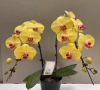
Root rot in Phalaenopsis (moth orchid) after repotting: should you trim the roots and disinfect, or repot again?
I believe many people who grow Phalaenopsis have run into the frustrating problem of root rot after repotting. You meant to give the plant a comfortable new environment, but instead the roots ran into trouble. Watching a once-vigorous Phalaenopsis gradually go limp is enough to make anyone anxious. In fact, as long as you deal with it promptly and adjust your care routine, there is a good chance the Phalaenopsis will recover.
-
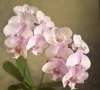
Sphagnum moss for Phalaenopsis needs replacing after long use: how beginners can clean out old moss, choose new moss, and solve yellowing leaves after repotting
Growers of Phalaenopsis know well that sphagnum moss becomes compacted and loses nutrients after long use, and only by promptly replacing it with fresh sphagnum moss can the roots breathe and the plant grow more vigorously. But changing the sphagnum moss is not as simple as just swapping the growing medium: you must first clean out the old sphagnum moss thoroughly, then give the roots a "trim + disinfect" treatment, and finally plant it properly with new sphagnum moss. Every step has its finer points.
-
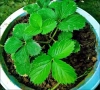
How to choose fruits to grow on your balcony in autumn? Recommendations for cold-tolerant crops that suit small spaces
Once the autumn wind starts blowing, the weather gradually cools down, and the period from September to November is the perfect time to set up a little "orchard" on your balcony! Don't assume that a small balcony means you can't grow fruit trees. In fact, if you choose the right crops, not only will your balcony turn lush and full of life, but once the fruit ripens you can pick and eat it, and every bite is full of fresh sweetness,
-

Can Phalaenopsis aerial roots be buried in sphagnum moss without being prone to dying?
Those aerial roots that Phalaenopsis sends out from beside its leaves - can they actually be buried in sphagnum moss? It always feels awkward to just let them dangle outside, but I'm also afraid that burying them might end up killing the plant. First, you need to understand that Phalaenopsis aerial roots are not ordinary roots. If you look closely, you'll find that most of them are green or
-

Can Venus flytraps really catch insects, and are they suitable for growing indoors?
Speaking of the Venus flytrap, plenty of people are probably like me - the first time you see one, it feels novel: this thing looks like a little pair of tongs, can it really catch insects? And is it reliable to keep one indoors? When a Venus flytrap catches insects, that is no bluff - it genuinely has this ability. Look at its leaves: the two lobes at the tip join together, and the edges carry a ring of small spines, just like a mini bear trap. On the inside of this trap there are several thin
-

What are the differences between growing plants in the south and the north? Are the indoor flowers suitable for growing in autumn in the south the same as the indoor plants suitable for growing in autumn in the north?
Indoor plants in autumn in the south and autumn in the north - similar, yes, a bit alike; different, yes, the differences are huge. It is just like how people in the south and north dress in autumn: in the south you might still be wandering around in short sleeves, while in the north people have already started pulling on sweaters, so the "survival needs" of plants naturally differ too. The most intuitive difference is temperature. In the south
条件筛选