-

The Mopan jujube is an ornamental tree suitable for courtyard planting
Aliases: Mozi jujube, Hulu jujube (Hebei), Yaohulu jujube (Gansu). It is fairly widely distributed; it is cultivated in places such as Dali in Shaanxi; Qingyang in Gansu; Jiaohe, Qingxian, Xianxian, Quyang, Daming and Weixian in Hebei; and Leling, Wudi and Xiajin in Shandong, but the quantity is very small, mostly planted scattered around the four sides [of homes and fields]. It has a long history of cultivation. The tree is vigorous, relatively large, with medium-strong trunk dominance; the crown is a natural semicircle and the tree posture is open. A 23-year-old tree: trunk height 1.1 m, trunk circumference 60 cm, tree height 7.35 m, crown diameter about 7 m. The main trunk is grayish brown, with deep bark cracks
-
How to choose a mushroom yard for shiitake log cultivation
Shiitake log cultivation -- choosing a mushroom yard. Artificial log cultivation of shiitake in China began around 1313 AD, when Wang Zhen's "Agricultural Treatise" recorded the artificial cut-flower method of producing shiitake. This method continued to be used until the 1960s, and only with the spread of the new pure-mycelium inoculation technique did shiitake production achieve new development. The old cut-flower method involved cutting many notches into tree trunks so that shiitake spores from nature could naturally invade, inoculate and grow into shiitake. This extensive cultivation method and production process were relatively simple and required no
-
A Complete Guide to Schisandra Cultivation Techniques in the Courtyard
Growing Schisandra in courtyards and on vacant land in front of and behind houses can not only increase economic income and solve the problem of insufficient land, but also relieve summer heat, provide shade and coolness, green the courtyard, and beautify the environment. Whether in urban or rural homes, factories, schools, offices, and other institutions, Schisandra can be grown in courtyards. This is a very promising and creative project. 1 Cultivation Characteristics 1.1 Rational Use of Space, Convenient Management Schisandra is a vine fruit tree that can extend its fruiting with the help of trellises, making full use of space. In courtyards, it is very suitable for planting.
-
Which peach and apricot varieties are suitable for courtyard planting?
Okubo Okubo originated in Japan and is now the main peach cultivar in North China. The fruit is nearly round, with an average single fruit weight of 220 g. The fruit apex is round and slightly concave, the suture is shallow and fairly distinct, the two sides are fairly symmetrical, and the fruit shape is uniform. The ground color of the skin is light greenish yellow, with red streaks. The flesh is milky white, with red on the sunny side, fine and soft in texture, juicy, with few fibers, aromatic, and freestone. The soluble solids content is 12%, and the quality is excellent. In the Beijing area, the fruit is harvested in late July. The fruit development period is 100 days. This
-
Detailed Explanation of Schisandra chinensis Courtyard Cultivation Techniques
In recent years, our county has explored four cultivation models for the artificial cultivation of Schisandra chinensis, namely cultivation under wild shrub forests, cultivation under artificial forests, open-field bare-land cultivation under full sunlight, and courtyard cultivation. Looking at it now, the best results have come from bare-land cultivation and courtyard cultivation, especially courtyard cultivation, which is small in scale, low in investment, and easy to manage, and has achieved very good economic benefits. We surveyed several farming households: a courtyard of less than half a mu can harvest more than 200 jin of dried Schisandra chinensis fruit each year. At the current market price of 60 yuan per market jin, the income can reach more than 12,000 yuan
-
Schisandra cultivation in Meixi courtyards proves successful
The reporter learned from the Meixi District Agriculture Committee that Meixi District resident Liu Shijun has achieved initial success in cultivating Schisandra chinensis in his courtyard. After nearly 4 years, he has explored a path to prosperity through courtyard cultivation of Schisandra chinensis. Led by Han Zhenyu, a staff member of the Meixi District Agriculture Committee, the reporter found resident Liu Shijun's home in Donglin Committee. On a plot of less than 4 mu, long trellises stood, covered with Schisandra chinensis. According to Liu Shijun, he began cultivating Schisandra chinensis in his courtyard unintentionally. Because he had earlier established a wood industry limited company, the company
-
Detailed Explanation of Cutting Propagation Methods for Japanese Yew in Courtyard
Japanese yew, also known as zi shan or chi bai song, is a precious medicinal and ornamental tree species. The taxol it contains is the most effective anticancer drug in the world today. It stays evergreen year-round, and its peculiar red fruits contrast beautifully with the green leaves, giving it an elegant, refined look with strong ornamental value. Japanese yew can also release various alkaloid gases that kill bacteria and purify the air, providing certain health benefits. It has broad prospects for development in landscaping, bonsai making, and creating green indoor spaces. The author conducted cutting propagation experiments in a courtyard to cultivate seedlings for bonsai and afforestation, and now summarizes the cutting propagation
-
Courtyard Cultivation Methods and Technical Key Points for Chinese Orchids
Many orchid growers use courtyards as orchid sites for orchid cultivation. The advantage is that it is close to the ecological environment of the orchid's native habitat, which is beneficial to the growth and development of the orchid plants. The disadvantage is that light, temperature, moisture, and wind force are not easy to control, and the plants are prone to natural disasters, pests, and diseases, which to a certain extent restricts the growth of the orchid plants. Therefore, the following key problems must be solved with emphasis: Light. Orchids are semi-shade plants. They cannot do without sunlight, but strong sunlight is also harmful. In winter and spring they need full light, while in summer and autumn strong direct light must be blocked. If the courtyard faces south, move the orchid plants to the front of the house in winter and spring, and to the foot of the south wall in summer and autumn. If it faces north, move them to the foot of the north wall in winter and spring, and to the front of the door in summer and autumn. In summer and autumn, shade nets must be used for shading, and the shading degree should be no less than 70%. If conditions permit, climbing plants such as grapes, loofah, and chayote can also be planted in the courtyard in summer, which can both shade and cool the orchids and provide fresh melons and fruits for eating.
-
What herbicide is used to control rice barnyardgrass? Rongjie is a highly effective herbicide.
Rongjie is a rice field herbicide newly developed by Dow AgroSciences of the United States, with penoxsulam (25 g/L oil suspension concentrate) as its main ingredient. Years of trials and demonstrations have proven that Rongjie is particularly outstanding in controlling rice barnyardgrass, a vicious weed in paddy fields in Northeast China. In the rice fields of the Fushun area, there are two types of barnyardgrass: water barnyardgrass and rice barnyardgrass. Water barnyardgrass has no auricle or ligule, while rice barnyardgrass, though also lacking an auricle and ligule, has fine hairs on the internodes between the leaf and leaf sheath. In recent years, after conventional barnyardgrass-killing herbicides were applied in rice fields, water barnyardgrass has been effectively controlled,
-
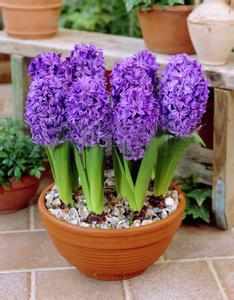
A Detailed Guide to Overwintering and Keeping Warm Garden Flowers in Home Courtyards
At present, most families with courtyards like to plant grass and grow flowers in their courtyards. Some flower varieties introduced from the south have poor cold tolerance and mostly need cold protection during the winter. Generally speaking, open-ground cultivated herbaceous flowers, perennial flowers and some nursery stock are highly adaptable, such as chrysanthemums, stock, peonies, Chinese roses, etc.
条件筛选