-

What does governance-driven drought teach us
In recent years, field surveys have often revealed the "last mile" problem: the state invests trillions of yuan in rural areas every year, building large water conservancy facilities, roads connecting villages, rural libraries and agricultural technology service stations, providing farmers with infrastructure and public services
-
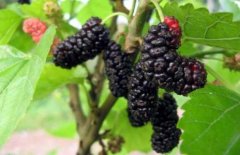
What nutrients do mulberry branches and mulberries each contain?
It is said that the mulberry tree is a treasure from top to bottom, so let's take a look at what functions the mulberry tree actually has and what nutritional value it offers. The bark and roots of the mulberry tree can be used in traditional Chinese medicine, known as mulberry white bark and honey-processed mulberry white bark; the leaves, dried and ground into powder, can also be used as medicine. The unripe fruit and the green branches of the mulberry tree contain a white latex, which may be slightly toxic and irritating. In addition, the pollen of the male flowers is relatively light and easily inhaled into the lungs, so individuals sensitive to it need to take care. The mulberry tree prefers fertile, well-drained loam, but can grow in a variety of soil types, with a pH of 5.5 to 6.5. Waterlogged areas should be avoided. The mulberry tree needs an average of about one inch of rainwater or irrigation per week; especially when watering is insufficient during the dry season, it may cause fruit drop. Iron, zinc, magnesium, barium, copper, and boron are the trace elements it needs, and organic fertilizers containing these elements can be purchased for use.
-
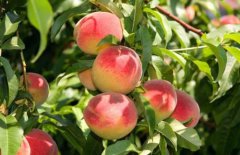
Five major peach variety characteristics: firm-fleshed peach, yellow peach, honey peach, nectarine, flat peach
Peaches are a fairly common fruit in our daily life, and we have also heard of peach tree grafting techniques. So how many peach varieties do you know? Do you recognize the peach varieties introduced below? 1. [Firm-fleshed peach] Firm-fleshed peach, also called crisp peach, is a common edible peach variety on the market. Its flesh is relatively firm, and even after ripening the flesh remains crisp, firm and dense. This kind of peach tastes quite good, but has relatively little juice.
-
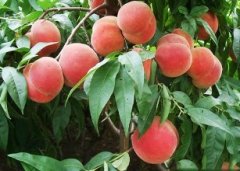
What Is the Sweetest Peach Variety in Japan: Hana Yome, Hakuhō, and Shimizu Hakutō Flavor and Harvest Periods
Okayama Prefecture is known nationwide as the hometown of "Momotarō," and the peach blossom has also become Okayama Prefecture's "prefectural flower." The grafting time and method for peach trees in Japan differ from the grafting time and method for peach trees in our country. Peach cultivation in Okayama Prefecture began in Meiji 8, after
-
A detailed guide to bowl lotus planting methods, teaching you daily management step by step
In the height of summer, many summer plants attract attention. The bowl lotus is currently one of the more common plants with relatively high enthusiasm for growing, so what are the planting methods for bowl lotus? How do you carry out daily management? Planting methods for bowl lotus 1. Soil selection Although bowl lotus
-
What Tree Species Are Used for Grafting Peach Trees? A Detailed Guide to Timing and Techniques
Peach trees generally refer to the peach, a plant in the rose family (Rosaceae), a deciduous small tree whose fruit can be eaten. It is widely cultivated in our country. So what trees can be grafted with peach trees? When to graft? What are the techniques? 1. What trees can be grafted with peach trees? Peach trees can
-
What is the difference between Caodoukou and Caoguo? Teach you to easily tell the two apart
The names Caodoukou and Caoguo are so similar that many people are quite confused about how to tell the two apart before they have seen the actual plants, and may even be fooled by unscrupulous merchants the first time they buy them. So where exactly is the difference between Caodoukou and Caoguo? 1. Different genus and species
-
What is the difference between reed and grass? Teach you a quick way to tell them apart
When reed is mentioned, everyone is surely familiar with it. Its stems can be used to make mats and brooms, and reed flowers can be used as quilt and pillow filling to provide warmth; they can also be used in flower arrangements and have high ornamental value. So what is the difference between reed and grass? 1. Reed and grass
-
What is the difference between crabapple flowers and peach blossoms? A quick guide to tell them apart
When crabapple flowers are mentioned, everyone is surely familiar with them. They not only have high ornamental value but are also easy to grow, so many people like to keep a pot at home. However, because they look very similar to peach blossoms, many people mistake them for the same plant. In fact, they are not. So what is the difference between crabapple flowers and peach blossoms
-
What is the difference between moss rose and chrysanthemum? Teach you to easily tell the two flowers apart
Moss rose, also known as pine-leaf peony and purslane, prefers a warm, sunny and dry environment; its flowers open in sunlight and close in the early morning, evening and on cloudy days, hence the names "moss rose" and "noon flower." So, what is the difference between moss rose and chrysanthemum? 1. Moss rose and chrys
条件筛选