-

Going out for 7 days over National Day, what if your flowers die of thirst? 3 automatic watering methods for emergencies
You want to go out and have fun during the National Day holiday, but just thinking about your flowers at home with no one to water them gives you a headache - especially since summer has just ended, some flowers haven't recovered yet, and a few days of thirst will definitely make them wilt! Today I'll teach you a few super practical "automatic watering tricks", all made with common household materials, no need to spend big money, just 10 minutes before you leave, and when you come home
-

Stop Watering Your Phalaenopsis the Same Way in Autumn as in Summer, or Your Good Intentions Will Do Harm
"Can I just keep using my summer watering method for my Phalaenopsis in autumn?" Honestly, every time I see this question, I worry for the orchid. A Phalaenopsis in summer and one in autumn are like two people in completely different states: in summer it needs to "quench its thirst," while in autumn it needs to "stay alive." If you keep watering the old way, the roots will rot before you even realize what's happening.
-

4 flood-tolerant flowers: no fear of overwatering, super easy to care for
The most headache-inducing part of growing flowers is getting the watering rhythm right. Accidentally water too much, and the roots rot faster than anything. But some flowers are practically "made of water" - the wetter they are, the more vigorously they grow, and even occasional overwatering doesn't bother them. They're especially suited to clumsy beginners and forgetful plant lovers. Today we'll round up 4 "can't-drown" flowers.
-
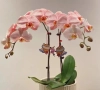
When growing Phalaenopsis (moth orchid) semi-hydroponically, water along the edge of the pot to prevent root rot; how should the watering frequency be set?
If there is a "lazy person's blessing" in Phalaenopsis care, semi-hydroponics definitely counts as one! You do not need to painstakingly remove the old potting medium, nor do you need to repot frequently, and the Phalaenopsis can still grow vigorously, making it especially suitable for beginners who dislike hassle. How exactly do you do it? It can be done in just a few steps, so let's go through it slowly. First, prepare these materials, all of which are common household items: none
-
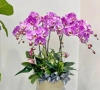
Don't panic if your Phalaenopsis orchid gets sun-scorched and wilts! This rescue method works better than randomly watering. How do you save a Phalaenopsis orchid that has wilted from sun exposure? First do 2 emergency steps, then do 3 things.
Everyone knows Phalaenopsis orchids like indirect light, but if you accidentally let them get too much sun, the leaves wilt and curl, and the edges even turn scorched black. It really hurts to see! Actually, after sunburn, don't panic. With timely emergency care, they can still be saved. The key is to focus on "shade, rehydration, and controlling the environment." Just like a person with sunburn needs to get out of the sun and apply moisturizer, Phalaenopsis orchids also need to be treated accordingly.
-
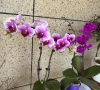
Why Phalaenopsis Orchid Petals Wilt After Watering and Whether It Can Survive
What do you fear most when growing Phalaenopsis orchids? Nothing beats finding the petals suddenly limp and listless after careful watering. The reason is most likely overwatering that caused root rot! When the roots are damaged, they cannot absorb water, so the petals naturally droop. Today I will give you a step-by-step care guide for when Phalaenopsis petals wilt after watering. Why do petals wilt after watering? Pha
-

Is there a difference in watering old and new Phalaenopsis orchids, and which one blooms more easily?
Once you have grown Phalaenopsis orchids for a while, you will find that old plants and new plants have completely different "temperaments". Just the watering alone is worlds apart, let alone their blooming performance. So how should you care for this old-and-new pair in summer so that both grow smoothly? First, let's talk about the difference in watering. Old plants, well, their root systems are long established, and some old roots even have brownish outer layers, with water-absorbing ability far worse than before.
-

Does watering a Phalaenopsis orchid need to be done differently by season? A breakdown of watering methods for different seasons
Is watering the most headache-inducing part of growing Phalaenopsis orchids? Some people are never sure: "Is watering a Phalaenopsis the same all year round?" Today let's be blunt - watering a Phalaenopsis must be done differently by season! The watering routines for different seasons are worlds apart, and if you get it wrong, root rot can show up in no time! Let's start with spring. At this time, the Phalaenopsis
-

Phalaenopsis watering rules in summer: is it better to water in the morning or in the evening?
Does summer make you worry about watering? Water in the morning or in the evening? This is no small matter; get it wrong and your orchid may wilt. When watering Phalaenopsis in summer, is it better to water in the morning or in the evening? Choose the morning first (before 7 o'clock, when the sun is not fully out), and absolutely do not choose the evening (especially after 8 o'clock
-

Which potted plants do not need sunlight? Four small potted plants with low watering frequency
Insufficient indoor light and low watering frequency? These four potted plants do not need frequent sunlight, nor do you have to constantly remember to water them. They are suitable for busy people or beginners, and are simply a blessing for renters and overtime workers. Even if you occasionally forget to take care of them, they can still live quite vigorously. Small-leaf red nanmu: Small-leaf red nanmu (Syzygium buxifolium) looks especially delicate, with small oval leaves that are glossy green, and from a distance it looks like a mini forest. The best part is that it is not picky about light, so it can be placed in a corner of the living room or beside a desk, as long as it is not completely pitch-black. Watering is even more worry-free; water only after the soil has dried out completely, about once every ten days or so is enough, in summer when evaporation is fast at most once a week, and in winter once every half month is no problem. I once kept one, went on a business trip for half a month without tending it, and when I came back it still looked vigorous, just a little wilted leaves, and after a bit of water it perked up the next day, very easy to keep.
条件筛选