-

Ministry of Agriculture issues guidance to accelerate the development of herbivorous livestock farming
This website news: Developing herbivorous livestock farming is an important focus for accelerating the transformation of agricultural development patterns and structural adjustment. Recently, the Ministry of Agriculture issued the "Guiding Opinions on Promoting the Accelerated Development of Herbivorous Livestock Farming" (hereinafter referred to as the "Opinions"), which clarified the approach, goals and main tasks for the development of herbivorous livestock farming in the period ahead.
-
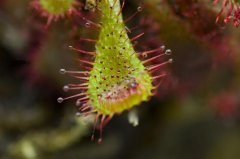
Is the sundew that eats insects a carnivorous plant? A roundup of common carnivorous plants
Carnivorous plants are a relatively little-known group of garden plants. They have insect-eating characteristics that set them apart from ordinary plants, and together with some misunderstandings, do you know which carnivorous plants there are? Pitcher plant: the structure the pitcher plant uses to catch insects is a specialized insect-trapping pouch at the end of the leaf
-
Is osmunda a carnivorous plant? This article explains it clearly
Osmunda is a wild vegetable, a perennial herbaceous plant of the genus Vicia in the family Osmundaceae of the ferns, and its tender leaf stalks can be eaten as a vegetable. So, is osmunda a carnivorous plant? 1. Is osmunda a carnivorous plant? Osmunda is not a carnivorous plant, it is just an ordinary wild
-
What do river shrimp eat? They are omnivorous and can be fed a wide range of bait foods.
Abstract: River shrimp have fairly omnivorous feeding habits. In natural waters they mainly feed on various small benthic invertebrates, carcasses of aquatic animals, organic debris and plant debris, etc. In artificial farming they are mainly fed animal-based bait such as tofu residue, distillers' grains, cooked rice, silkworm pupae, river snails and wheat flour, but to ensure balanced nutrition for the river shrimp, compound feed should also be given in combination.
-
How to Fatten Pheasants? Detailed Methods and Key Technical Points
The pheasant is an omnivorous bird that likes various insects, small amphibians, grains, beans, grass seeds, tender green leaves, and so on. Artificially raised pheasants can be suited to large-group rearing environments. Pheasants have high economic value; their meat is tender and delicious with a strong game flavor, and their protein
-
How to farm river snails in rice paddies? These farming experiences are worth referencing
River snails are omnivorous, grow quickly, have strong adaptability, and are easy to breed and raise, but they prefer shade and fear light, so they are suitable for rice paddy farming. This allows one to maximize strengths and avoid weaknesses, and pursue advantages while avoiding harm. Farming river snails in rice paddies while growing rice can not only increase rice yields but also produce a large amount of
-
What are the key technical points for polyculture of yellow catfish?
The yellow catfish (Pelteobagrus fulvidraco) is a bottom-dwelling omnivorous fish, with delicate flesh, rich nutrition and extremely high economic value, making it a farming species with great market potential. The yellow catfish has strong adaptability and a slower growth rate than cyprinid fish, but grows relatively fast for its own species; fry bred in the same year can reach market size in that same year, and the population yield is relatively high. Because artificial breeding technology is not yet mature, large-scale artificial farming faces certain difficulties, so carrying out polyculture has become imperative. Polyculturing yellow catfish in fish ponds has the following advantages: First, it can feed on low-value small miscellaneous fish and shrimp, residual feed of fish, organic debris, zooplankton, etc. in the pond, increasing the net yield of the pond. Second, the yellow catfish feeds on parasites such as Lernaea in the water, which can reduce the occurrence of fish diseases. Third, without affecting the yield of the main cultured species, adding 5 kg to 20 kg of yellow catfish per mu can increase the benefit by more than 100 yuan per mu. The polyculture techniques are introduced as follows:</p><p></p><p>I. Polyculture in adult fish ponds</p><p>Polyculturing yellow catfish in adult fish ponds places no strict requirements on the main fish species cultured in the pond. Ponds culturing the four major Chinese carps and ponds mainly culturing feeding fish (such as carp and crucian carp, tilapia, freshwater pomfret) can all be used for polyculturing yellow catfish. The pond area is 20 mu to 30 mu, the water depth is 2 m to 2.5 m, with sufficient water source, good water quality and convenient water injection and drainage. Generally, 40 to 50 yellow catfish are stocked per mu, with a size of 3 cm per fish to 4 cm per fish, which can increase the yellow catfish yield by 5 kg to 8 kg per mu.</p><p>II. Polyculture in broodstock ponds</p><p>Polyculture in broodstock ponds can not only make full use of the water space of the broodstock pond and improve the utilization rate of the broodstock pond, but the yellow catfish can also feed on some small wild fish in the broodstock pond that compete with the broodstock for food and consume oxygen. After the artificial breeding of broodstock is completed, stock 40 to 60 yellow catfish per mu, with a size of 2 cm per fish to 3 cm per fish, which can increase the yellow catfish yield by 6 kg to 10 kg per mu.</p><p>III. Polyculture in adult crab ponds</p><p>Polyculturing yellow catfish in crab ponds can make full use of the natural bait organism resources in the crab pond. Generally, the crab pond area is 30 mu to 50 mu, with a aquatic plant coverage rate of about 50%; after the crab seed is stocked, stock 30 to 50 yellow catfish per mu, with a size of 3 cm per fish to 5 cm per fish, which can increase the yellow catfish yield by 5 kg to 10 kg per mu.</p><p>IV. Polyculture in rivers and ditches</p><p>There are many low-value wild miscellaneous fish in rivers and ditches, and polyculturing yellow catfish can save artificial bait. Generally, stock 40 to 60 yellow catfish per mu, with a size of 2 cm per fish to 4 cm per fish, which can increase the yellow catfish yield by 6 kg to 12 kg per mu.</p><p>V. Polyculture in large water bodies</p><p>Polyculturing yellow catfish in large water bodies gives a high population yield, neither affecting the yield of the main cultured species nor requiring additional bait. Generally, stock 40 to 60 yellow catfish per mu, with a size of 3 cm per fish to 4 cm per fish, which can increase the yellow catfish yield by 8 kg to 15 kg per mu.</p><p>No matter which polyculture method is adopted, the following matters must be noted in farming management:</p><p>I. Maintain a relatively high dissolved oxygen level in the water body. The yellow catfish has relatively high requirements for dissolved oxygen in pond water, so polyculture requires fresh water quality and sufficient dissolved oxygen; during the growing season, new water should be added in a timely manner, and during the high-temperature season, water should be changed frequently; maintaining a slight water flow is even better.</p><p>II. Maintain a reasonable stocking density and stocking size. According to the bait organism biomass in the water body, scientifically and reasonably determine the polyculture ratio and stocking size; generally, 30 to 60 fish per mu is appropriate, with a stocking size of 3 cm per fish to 4 cm per fish. If the density is too high and the size too small, the market size cannot be reached by the end of the year.</p><p>III. After polyculturing yellow catfish in a fish pond, it is no longer suitable to polyculture other carnivorous fish, and yellow catfish should not be polycultured in ponds for farming freshwater prawns or freshwater crayfish.</p><p>IV. During the farming process, if the yellow catfish are found to be too small, it indicates that the natural bait organism biomass in the fish pond is insufficient; small miscellaneous fish and shrimp, summer fry of domestic fish may be appropriately added, or specially formulated artificial yellow catfish bait may be fed. When feeding artificial bait, the main cultured species should be fed first (put into the shallow water area), and then the yellow catfish (put into the deep water area). The yellow catfish has the living habit of hiding by day and coming out at night, so feeding should mainly be done at night.</p><p>V. When polyculturing yellow catfish in crab ponds, because the river crab and yellow catfish occupy the same water layer position ecologically, it is easy to cause competition for ecological position between the two. Therefore, sufficient natural bait organisms must be maintained in the crab pond, otherwise the yellow catfish rearing effect will be affected. In advance, 300 kg to 400 kg of spiral shells per mu can be put into the crab pond, along with some egg-bearing crucian carp and egg-bearing freshwater shrimp, allowing them to reproduce naturally for the river crab and yellow catfish to feed on freely.</p>
-
What are the key points for fattening donkeys in winter?
Donkeys are herbivorous animals with strong disease resistance, are easy to raise and manage, reproduce quickly, can be kept either by grazing or in pens, and require little investment, making them very suitable for small-scale raising by farming households. After a short period of fattening in winter, the body weight of a young donkey can reach 150-200 kg, and that of an adult donkey can reach
-
Key Points of Winter Fattening and Breeding Technology for Meat Donkeys
Donkeys belong to the herbivorous category of animals, and donkey meat is tender and delicious, a high-protein, low-fat health food. Donkeys have strong disease resistance, tolerate coarse feed, are easy to raise, easy to manage, and reproduce quickly; they can be kept either free-range or penned, and require little investment, making them very suitable for small-scale raising by farming households. Therefore, breeding
-
How to choose the right feed for ground beetle (Eupolyphaga sinensis) farming
The ground beetle has very omnivorous feeding habits, and feed sources are wide-ranging. Feed includes both plant-based feed and animal-based feed. Among them, plant-based feed can be further divided into green feed, grain feed, and cake (meal) feed, and it is the main feed for raising ground beetles. Plant-based feed Green feed
条件筛选