-

What is a chemically-induced variegated succulent, and how can you tell it apart?
The leaves of the succulent have been bleached to a beige color, with black spots, and the most likely explanation is that you bought a chemically-induced variegated plant. Because chemically-induced variegated succulents are all artificially dyed fake variegation, using chemical agents such as peracetic acid and herbicides to corrode the surface of the succulent, affecting its chlorophyll
-
What is the difference between variegated white and variegated yellow Cotyledon tomentosa? A detailed explanation of the latest identification methods
There are currently three main types of the succulent Cotyledon tomentosa: one is the original-color plant, whose entire leaves are a tender green, which can be called the green bear's paw; the other two actually arose mainly through variegation mutations: one is a leaf bearing some white patches, which we can call
-
What Does "Variegation" Mean in Portulacaria afra 'Medio-picta'? A Detailed Guide
Variegation, simply put, is the phenomenon of albinism appearing in succulents. In fact, it is a genetic mutation, or what could be called a genetic disorder. But once a succulent becomes variegated, its value multiplies, because a variegated succulent has greater ornamental value. Portulacaria afra 'Medio-picta'
-
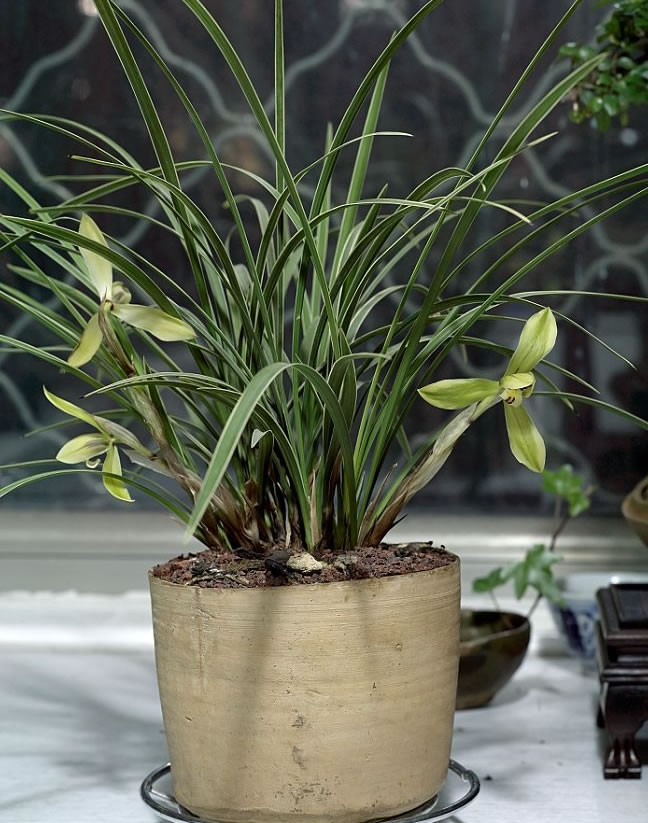
Leaf Variegation Characteristics and Appreciation of Cymbidium goeringii 'Jiaoyue Biancao'
Cymbidium goeringii 'Biancao', a tissue-cultured hybrid, a common variety in flower markets, quite attractive, blooms and multiplies readily, strong disease resistance, super easy to grow. Hybrid tissue-cultured plants have slightly weaker fragrance, so friends who want to enjoy the scent should choose carefully!
-
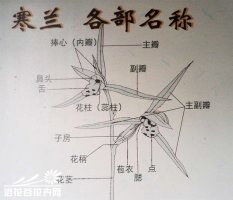
Illustrated Guide to Identifying Kanran Orchid Leaf Variegation, Leaf Types, and Flower Types
Kanran orchid, Kanran orchid, of the genus Cymbidium in the family Orchidaceae. Scientific name: Cymbidium Kanran Mak. The plant is slender and well-proportioned, the leaves elegant and graceful, the flower colors brilliant and varied, and the fragrance pure and long-lasting....
-
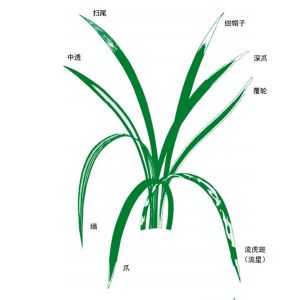
A Guide to Appreciating Orchid Leaf Variegation and Leaf Shapes
The white or yellow patches and patterns that appear on the leaves of Chinese orchids (Cymbidium) are called "yi" (variegation), and orchids cultivated for the changing patterns on their leaves are called "yi orchids" (variegated orchids). According to the standards of Japan and Taiwan, China, there are as many as 35 types of variegation patterns. Each type of pattern is called 1 yi; those with multiple patterns and spots are called "comprehensive yi," but on the same leaf...
-
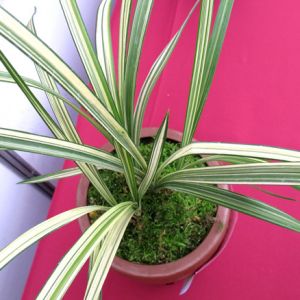
Characteristics and Appreciation of the Spring Orchid (Cymbidium tortisepalum) with Central Transparent Variegation
Spring Orchid with Central Transparent Variegation, Special Gold Award at the 22nd China (Zhenhai) Orchid Expo, submitted by Lianhua Town, Chenghai District, Shantou City
-
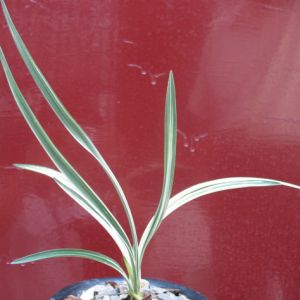
Introduction to the famous Cymbidium ensifolium leaf-variegation cultivar Tiegui Ruiyu
Tiegui Ruiyu variegation
-
A Detailed Introduction to Appreciating Orchid Leaf Variegation
White or yellow stripes and speckled patterns on orchid leaves are called "leaf variegation" in Hong Kong, China and Taiwan, China, and since the 1980s they have drawn attention in orchid circles. Flowers can only be enjoyed for half a month, while leaf variegation can be enjoyed all year round. 1. Claw: white or yellow on the edge of the leaf tip is called a "claw." Claws are divided into deep claws and shallow claws. 2. Rim: the entire...
-
Appreciation Techniques for Orchid Unusual Leaves and Variegation
1. Elegant plant form: The plant forms of Chinese orchids may look the same, but in fact their shapes vary: some are upright and vigorous, some are semi-arching with graceful curves, and some are obliquely spreading or fully pendulous, among others. Those that are refined and elegant are considered superior; only those that are vigorous yet still elegant achieve a balance of strength and grace, otherwise they are merely coarse wood. Bending and drooping do not equal weakness; there is strength within softness, and only when bending and drooping are moderate are the curves graceful. The leaves should be arranged neatly, or curved with posture and a sense of antique charm; a messy, disheveled look always seems lacking in beauty.
条件筛选