-
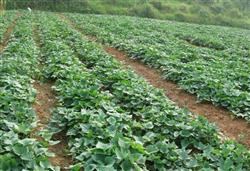
What is the correct method for turning sweet potato vines during cultivation?
How do you turn sweet potato vines during cultivation? Should it be done during the rainy season or during drought? We ask experienced gardeners to help explain. Because sweet potato is a vine-like herbaceous plant, the vines grow prostrate along the ground, and secondary roots form at the stem nodes in the soil. Therefore, the yield of sweet potatoes is related to the tubers; the larger the tubers, the higher the yield. Moreover, the size of the tubers is not only...
-
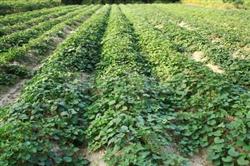
What issues should be noted when turning sweet potato vines?
1. When there is plenty of water, adventitious roots form at the stem nodes. These adventitious roots can absorb a large amount of nutrients and water, making vegetative growth vigorous and causing the vines to grow excessively, while inhibiting reproductive growth, so the tubers grow slowly. At the same time, the adventitious roots also produce small tubers, causing insufficient nutrients and creating a situation where "everyone goes hungry," which...
-
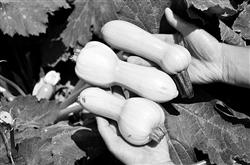
Why is the zucchini head not growing and turning white?
Why is the zucchini head not growing and turning white? What causes it? The zucchini head is not growing. Upon investigation, the cause is low soil temperature and insufficient light, which leads to poor plant growth, shrinkage of the head, and the fruit failing to develop chlorophyll. That is why the fruit color turns white. Solutions: 1) Enhance lighting, clean the greenhouse film to improve light transmission. Or add supplemental grow lights to enhance photosynthesis. 2) Spray Fengshou No. 1 plus other foliar fertilizers (containing trace elements) to comprehensively improve plant vigor. Or use Fengshou No. 1 plus Lijunkang for root drenching to enhance root activity. 3) For plants without heads, spray with 20 mg/L gibberellin to stimulate growth activity and restore normal growth.
-
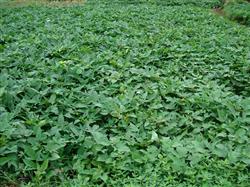
Do sweet potatoes need vine turning? Read this article and you will understand
Do sweet potatoes need vine turning? Please share this with readers: experiments have proven that when sweet potatoes (also called shan yu or di gua) are not vine-turned during the growing period, they can increase yield by about 25% compared with plots where vines are turned, and some even reach as high as 30%. The main reason vine turning reduces sweet potato yield is: damage to vines and leaves. Practice has proven that each time vines are turned, 66...
-

What measures can prevent eggplants from turning bitter?
In response to the above problems, starting with prevention and strengthening comprehensive cultivation management measures is the key to preventing bitter eggplants in protected cultivation. The main measures are: 1. Select varieties suitable for planting in protected cultivation. When cultivating in protected conditions, choose varieties that are resistant to low temperatures, tolerant of weak light, and have only slight bitterness. For newly introduced varieties, expand planting only after successful trial planting first, to avoid blind planting and losses. 2. Optimize the production environment of protected cultivation and meet the physiological needs of eggplants as much as possible. Pay attention to choosing greenhouse materials with strong heat preservation capacity and drip-free film with good light transmission, and frequently remove dust accumulation and dirt on the greenhouse film to ensure sufficient light. Where conditions permit, certain light-increasing measures can be taken, such as using reflective screens and artificial supplemental lighting. Enhance the heat retention and insulation performance of the protected facility so that the temperature inside can meet the needs of eggplant growth. Especially after fruit set, make even greater efforts to reach the suitable temperature for eggplant growth, to prevent imbalance in eggplant growth and development caused by insufficient light and heat, which leads to bitterness.
-
What Are the Benefits of Returning Wheat Straw to the Field? Methods and Precautions Explained in Detail
I. Benefits of Returning Wheat Straw to the Field. Returning wheat straw directly to the field not only reduces the number of tillage operations in the wheat field and lowers the cost of @#@245@#@ production, but also achieves rational use of the high-stubble wheat straw resource, avoids the practice of burning wheat straw, and helps conserve soil and water. After wheat straw is returned directly to the field, the straw covering the plow layer can reduce surface runoff during the rainy season, lessen soil compaction and cracking, and improve the soil's capacity to store water and conserve moisture; after the wheat straw decomposes, it can increase soil organic matter content, improve soil physical and chemical properties, and provide crops with various nutrient elements
-
Correct Methods and Technical Key Points for Returning Rice Straw to the Field
1. Rice straw mulching in wheat fields. After wheat sowing is completed, use 250-300 kg of rice straw per mu, cut into 10-20 cm straw segments, and spread evenly over the field so that the straw does not form piles and the soil is not left exposed. 2. Rice straw mulching in rapeseed fields. When transplanting rapeseed, plant the seedlings according to the specified spacing into holes with sufficient basal fertilizer, cover with soil, and then evenly spread rice straw over the whole field at 300 kg/mu, so that the straw does not cover the holes (seedlings) and the soil is not left exposed, while also applying integrated chemical weed control and necessary field management measures. 3. Drainage and
-
Detailed Explanation of the Technical Key Points for Returning the Full Amount of Wheat Straw to the Field
Crop straw is an important by-product of crops. It is also an important production resource for agriculture and industrial production. Returning crop straw to the field not only avoids the environmental pollution problems caused by rotting and burning, and achieves feeding the land with the land itself, but also consolidates the foundation of soil fertility for greatly increasing soil organic matter content, improving soil structure, building up soil fertility, strengthening the quality construction of cultivated land, and raising crop yield and quality. In every agriculturally developed country in the world, great attention is paid to the scientific rationality of the fertilization structure and the
-
Rice seedlings turning yellow, leaves curling, leaf-rolling: what to do? A detailed guide to prevention and control
There are many causes of the rice leaf-rolling phenomenon, and the most common one is the rice leaf roller (Cnaphalocrocis medinalis). Damage characteristics: the larvae bind silk to roll rice leaves lengthwise into larval cases, and the larvae hide inside and feed on the mesophyll, leaving only the epidermis, forming white streaks, which reduces the 1000-grain weight of rice, increases empty grains, and causes yield loss. Control agents: 1. Select rice varieties resistant to (or tolerant of) the pest, fertilize reasonably, so that the rice grows and develops vigorously, and prevent excessive early growth and excessive tillering as well as late-season stay-green and delayed maturity. Manage water scientifically, adjust the drainage (field-drying) time appropriately, and reduce field humidity during the larval hatching period
-

What are the key technical points and precautions for returning rice straw to the field?
Rice straw return technology and precautions
条件筛选