-
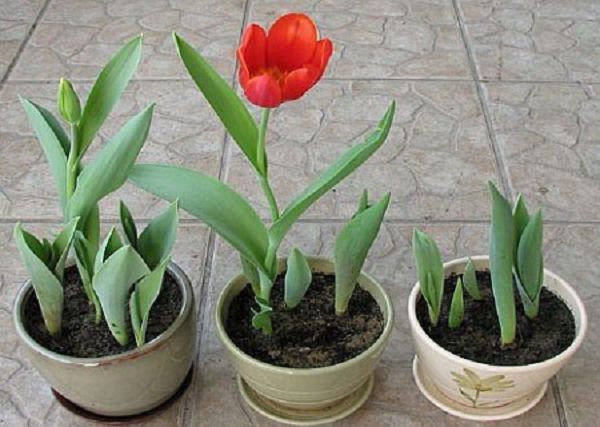
How to Fertilize Tulips? Detailed Explanation of Key Fertilization Techniques
Tulip Fertilization Techniques?
-
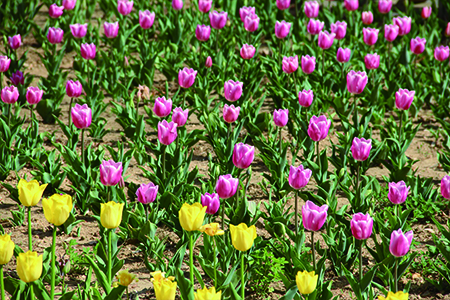
Are tulips toxic? Are they suitable for growing indoors?
Are tulips toxic and suitable for growing indoors?
-

Experience sharing on forcing cultivation of tulips to bloom during Spring Festival
Tulips have strong cold resistance, tolerating low temperatures of -35°C in winter, and can grow normally at 5°C-8°C, making them suitable for winter forcing cultivation. Forcing cultivation of tulips means breaking the dormancy of flower primordia and leaf primordia through variable temperature treatment of the bulbs, eliminating factors that inhibit flower bud germination, and promoting flower bud differentiation, then through artificial heating, supplemental lighting and other measures, making tulips bloom outside their natural flowering period. Currently on the market there are commonly 5°C bulbs and 9°C bulbs; we generally choose 5°C bulbs for forcing cultivation to bloom during Spring Festival. Substrate
-
Detailed Explanation of Key Management Techniques for Forcing Cultivation of Tulips
Tulip (Tulipa gesneriana), of the Liliaceae family and the genus Tulipa, is a perennial bulbous herbaceous flower, and is a world-famous material for cut flowers as well as flower beds and flower borders. Its elegant and graceful flower form and pure, simple fragrance make it deeply loved by people. Due to the tulip's own biological characteristics and ecological habits, under natural cultivation conditions in northwest China, people can only catch a glimpse of its elegance and splendor from May to June each year. In recent years, in order to enable tulips to appear on the flower market stage from New Year's Day to the Spring Festival, we have used solar energy-saving
-
Key Techniques and Methods for Forcing Tulips into Bloom
Tulips grown in natural conditions generally bloom from March to May. To make tulips bloom at Spring Festival, the following technical measures should be taken. Selection of bulbs: in October, choose plump, well-developed bulbs free of pests and diseases, and remove the brown outer skin. Disinfection of bulbs: before low-temperature treatment, soak them for 15-20 minutes in a 75% chlorothalonil wettable powder solution diluted 800 times, then let them dry naturally. Low-temperature treatment of bulbs: tulips grown in natural conditions all undergo a natural dormancy process. To make tulips bloom earlier at
-
What classifications do tulips have? Understanding tulip variety classification in one article
There are many varieties of tulips, about ten thousand or more. Two main classification methods are introduced here: 1. Classification by flower shape variation. They can be divided into cup type: the corolla is cup-shaped, with representative varieties including Cottage tulip, Darwin tulip, and Darwin hybrid tulip; bowl type: the corolla is shallow dish-shaped and bell-shaped, with many small flowers, and the representative variety is water lily tulip; lily type: the petal tips are gradually pointed, and the corolla resembles a lily flower, with the representative variety being lily tulip; ball type: the corolla is spherical, and these are the double-flowered types among Cottage tulips and Darwin hybrid tulips. 2. Classification by early or late flowering.
-
How to Propagate Tulips After Flowering: The Correct Method
Tulips belong to the lily family and are bulbous herbaceous flowers. Tulips bloom from March to May each year, but if the growing techniques fall short of what is required, it will be very difficult for them to bloom again from March to May the following year. Therefore, propagation and care after tulips finish flowering is especially important. After a tulip flowers, the new bulb underground develops rapidly, and the mother bulb that served as the planting bulb disappears. So after the tulips fade, the flower stalks should be cut off immediately, and the leafy bulbs should be planted in pots (or in the ground if you have a small yard). When planting, first add a base fertilizer, preferably soybean cake crumbs and bone
-
How to Fertilize Tulips? A Detailed Guide to the Correct Fertilization Method
Tulips are perennial bulbous flowers of the lily family. The plant grows 30-40 cm tall, with an ovate bulb covered by a scaly membranous tunic. Flower colors include bright red, black-red, yellow, white, purple and others. They prefer a warm, humid, sunny or semi-shaded environment and cannot tolerate intense heat. They require sandy loam rich in humus and with good drainage. 1. Home cultivation. Bulb division is commonly used for propagation. Generally, after rooting and leafing out, apply a top dressing once every half month, mainly phosphorus and potassium fertilizers, with an appropriate amount of Jinbaobei bacterial fertilizer added, which can make the flowers more intensely fragrant. 2. Greenhouse production. Tulips in
-
How to choose and care for tulips? Here are some practical tips
Buy plants that have not yet bloomed but have already grown green buds, so you can enjoy the entire flowering period; choose a pot with multiple bulbs planted in it, so you can enjoy a longer flowering period; if you rearrange the plants after purchase, water immediately after transplanting; when rearranging, be sure to transplant the soil in the pot together with the tulips or hyacinths as a whole into a new container, and then combine them with flowers from other pots. Never try to separate flowers originally planted in the same container, to avoid damaging the tangled roots; water frequently
-
How to Grow Tulips? A Complete Guide to Practical Care Methods
Tulips belong to the Liliaceae family, are perennial herbaceous plants with bulbs, and originated along the Mediterranean coast. They were later improved and cultivated by Central European countries and have now become a very elegant and precious flower. They were introduced to the Netherlands in the 16th century and designated as the national flower of the Netherlands. In the Netherlands there is a saying: "If a rich man does not have tulips, he is not truly wealthy." At that time, a precious flower bulb was worth 100 pounds, almost equivalent to the price of a villa. The famous French writer Alexandre Dumas wrote a legendary novel, The Black Tulip, praising this
条件筛选