-

Detailed Explanation of Common Walnut Tree Shapes and Training Techniques
A rational tree shape is the framework of the tree, the foundation for bearing yield, and the basic condition for high yield, quality and efficiency. The purpose of training is to create a solid tree framework, ensuring the leaf canopy can intercept light energy to the maximum extent and bear a relatively high yield. A rational tree
-
-
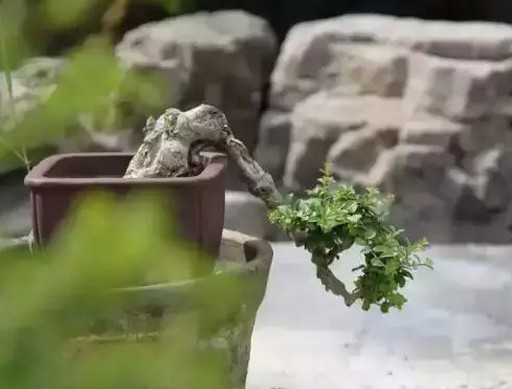
Cultivation of small trees for landscape bonsai originates from insights into how nature shapes trees
Bonsai starts from small seedlings, pruned once a year in the early stage, beginning with basic training; as time accumulates, the small tree naturally shows healed pruning cuts, and according to one's own needs and purposes, the tree's form is gradually perfected through continuous pruning. Young trees in the early stage have no degree of aging. Due to the characteristics of some tree species, such as Chinese privet (Ligustrum sinense)
-
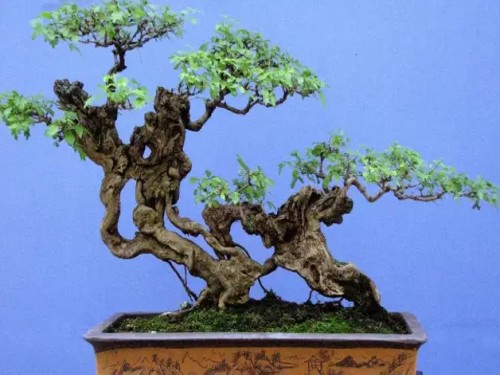
A Detailed Explanation of the Methods for Designing and Conceiving Tree Bonsai Shapes
Tree bonsai takes trees as its main subject. Because the materials used differ, it is usually further divided into two major categories: tree scenery and stump scenery. Tree scenery is made by using young trees as material and carrying out artistic processing, so it is often called "cultivated from youth." In the creation of tree bonsai, for a bonsai to deserve to be called an excellent work, all its parts must be seamlessly integrated and unified in harmony
-
What tree shapes are suitable for almond? Key points of training and pruning techniques
According to the light-loving characteristics of almond, adopting a tree shape with an open canopy and good ventilation and light penetration makes it easy to obtain high yields. Suitable tree shapes include the round-headed shape, the tiered shape, the cup shape and the natural open-center shape, among which the natural open-center shape is used more often. After the young seedlings are planted, the trunk is headed at 60-100 cm. If the planted seedlings already have branches but these cannot be used as main branches, keep a few buds at the base of these branches and carry out relatively heavy renewal pruning; in the spring of the 2nd year, when the new shoots reach about 10 cm in length, select and retain 3
-
Bonsai Ficus Tree Pictures to Enjoy - Gorgeous Shapes That Will Delight Your Eyes
Chinese name: Ficus tree. Other names: Small-leaved ficus, Cheng tree, Ficus aerial roots. Latin scientific name: Ficus microcarpa. Family and genus: Moraceae, Ficus genus. Place of origin and distribution: Tropical Asia. Ficus bonsai refers to using the ficus tree as material, with the goal of appreciating the peculiar forms of the ficus trunk, roots, stems and leaves.
条件筛选