-

How can azalea chlorosis be prevented and treated effectively?
Azalea chlorosis is a physiological disease, but the causes of chlorosis are complex. If prevention and treatment are carried out blindly, it is often futile. Therefore, careful observation must be made to determine the condition, identify the cause, and then apply the right remedy for it to be effective. The various symptoms, causes and effective prevention and treatment measures for azalea chlorosis are described below: 1. Iron deficiency. 1. Soil iron deficiency: The formation of chlorophyll requires elements such as iron and nitrogen, and the phenomenon of chlorosis caused by soil iron deficiency occurs frequently. Therefore, supplementing the iron element in the soil is crucial. Ferrous
-
How is actinomycosis in deer diagnosed and treated? Seven cases of experience shared
Actinomycosis is also known as Lumpyaw. The pathogens of this disease are Actinomyces bovis and Actinobacillus lignieresii. It is a non-contagious chronic infectious disease of livestock, wild animals and humans, commonly occurring in ruminants such as cattle, sheep and deer. The characteristic symptoms of the disease are actinomycotic lumps on the head, neck, submandibular region and tongue, causing difficulty in breathing, swallowing and chewing, rapid weight loss, skin suppuration and ulceration, and formation of fistulas that do not heal for a long time.
-
What to do about bloody diarrhea in dogs? It can be treated with Pulsatilla decoction combined with Licorice and Donkey-Hide Gelatin
Bloody diarrhea in dogs is one of the most common canine diseases in clinical practice. The disease develops extremely rapidly, and treatment with antibiotics yields little or no effect, with a mostly poor prognosis. Pulsatilla decoction plus Licorice and Donkey-Hide Gelatin decoction is a representative formula in human clinical medicine for treating blood deficiency and prolonged diarrhea damaging yin, originating from the Jin Gui Yao Lue (Synopsis of the Golden Chamber). 1. Clinical symptoms: sudden onset, listlessness, fever, thirst with excessive drinking, little or no eating, dry nose, vomiting, diarrhea with pus and blood that is often bright red or purplish red, along with tenesmus, weakened or faint bowel sounds, a crimson tongue body, yellow coating, and a slippery or wiry rapid pulse
-
Porcine epidemic diarrhea can be treated with starvation therapy
Porcine epidemic diarrhea is a common disease of pigs, and pigs of all types can be affected. Because the disease mostly occurs in the cold winter and spring seasons and is highly contagious, in some places it is customarily called cold diarrhea. There are many methods for treating the disease, but according to practice, the currently more effective method is starvation therapy. So-called starvation therapy means that once symptoms of the disease appear in pigs, the method of stopping feeding is adopted, and absolutely no feed-related food may be given to the sick pigs, including green fodder and so on. Generally, feeding is stopped for 2~3 days. The specific operation method is as follows: clean up the leftover
-
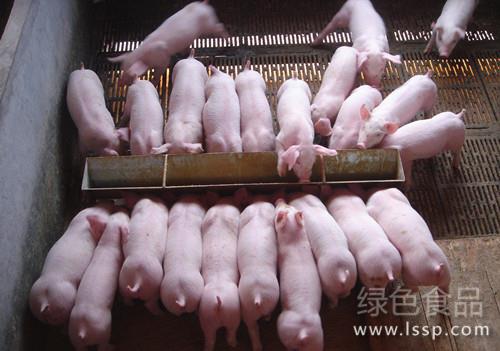
A pig's rectum has prolapsed from the anus and cannot be pushed back in; how should prolapse of the anus be prevented and treated?
How to prevent and treat prolapse of the anus in pigs when the rectum has prolapsed from the anus and cannot be pushed back
-
How is swine vesicular disease diagnosed and treated?
A cow's ocular conjunctiva is covered by the eyelids. To examine the conjunctiva, there are generally two methods: first, press open the lower eyelid with your thumb to expose the conjunctiva. Second, grasp the cow's horns with both hands and forcefully turn the head to one side; the cow will then look sideways, exposing the conjunctiva. In a healthy cow, the ocular conjunctiva is pale pink. Redness of the conjunctiva is a sign of circulatory disturbance and may indicate eye trauma, conjunctivitis, or various acute febrile infectious diseases. A blue-purple conjunctiva may indicate pneumonia or heart failure
-
What are the characteristics of sheep struck (enterotoxemia) and how is it prevented and treated?
Sheep struck is a toxemia caused by Clostridium welchii type C, clinically characterized by acute death, peritonitis and ulcerative enteritis. I. Pathogen Clostridium welchii, also known as "Bacillus aerogenes capsulatus," belongs taxonomically to the genus Clostridium. This bacterium is Gram-positive, can form a capsule in the animal body, and its spores are located in the center of the bacterial cell. This bacterium can produce multiple exotoxins such as alpha, beta, epsilon and iota; based on toxin-antitoxin neutralization tests, Clostridium welchii can be divided into 5 toxin types: a, b, C, D and E. Sheep
-
How should cuttings be treated when propagating yew (Taxus) from cuttings?
When propagating yew from cuttings, the method for treating the cuttings is: cut branches at least 15 cm long as cuttings, remove the lower leaves, girdle the base of the branch to make a wound 0.5 to 1 cm wide, wait until nodular growth forms around the wound, then cut the branch off below the girdled part, and soak the basal end in 100 ppm indoleacetic acid or phenylacetic acid for 3 hours, or soak it in a 200 ppm ABT No. 2 rooting powder solution for 8 to 10 hours.
-
What causes vomiting in pigs and how is it treated?
In production, the symptom of pigs vomiting can often be seen. Sometimes we may think it is just some ordinary gastrointestinal disease, but we must be careful, because it may be caused by certain infectious diseases. Below is a summary of the diseases that can cause vomiting in pigs. 1. Transmissible gastroenteritis of pigs. Transmissible gastroenteritis of pigs is a highly contagious viral infectious disease characterized by causing vomiting, severe diarrhea and high mortality in piglets under 2 weeks of age. Although pigs of different ages are all susceptible to this virus, the mortality rate of pigs over 5 weeks of age is very low.
-
How can sheep bot fly larvae disease be treated effectively?
Sheep bot fly larvae disease mainly affects sheep and goats. This disease mainly occurs from early autumn to mid-autumn. After infection, the sheep become restless, showing symptoms such as shaking the head, running around, and lowering the head to press the tip of the nose against the ground; some hide their heads under the bellies of other sheep. Treatment: (1) In early autumn, when adult flies fly and deposit larvae, an insecticidal ointment can be applied to the sheep's nose and nostrils once every 7 days to prevent adult flies from depositing larvae. (2) Spray 60 ml of 3% Lysol solution into the sheep's nostrils once a day for 7 consecutive days; the curative effect is excellent.
条件筛选