-

How can the structural problems of agricultural mechanization be treated with targeted remedies?
Recently, supply-side structural reform has repeatedly appeared in the newspapers, becoming a high-frequency term that government officials pay attention to and that the media and scholars hotly discuss. The reason is that General Secretary Xi Jinping emphasized at the eleventh meeting of the Central Leading Group for Financial and Economic Affairs that while moderately expanding aggregate demand, we should
-
By 2020, more than 90% of villages will have their domestic waste effectively treated
By 2020, more than 90% of villages' domestic waste will be effectively treated. With the approval of the State Council, the Ministry of Housing and Urban-Rural Development and ten other departments jointly issued a document on the 13th declaring war on rural waste. This is the first document at China's central government level specifically targeting rural waste, sounding the charge
-
Food production must never be treated lightly at any time
As China's economy enters a new normal, new changes and new characteristics have also emerged in the grain sector. In early January 2015, at the national grain circulation work conference convened by the State Administration of Grain, Ren Zhengxiao, director of the State Administration of Grain, described the 2014 grain market situation as "complex and intricate, with unprecedented pressure on purchasing and storage, and with arduous and heavy tasks for reform and development."
-
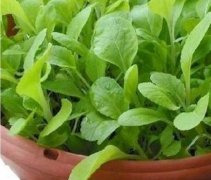
How should pak choi seeds be treated and sown in pots so they grow well?
More and more people are now growing vegetables in pots, so do you know how to grow vegetables from pak choi seeds in pots? Let's learn together and grow the vegetables you like! First, wash the seeds clean, carefully rubbing off the flesh and the outer mucilage. Most seeds need
-
How to Tell If Kiwifruit Has Been Treated with a Growth Enhancer? Plus Ripening and Harvest Times
For growers, how should you identify kiwifruit that has been treated with a growth enhancer? Are there fixed values for when kiwifruit ripens and when it should be harvested? How to identify kiwifruit treated with a growth enhancer? Feature 1: High-quality kiwifruit not treated with a growth enhancer has a regular fruit shape, mostly a long oval
-
Wheat blossom midge can be controlled by broadcasting pesticide-treated soil at the booting stage
The wheat blossom midge overwinters as mature larvae in round cocoons in deep soil and can remain dormant for many years. In spring, when the soil temperature at 10 cm rises to about 7°C, which is when wheat begins jointing, the larvae break out of their cocoons and move toward the soil surface. In mid-April, wheat enters the booting stage, and the larvae
-
How can laying hen salpingitis be treated effectively?
Are many people unfamiliar with salpingitis in laying hens? Can laying hens really get salpingitis? In fact, specialized breeding households are very familiar with this disease, because it is a common disease of chickens, prone to occur during the peak laying period, and is one of the frequently occurring diseases that threaten the healthy development of the chicken farming industry.
-
What is "late molting" (laying stoppage) in laying ducks, and how should it be prevented and treated?
A female duck from the start of laying until culling is called a laying duck. Generally, the useful period of egg-type Ma ducks is about 350 days (150-500 days of age), which is called the first laying year; some are also used in the second and third years after molting and resting, but their production performance declines year by year.
-
How are pullorum disease in newly hatched partridges diagnosed and treated in partridge farming?
Diagnosis and prevention and treatment Based on the characteristics of mass onset and death among young partridges and grayish-white foul-smelling diarrhea, a preliminary diagnosis can be made. After laboratory bacterial isolation and identification, it was confirmed as partridge pullorum disease. The partridge farm was immediately locked down, and 63 severely affected partridges were isolated separately from 584 mildly affected and asymptomatic partridges; the partridge house was cleaned, ventilation was strengthened, and stocking density was adjusted. The partridge house was sprayed and disinfected with 1:300 Baidusha while the partridges were present, once per day, for 3 consecutive days; the whole flock was immediately given norfloxacin at 0.05% mixed into feed and ciprofloxacin at 0.02% in drinking water for 5 consecutive days. The 63 severely affected partridges were injected intramuscularly with 2 ml:0.5 g (500,000 units) kanamycin sulfate at 0.1 ml per bird, twice per day, for 3 consecutive days; contaminated feathers and feces were promptly cleaned up daily and disinfected with 2% NaOH; dead partridge carcasses were soaked in 2% NaOH for half an hour and then deeply buried. On the morning of the next day after these measures were taken, 5 mildly affected partridges died, and the remaining partridges showed improved spirits and increased feed intake; 22 severely affected partridges died, and the remaining partridges gradually improved in spirit, with some already seen foraging. On the third day, 4 severely affected partridges died, and the spirits and appetite of the remaining partridges gradually returned to normal. A follow-up visit half a month later showed that the partridge flock had fully recovered and was growing and developing normally.
-
How is white spot disease treated in grouper farming?
Symptoms: White spot disease is one of the serious diseases of grouper, especially common in high-density holding tanks and cage farming. This disease spreads quickly; in severe cases, it can kill all the fish in a pond within 3-4 days. In cages, it forms a concurrent infection with monogeneans, with an infection rate of 90% and a mortality rate of over 50%. The disease is prevalent in Fujian, Guangdong and Zhejiang, China, and mostly occurs in summer.
条件筛选