-
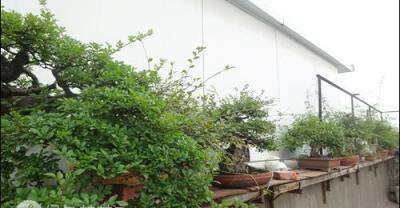
A Horticultural Therapy Perspective on the Garden Hotel Guangzhou
On July 19, 2017, Sister Rose went to the Garden Hotel to attend the launch ceremony of the fourth phase of the HSBC Community Partnership Programme, and took the opportunity to look around the Garden Hotel as well. Garden Hotel...
-
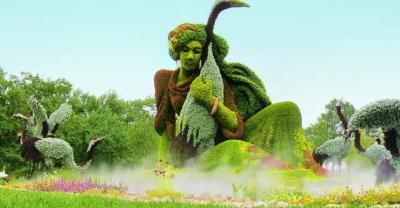
Horticultural Therapist Training Program: An Introduction to Horticultural Therapy
In the 2011 book "Introduction to Horticultural Therapy," Professor Li Shuhua of Tsinghua University defines it as the use of gardening activities or various plant-related activities to achieve physical...
-

Gene editing, immunotherapy and stem cells included in the 13th Five-Year National Plan for Scientific and Technological Innovation
The 13th Five-Year National Plan for Scientific and Technological Innovation: gene editing, immunotherapy, stem cells
-

How to treat omasal impaction in cattle? A detailed explanation of the Da Cheng Qi Tang therapy
Rhubarb 100g, magnolia bark and bitter orange each 60g, angelica 80g, bupleurum and licorice each 40g, green tangerine peel, tangerine peel, Oriental waterplantain rhizome and poria each 50g, fresh Chinese tallow tree root 200g, salt 150g, soybean oil 150ml. Except for the salt and soybean oil, decoct the remaining herbs in water; when administering, add the salt and soybean oil and shake well, 1 dose/day, given in 2 divided doses in the morning and evening. This formula can treat omasal impaction caused by various factors, and can also restore and improve the digestive function of the stomach.
-
Enema Therapy for Treating Digestive System Diseases in Dogs
In pet diagnosis and treatment, the most commonly encountered condition is digestive system disease in dogs. Applying a simple enema method according to the condition can achieve good results. Scope of application of enema therapy: (1) When a dog shows symptoms of gastroenteritis such as vomiting and diarrhea, and feces that are bloody and foul-smelling, enema therapy can be used for treatment, removing loose feces, emptying the intestines, and administering drugs directly via the rectum. (2) When a dog has fecal impaction such as dry stool and difficulty defecating, enema therapy can be used to soften the feces and lubricate the intestines.
-
Jiaxing, Zhejiang, China, vigorously promotes a new fish therapy species - the doctor fish
Jiaxing Jinhongwan Ornamental Fish Professional Cooperative is a comprehensive ornamental fish enterprise in Xiuzhou District, with ornamental fish farming as its leading variety and integrating breeding, farming, sales, and export. Mr. Chen Zhiyu, the head of the cooperative, devoted himself to research on the reproduction of hot spring fish for many years, and this fish has now been successfully artificially bred in Sanya, Hainan, China. In order to better promote doctor fish fry and carry out industrial development, on the one hand, the cooperative has increased its efforts in base construction. Because the breeding of doctor fish has relatively high requirements for water quality, climate, and other conditions
-
Porcine epidemic diarrhea can be treated with starvation therapy
Porcine epidemic diarrhea is a common disease of pigs, and pigs of all types can be affected. Because the disease mostly occurs in the cold winter and spring seasons and is highly contagious, in some places it is customarily called cold diarrhea. There are many methods for treating the disease, but according to practice, the currently more effective method is starvation therapy. So-called starvation therapy means that once symptoms of the disease appear in pigs, the method of stopping feeding is adopted, and absolutely no feed-related food may be given to the sick pigs, including green fodder and so on. Generally, feeding is stopped for 2~3 days. The specific operation method is as follows: clean up the leftover
-
Case Analysis of Intraperitoneal Fluid Therapy for Moldy Feed Poisoning in Pigs
1. Clinical symptoms: The sick pigs were depressed, had weakened vision and slow responses, unsteady staggering gait, and diarrhea with grayish-yellow feces (some mixed with blood). Some sick pigs vomited, and a few circled or pressed their heads against the wall. Red patches appeared on the skin at the base of the ears, abdomen, and inner sides of the limbs. The body temperature of the sick pigs was 37.8-38.5°C. 2. Necropsy changes: The liver of the dead pigs was significantly enlarged, pale yellow, and brittle; the gallbladder was enlarged, and the lymph nodes were edematous. 3. Diagnosis: Upon inquiry, it was learned that the pig
-
How to treat swine winter diarrhea? A detailed explanation of integrated Chinese and Western medicine therapy
Porcine epidemic diarrhea in winter, commonly known as winter diarrhea, has its peak incidence from mid-December each year to mid-January of the following year; it strikes suddenly, spreads over a wide area and spreads rapidly; the incidence rate is high, seriously affecting the growth and development of pigs. 1. Symptoms The incubation period of the disease is generally 12-18 h. After infection, adult pigs show symptoms of watery diarrhea; the feces are initially grayish-white, gradually becoming yellowish-green, with an offensive fishy odor. Abdominal distension, vomiting, body temperature rises to 40-41°C in the initial stage, and once the diarrhea passes, the body temperature drops. Thirst and a desire to drink. 10 days
-
How to Treat Stunted Pigs: An Introduction to Integrated Traditional Chinese and Western Medicine Therapy
Stunted pigs are underdeveloped piglets with stunted growth, also called "little old pigs", "runts", or "hedgehog pigs". These pigs only eat feed without gaining meat, causing great waste of manpower, feed, and pen space in pig production as well as economic losses. 1. Symptoms: Stunted pigs have rough, disordered hair, are thin and small in build, with arched backs and sagging bellies, large heads and thick tails; some are anemic, eat normally but grow slowly, and some have alternating constipation and diarrhea; scabies or internal and external parasites are often present. 2. Causes
条件筛选