-
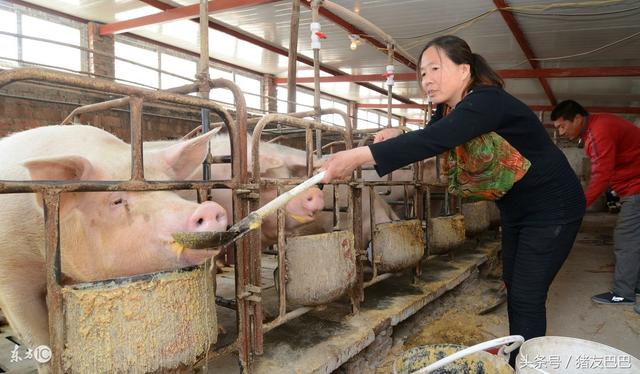
Pig farming doesn't make money, so look back at the fields - what insight does this rural proverb offer?
What insight does the rural proverb "Pig farming doesn't make money, so look back at the fields" offer?
-

Characteristics and Application of the Herbicide Nabu in Sesame Fields
[Trade name] Nabu [Common name] sethoxydim [Formulations] 12.5% oil-miscible emulsion, 20% emulsifiable concentrate [Application rate] To control annual grass weeds with 12.5% Nabu oil-miscible emulsion or 20% Nabu emulsifiable concentrate, use 1.0 L per hectare at the 2-3 leaf stage; 1.5 L at the 4-5 leaf stage; 2.0 L at the 6-7 leaf stage. Under drought conditions, the application rate of 12.5% Nabu is the same as above; 2
-
Product Introduction to the Herbicide Saturn for Sesame Fields
[Trade name] Saturn [Common name] thiobencarb [Formulation] 50% Saturn emulsifiable concentrate, 90% high-strength Saturn emulsifiable concentrate [Application rate] 2.25-3.0 L of 50% Saturn per hectare, or 1.2-1.5 L of 90% high-strength Saturn. [Timing of use] Apply after sowing sesame but before seedling emergence. [Target weeds] Barnyardgrass, crabgrass, foxtail, bluegrass, goosegrass, rice flatsedge, purslane, etc. [Application technique] Spray volume
-
Introduction to the herbicide Selectone for sesame fields
[Trade name] Selectone [Common name] clethodim [Formulation] 12% emulsifiable concentrate [Application rate] For the control of annual grass weeds, use 525-600 ml of 12% Selectone per hectare. Use the lower rate when weeds are small or when field moisture is good at application, weeds are growing vigorously, and relative air humidity is high; use the higher rate when weeds are older in leaf age, the field is dry, and relative air humidity is low. For the control of perennial grass weeds such as reed,
-
Do not make these mistakes when growing button mushrooms (Agaricus bisporus) in paddy fields for high yields
In actual production, farmers often make certain mistakes that affect the profitability of cultivation. First, insufficient pre-wetting. Rice straw must be fully soaked before it can decompose well. Straw that has not been soaked sufficiently needs a large amount of water added during turning, and if the water cannot be replenished before the second turning, it will be very difficult to make up later, which seriously affects the growth of mushroom mycelium. Second, uneven turning. It should be done according to the principle of "raw material in the middle, cooked material on both sides; the middle goes to the two ends, the two ends go to the middle." Some growers, when turn
-
What is the application ratio of special fertilizer for cotton drip-irrigated fields?
I. Total fertilizer application for cotton In high-latitude marginally suitable cotton areas, for a seed cotton yield of 300-380 kg, 70-80 kg of natural fertilizer is needed, equivalent to 160-180 kg of standard fertilizer. This achieves "a jin of fertilizer for a jin of cotton." Applying 1 kg of standard fertilizer can produce 1 kg of lint cotton. Soil test results and cotton plant nutrient diagnosis in Regiment 137 generally show zinc deficiency; applying 1-2 kg of zinc fertilizer in autumn increases yield by 5%-10%. For plots with abundant potassium according to test results, potassium fertilizer application is 5-10 kg, especially
-
What is the box tree pyralid, an insect found beside vegetable fields?
As spring warms and flowers bloom, insects begin to become active. During a recent science-and-technology outreach activity in the countryside, it was found that a pest called the box tree pyralid had begun to occur and cause damage on boxwood along the roadsides of the park. The box tree pyralid is one of the common pests on plants such as boxwood, small-leaved box, large-leaved box, littleleaf box, Chinese box, spoonleaf box, Korean box, and holly, and it occurs in Shanghai and other provinces and cities. In Shanghai it has 3 to 4 generations per year, with severe overlapping of generations. It usually becomes active in March in spring, begins pupating in mid-April, begins emerging in late April, and the first-generation lar
-
Detailed Explanation of the Key Cultivation Techniques for Growing Golden Mushrooms in Rice Fields
In the townships of Dongchan, Fenshui, Shidong and others in Anju District, Mianyang, Sichuan Province today, when people mention "open-air mushrooms in rice fields," it can be said that everyone knows of them. "Growing mushrooms in rice fields is great! It doesn't affect the rice and brings very good returns." Uncle Yin from Shuangbaishu Village in Dongchan Town always speaks highly of field mushrooms, "Now, apart from growing mushrooms, I probably can't find any other cash crop that brings in more money than this." It is reported that "open-air mushrooms in rice fields" use wheat straw, rapeseed stalks, corn stalks, rice straw and other materials as raw materials,
-
Planting Techniques for Intercropping Shrubs in Southern Magnolia Fields
In the first 3 years of southern magnolia seedling growth, to offset the drawbacks of large initial investment and no profitable output from field-planted trees in the early stage, small shrubs such as littleleaf boxwood, golden-leaf privet, and red-leaf barberry can be intercropped. During the first 3 years of intercropping small seedlings, 6000-7000 plants per mu at an average of 0.5 yuan per plant can yield more than 3000 yuan in income. After the 4th year, the southern magnolia has grown to 5-6 cm, and can then be sold selectively at about 80 yuan per plant. From then on, annual sales all generate income. Cultivation points: southern magnolia 1-year
-
Technique of Intercropping Small Shrubs in Southern Magnolia Fields
In the first 3 years of southern magnolia seedling growth, to offset the drawbacks of large investment and no profitable output from planting trees in open fields in the early stage, small shrubs such as Japanese boxwood, golden-leaf privet, and red-leaf barberry can be intercropped. During the first 3 years of intercropping small seedlings, at 6000-7000 plants per mu, averaging 0.5 yuan per plant, more than 3000 yuan in returns can be obtained. After the 4th year, the southern magnolia has grown to 5-6 cm, and at this point they can be sold selectively, at about 80 yuan per plant. From then on, selling each year yields returns. Cultivation points: when planting 1-year-old southern magnolia seedlings, plant spacing 1.2-
条件筛选