-

Is the Phalaenopsis orchid harmful to the human body or to pregnant women?
In the world of flowers, the Phalaenopsis orchid is deeply loved by people and has become a popular choice for indoor decoration and for giving to relatives and friends. However, some people also harbor doubts, worrying that this beautiful flower may harm human health, especially for the special group of pregnant women. So, is the Phalaenopsis orchid actually harmful to the human body? And what effect does it have on pregnant women?
-

Which plants are easy to care for, suitable for keeping at home, and good for the health of the body and the household?
As people's lives today keep getting better, everyone likes to add some green plants at home to beautify the environment; when a few friends come over, taking photos and sharing them also shows that the host has good taste. So, in the flower market, which plants are there that not only have good ornamental value but also are good for people's health? Aloe Aloe is grown mainly for its
-
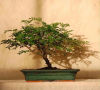
Is Fragrant Wood a sinister tree or an auspicious tree? Household taboos and three major harms and their effects on the human body
Fragrant Wood, scientific name Pistacia weinmannifolia, is a shrub or small tree of the genus Pistacia in the family Anacardiaceae. It can reach a height of 15 m, with gray bark, lush branches and leaves, red young leaves, green old leaves, and a fragrant aroma. Fragrant Wood is drought-tolerant and tolerant of barren soil, with strong adaptability, and is a species for barren hill afforestation
-

Which plants are not suitable for growing indoors, and what effects do they have on the body?
When choosing suitable plants to place indoors, we generally consider factors such as the plant's beauty, its ability to purify the air, and how easy it is to care for. However, not all plants are suitable for growing in an indoor environment, and some plants can even harm human health. Below are several plants that are not suitable for growing indoors.
-

Is spider plant suitable for indoor placement? Learn about its benefits for the human body
Spider plant, is it suitable for indoor placement? Does it benefit the human body?
-
Does eating watermelon cause internal heat? Eat watermelon this way to avoid harming your body
Does watermelon cause internal heat? Watermelon is a very common fruit for all of us, and it is one of the fruits that none of us can do without in summer. So if we eat a lot of watermelon, could it also cause internal heat? Today, the editor will talk with everyone about this question of whether watermelon causes internal heat
-
Introduction to the Body Type and Production Performance of 13 Excellent Beef Cattle Breeds
Beef is a food with very high nutritional value. We know that Westerners are very strong physically because they often eat beef. Now, as people's living standards improve, the demand for beef increases, and the number of beef cattle farmers is gradually growing. So if you want to raise beef cattle, you should first
-
Is the Siberian tiger the largest carnivorous felid by body weight currently existing in the world?
Siberian tiger: also known as the Amur tiger, it is one of the subspecies of tiger. It is the largest carnivorous felid by body weight currently existing in the world, among which males can reach a body length of about 2.8 m, with a tail about 1 m long, and a maximum body weight of more than 350 kg. In the wild, the Siberian tiger's coat color in summer
-
What to Do When Parrotfish Develop White Spots? Common Disease Prevention and Treatment Methods for Tropical Fish
Parrotfish, commonly known as parrot cichlid, parrotfish, red wedge cichlid, etc., are tropical fish that live in coral reefs. They are named for their brilliant colors and mouths that closely resemble a parrot's beak. There is also a freshwater ornamental fish bred by crossbreeding the male red devil cichlid (a Central American cichlid) with the purple-red firemouth, and because of its bright red body color, it is also called the blood parrot. So what are the common diseases of parrotfish? What should you do when white spots appear on the body? According to data, the pathogen of white spot disease is Ichthyophthirius multifiliis. After Ichthyophthirius invades the fish's skin, the diseased fish's skin mucus increases, and a dense layer of white spots visible to the naked eye appears on the fish's pectoral fins, dorsal fin, caudal fin, and body surface skin. In the early stage of the disease, the diseased fish gather in the corner of the tank and rub against each other. In the later stage of the disease, the diseased fish float sluggishly at the water surface and do not eat when food is offered. Because Ichthyophthirius does not reproduce easily at water temperatures above 25 degrees C and begins to die at 28 degrees C, the water temperature can be slowly raised to 30~31 degrees C; after resting for several days, the Ichthyophthirius cysts begin to fall off, and if the water is replaced with fresh water in time, the diseased fish can recover. You can use the medication —— “White Spot Once Clean”; remember to pay attention to the dosage.</span></p> <p style="text-align: center;"><span style="line-height:1.6; text-indent:2em"></span></p> <p style="text-indent:2em;">Parrotfish also have the following common diseases: enteritis and prolapsed anus</p> <p style="text-indent:2em;">1. Bacterial enteritis in parrotfish is mainly caused by eating unclean food or overeating, with the intestines becoming distended and excretion blocked, and finally bacteria infecting the intestines and causing enteritis. The pathogen is Aeromonas punctata. [Symptoms] The diseased fish often has a swollen abdomen, shows red spots, a protruding anus, and the fish body becomes sluggish, staying motionless in the corner of the aquarium, with short bouts of twitching of the body muscles, no feeding, and white feces. When the fish's abdomen is cut open, abdominal fluid can be seen, and the intestinal wall is congested and inflamed. In mild cases, only part of the intestine appears red; in severe cases, the entire intestine is purplish red, with no food in the intestine and filled with pale yellow mucus and bloody pus.</p> <p style="text-indent:2em;">There are many methods for treating enteritis. There are also many drugs sold on the market. Oral drugs such as nakexin, yufukang, sulfaguanidine, etc., and external drugs such as yujunjie, furacilin, gentamicin, oxytetracycline, furazolidone, etc., after dilution, can be splashed or used as a bath, and all can achieve relatively good results.</p> <p style="text-indent:2em;">2. Prolapsed anus in parrotfish mainly involves protrusion of the anal opening, with white intestines exposed outside the anus, like a caterpillar. When parrotfish show this condition, it is very dangerous. If you find that a parrotfish has this kind of prolapsed anus, you must treat it promptly. Generally speaking, prolapsed anus in parrotfish is mainly due to long-term feeding of a single food or food that is too hard, such as feeding dried shrimp that has not been soaked soft for a long time; there is also a pathological type of prolapsed anus. The mild prolapsed anus generally caused by food can be addressed by fasting the parrotfish for a period of time, but it is worth noting that after the anal gland retracts, fasting is still needed for about a week to avoid recurrence and the development of habitual prolapsed anus. If the prolapsed anus has already persisted for a relatively long time, then medication should be used according to the fish's condition. You can choose 4 tablets of furazolidone (furazolidone) + Baibichu + 31 degrees C water temperature + stopping food, dissolved in a 1 m aquarium, change 1/3 of the water every 2 days and replenish the medicine. After one week of medication, it can recover.</p> <p style="text-align: center;"></p> <p style="text-indent:2em;">Appendix: Are parrotfish poisonous?</p> <p style="text-indent:2em;">Parrotfish themselves are not poisonous; it is just that some of the food they eat is toxic. Parrotfish have organs in their bodies that break down and digest toxins, so parrotfish are not harmed by these toxins. However, if people catch parrotfish at this time and the toxins in their bodies have not been completely eliminated, then the toxins from the parrotfish's food will be transferred to the humans who eat the parrotfish. Therefore, many fishermen advise greedy diners not to eat parrotfish.</p>
-
What Are Ticks and How to Use Medication to Exterminate Tick Larvae on Dogs and Cattle at Home
In recent years, news of tick bites has been common, so what exactly are ticks? How do you kill tick larvae clean on your home, dogs, and cattle? What medication can exterminate them? Ticks (p) are also called wall ticks, turtle bites, commonly known as dog ticks, grass ticks, cattle ticks, grass ticks, dog beans, cattle ticks. In Sichuan dialect, they are called bi sha (pronounced shà), etc. They lie dormant in the grass and plants of low hills, or lodge in the fur of livestock and other animals. When not engorged with blood, the small ones are only as big as a shriveled mung bean, and some are as fine as a grain of rice; after engorging with blood, they are as big as a plump soybean, and the large ones can reach the size of a fingernail. The anaplasmosis transmitted by tick bites is an infectious disease, and humans are generally susceptible to it. Medical staff or their caregivers who have close contact with critically ill patients or directly contact patients' blood and other body fluids may also become infected if they do not pay attention to protection.
I. Tick Classification
1. By morphological characteristics
1) Hard ticks
The body is oval; when not engorged with blood, the abdomen and back are flat, with the back slightly raised; adult body length is 2-10mm; after engorging with blood, it swells up like a red bean or castor bean, and the large ones can reach 30mm in length.
2) Soft ticks
The capitulum is on the ventral side of the body and cannot be seen from the dorsal side; there is no porose area on the dorsal surface of the basis capituli. The dorsal surface of the body has no scutum; the body surface is mostly granular small tubercles, or has wrinkles and disc-shaped depressions.
2. Main species
1) Ixodes persulcatus: the scutum is brown, the palps are slender and cylindrical, and the auricular processes of the basis capituli are bluntly toothed.
2) Dermacentor nuttalli: the scutum has enamel-like spots, with eyes and festoons; the palps are wide and short, the basis capituli is rectangular, and the dorsal spur of tarsus I is short and blunt.
3) Hyalomma asiaticum kozlovi: the scutum is reddish brown, with eyes and festoons; the palps are long and cylindrical, and the second segment is notably elongated; the legs are pale yellow, with obvious pale rings at each joint; the cervical grooves of the male are obvious and deep-grooved, and the spiracular plate is pipe-shaped.
4) Ornithodoros papillipes: the body surface is granular, and the intersection of the postanal transverse groove and the postanal median groove is almost a right angle.
II. How to prevent tick bites?
1. To eliminate ticks on the body surface of livestock and in livestock sheds, insecticides such as trichlorfon and dichlorvos can be sprayed. Housing should be ventilated and dry; fill and plaster wall cracks, seal caves, and clean livestock and poultry sheds thoroughly or spray them with medication to eliminate tick breeding sites.
2. Strengthen personal protection. When entering forest areas or working in the field, wear long-sleeved clothing, tighten the belt, cuffs, and trouser legs, tie a towel around the neck, and apply ointment to the skin surface to prevent tick bites. Take a bath and change clothes after returning from outings to prevent bringing ticks home.
In addition, it is summer now, which is a good season for people to travel. Here I want to remind everyone that when playing in the wild, in addition to the above two points to note, do not go to scenic areas that have not yet been well developed, and try to go less to forests and wild places with dense grass. In this way, we will avoid tick bites.
III. What medication is used to kill ticks?
After a certain pesticide is used for a long time, ticks will develop resistance, so pesticides should be mixed or used in rotation.
There are mainly two ways to eliminate ticks on livestock: one is direct capture, and the other is using chemical drugs to kill ticks. When ticks are found, they should be pulled off and then killed together. When pulling, the tick body should be perpendicular to the skin, then pulled upward, to avoid the tick's false head breaking off in the skin and causing inflammation. However, this method can only be used when there are few livestock and sufficient manpower.
For eliminating ticks with chemical drugs, commonly used ones include pyrethroid insecticides, organophosphorus insecticides, amidine insecticides, etc. According to the season and application target, methods such as spraying and dipping can be selected. However, it should be noted that after these pesticides are used for a long time, ticks will develop resistance, so pesticides should be mixed or used in rotation.
In recent years, genetic control and biological control have begun to be used to kill ticks. The former uses radiation or chemical sterilants to make male ticks lose reproductive ability, causing the tick population to continuously decline; the latter uses ticks' natural enemies to kill ticks. Some parasitic wasps in the family Encyrtidae of the order Hymenoptera have now been found to lay eggs in some nymphal ticks, and the adults emerge from the nymphal ticks only after becoming adults; the nymphal ticks die shortly after parasitism. Insects in the family Reduviidae can also cause tick death.
条件筛选