-
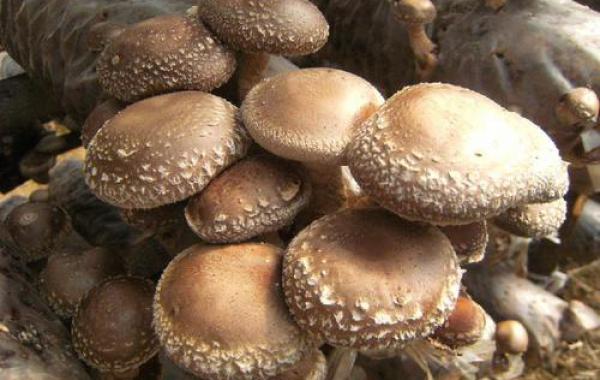
What Are the Grading Standards for Edible Mushrooms? Read This One Article to Understand
What are the grading standards for edible mushrooms?
-

What are the typhoon prevention measures for edible mushroom production? Learn in one article
Typhoon prevention measures for edible mushroom production
-
What are the key points of mushroom preservation technology? Understand in one article
The main factors affecting mushroom preservation are as follows: Temperature: the higher the temperature, the worse the mushroom preservation. 0-4°C is the suitable temperature for mushroom preservation. Apart from quick freezing, below 0°C easily causes freezing damage. Water quality: when the iron or copper content in water exceeds 2 mg/L, the mushroom color darkens and turns brown, so iron and copper utensils and tools are prohibited. Humidity: 95-100% is required. Below 90%, the color darkens, and the caps easily open and spoil. Gas composition: an important cause of spoilage, which can be inhibited by sterilization and adjusting pH value. Enzyme activity
-
What excellent varieties of oyster mushrooms are there? This article provides a detailed introduction for you
According to the different temperature requirements during the fruiting body differentiation stage, oyster mushrooms are divided into four groups, namely the low-temperature type, the medium-temperature type, the high-temperature type, and the wide-temperature type. For the low-temperature type, the optimum temperature for fruiting body differentiation is 10-15°C, such as Pleurotus ostreatus, Pleurotus pulmonarius, Jingzhou No. 1, Suping 48, and 4011. For the medium-temperature type, the optimum temperature for fruiting body differentiation is 16-22°C, such as Florida oyster mushroom and Phoenix mushroom. For the high-temperature type, the optimum temperature for fruiting body differentiation is 22-26°C, such as Pleurotus citrinopileatus, Pleurotus djamor, and Suping No. 1
-
What are the good methods for forcing oyster mushrooms to fruit? Explained clearly in one article
In oyster mushroom cultivation, some spawn bags fail to fruit after being fully colonized, or after the first flush is harvested, the second-flush primordia are slow to appear. In both of these cases, as long as the bags are colonizing normally and the spawn's temperature type is suitable, the following measures can all bring about successful fruiting. 1. Temperature difference stimulation: raise the temperature of the mushroom shed during the day and ventilate to cool it at night, artificially widening the temperature difference to stimulate fruiting. 2. Light stimulation: after the spawn bags are fully colonized, roll up the straw curtains of the mushroom shed every day and let sunlight shine in for a period (do not expose them to direct light when the light is intense). For trenches or mushroom houses where sunlight is inconvenient, artificial light can be used.
-
What is the fresh-keeping principle for edible fungi? This article will help you understand it clearly
Fresh-keeping for edible fungi (theprincipleoffresh-keepingforediblefungi): Mushroom bodies separated from the culture substrate still have vitality, and living organisms have resistance to adverse external environments and microbial infection. However, the stronger the life activity, the faster the rate of freshness decline. Therefore, without destroying the normal physiological functions of the organism, by controlling various factors that affect the physiological and biochemical changes of fresh mushroom products, the life activity of the mushroom body can be kept as low as
条件筛选