-

Detailed Explanation of Key Orchid Cultivation and Management Techniques
Site The orchid shed should be situated in a location facing east with its back to the west, with open space to the southeast and a high wall or large tree to the west and rear. It should receive the early morning sun while blocking the harsh midday sun. The surrounding micro-environment should have clean air and a courtyard with some humidity. Pay attention to ventilation, exposure to dew, avoidance of harsh sunlight, and prohibition of smoke. If built on a rooftop or a balcony on an upper floor, in addition to...
-
Cymbidium ensifolium propagation techniques explained in detail, all the key methods clarified in one article
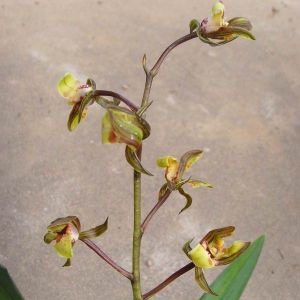
Cymbidium sinense 'Yu Qilin' - also known as Dog Head, Dog Ear Dragonfly Orchid. A rare Cymbidium sinense cultivar, with an intermediate leaf type. Leaves are thick and broad, the flower is a butterfly-type flower with a rounded center petal, flowers all open facing upward, the lip is golden yellow and curls outward, very beautiful, with broad and long leaves.
-
Detailed Explanation of Cold Fragrance Plum Hybridization Techniques and Methods
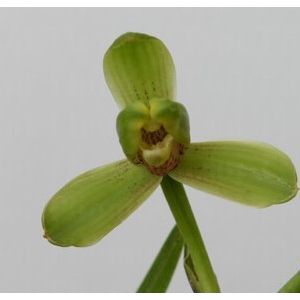
Origin: Taiwan, China Content: This is a hybrid orchid, a cross between Chunlan (Cymbidium goeringii) and "Vietnamese Four Seasons"; some sell it as Hanlan (Cymbidium kanran), and others sell it as Jianlan (Cymbidium ensifolium). The flowering period is quite long, and it may also bloom from October to May or June of the following year; by plum standards, the flower proportions are authentic, the central column is well held (when the bloom is good), and it has a Ruyi tongue; the color is green, the flowers are large, and very fragrant (a delicate fragrance); the leaves...
-
Cultivation Techniques and Care Methods for Gaoyunmei Chunlan
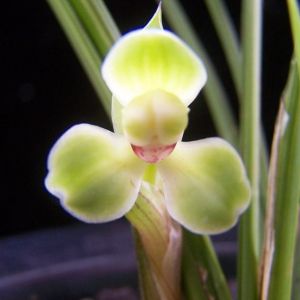
Gaoyunmei was selected and bred by Yu Hongda in Zhoushan in 2001. Its sepals are short and broad, with peach-shaped upturned tips, prominent leech-vein markings, semi-hard silkworm-moth pollinia, round and smooth, with a large round ruyi tongue extending forward, slightly revealing red dots, tender green in color, with a short flower scape, small and exquisite, and worth cultivating. Gaoyunmei is a typical peach-petal type; its outer petals are very round and neat. Ordinary peach-petal types all have hard pollinia, while this one has standard soft pollinia, which can also be considered one of its characteristics.
-
How to grow wild apricot seeds? Detailed planting methods and techniques
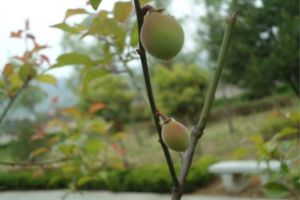
Have you ever seen a wild apricot? Its crown comes in many different shapes. Its bark looks grayish, with cracks running across it. When March to April comes each year, that is its flowering time, and it usually produces only 2 flowers. After the flowers fade, it begins to bear fruit; the fruit is round in shape, full of juice, and has seeds inside. So how do you grow its seeds? Let's take a look.
-

How to Plant Rapeseed: A Detailed Guide to Sowing Methods and Growing Techniques
Speaking of rapeseed, if you were born in the countryside, you are surely very familiar with it. When spring arrives each year, it bursts into fields of yellow flowers, a scene so beautiful it seems like a fairyland on earth, leaving you lingering with delight. So do you know how to grow it from seed? Let's take a look together.
-
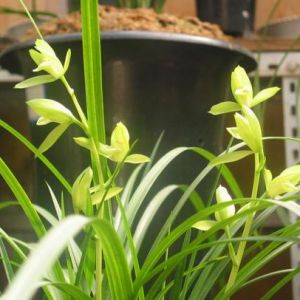
Emerald Green Suxin Orchid Variety Introduction and Key Cultivation Techniques
Big Tongue Emerald Green
-
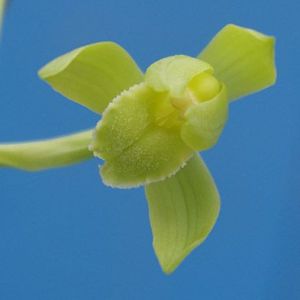
Orchid Cultivation and Tissue Culture Technology Video Tutorial
Huisi has good form and upright flower shape
-
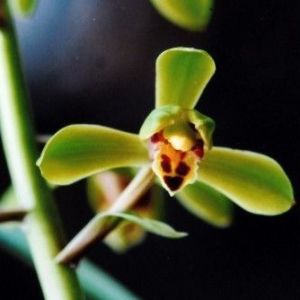
How to mix orchid potting medium? Detailed explanation of methods and techniques
Qianjiang Mei The circulation process of Qianjiang Mei On the afternoon of February 7, 2006 (the tenth day of the first lunar month), it was collected by Qianjiang Fan Liqiang on Liuwang Mountain (Lantern Festival), about 30 meters from the lower mountain point. When Qianjiang Mei was brought down the mountain, there was a 50cm large seedling clump; 5 old backbulbs of 20cm bud clumps; when repotting in 2007, 4 old backbulbs were divided off and produced 1 small seedling. By April 2008, there were altogether...
-
Detailed Guide to Orchid Leaf Pruning Methods and Techniques
1: If a leaf has a disease that is not yet controlled and is difficult to control, and is highly contagious, it should be pruned immediately. 2: Orchid plants infected with a virus should be thoroughly destroyed or isolated for observation. 3: Do not prune leaves with pest damage; focus on pest removal. 4: If leaf diseases and pests have already been controlled, or if it is normal aging, do not prune immediately just because it affects appearance; you can wait until...
条件筛选