-

Big price differences in tea rolling machines? Key points for buying and subsidy facts you need to know
The tea rolling machine is a key piece of equipment for preliminary tea processing, and prices vary considerably depending on the model, brand and capacity. This article explains the role of the rolling machine, the factors affecting price and points to note when buying, to help you choose a suitable tea processing machine.
-
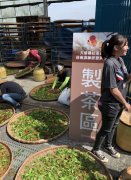
Yuchi Township Black Tea Competition Is Not Just About Roasting and Processing - It Is Also About Integrated Picking and Processing
To coach tea farmers in improving their tea-making skills and quality, the Yuchi Township Farmers' Association chose to hold a large-leaf black tea picking and processing competition at the Yuchi Branch of the Tea Research and Extension Station. A total of 37 tea farmers from Xinyi Township, Ren'ai Township, Zhushan Township tea areas, and various townships and cities across the county registered to participate. Among the contestants
-
What are the methods for controlling tea plant pests and diseases
The meaning of deep processing of tea. Deep processing of tea refers to the use of fresh tea leaves or finished tea as raw materials, or the use of tea, tea factory rejects and by-products as raw materials, together with corresponding processing techniques and methods, to produce tea-containing products. Tea-containing products may be based on tea
-
Detailed Explanation of Mulberry Leaf Tea Production Techniques and Processing Steps
According to experts at the Japanese Institute of Health, mulberry leaves contain 17 amino acids, as well as fats, vitamin C, B1, B2, folic acid, carotene, calcium, phosphorus, iron, manganese, sodium, and more. These nutrients are at their highest levels in mulberry leaves after the first frost. Mulberry leaf tea is a natural health product for maintaining health and strengthening the body, and is especially suitable for long-term drinking by patients with diabetes and high blood pressure. Its production process is as follows: Leaf picking and handling. It is best to pick leaves from the middle and upper parts of late-autumn mulberry trees that are free of pollution, pests, and diseases. In the Qian'an area of Hebei, mid-September is
-
Detailed Explanation of Greenhouse Tea Production and Processing Technology in Northern China
Rizhao green tea, as a successful example of "moving southern tea to the north," accounts for more than 50% of the total tea garden area in Shandong Province. It has the unique qualities of "beautiful taste, rich aroma, and resistance to repeated brewing," and is renowned both domestically and internationally. In recent years, with the adjustment of agricultural structure, as an important component of facility agriculture, greenhouse tea production has formed a certain scale, becoming a pillar industry for agricultural development in tea regions and an important way for farmers to increase income. The production and processing technology of winter tea in facility-cultivated greenhouses is introduced as follows: 1 Site selection and greenhouse construction 1.1 Garden site selection Rizhao is located in the north
-
Detailed explanation of black tea processing technology, master the key process steps
Black tea is divided into two types: domestic sales and export sales. Before 1966, all export black tea in Zhejiang was processed as Congou black tea. From 1967, it was converted to Yuehong leaf tea, and the second national set of Congou black tea naturally produced broken pieces and dust tea (that is, rolled broken black tea). For domestic black tea, product specification standards have been implemented since 1971. Black tea refining and processing selects Zhejiang rough red as raw material. The refining and processing flow is: raw material blending, grading and issuing for processing, adopting the method of two-stage issuing and single-stage (main grade) recovery, taking material from five routes: itself, long body, round body, light body,
-
What are the requirements for Pu'er tea processing? These points are key
Pu'er tea refers to loose tea and compressed tea made from large-leaf sun-dried green tea (mao cha) produced within Yunnan Province as raw material, processed through traditional techniques or post-fermentation. Farmer processing refers to tea farmers picking or purchasing fresh leaves themselves, fixing them in iron woks or crucibles, rolling the leaves into strips, and sun-drying them to make sun-dried green tea (mao cha), which is then further processed. 1. Raw material requirements 1. Raw material procurement. The raw material purchased for Pu'er tea must be large-leaf sun-dried green tea (mao cha) that complies with GB9676 "Hygienic Standard for Tea". 2. Raw material transportation. The packaging containers and transport vehicles for holding raw materials shall meet hygiene requirements, and must not be transported together with toxic or harmful substances. Fresh leaves shall be held in clean, well-ventilated bamboo-woven or mesh tea baskets or crates; bags previously used for feed, chemical fertilizer, or pesticides must not be used to hold fresh leaves. The picked tea leaves shall be transported to the tea factory promptly to prevent deterioration of the fresh leaves and contamination by toxic or harmful substances. 3. Raw material storage. The raw material warehouse must be ventilated, dry, and clean, with a level floor, good drainage, and rodent-proof facilities; it shall have dedicated personnel for management, and a management system shall be established.
-
Detailed Explanation of the Dark Tea Manufacturing Process and Processing Methods
The manufacturing process of dark tea consists of fixation, rolling, pile fermentation, and drying. Among these, pile fermentation is a unique step in dark tea manufacturing and the key step that forms the quality of dark tea. (1) Fixation: Because the leaves picked for dark tea are coarse and old with low moisture content, they require high-temperature quick-frying with fast and even turning until they turn dark green. (2) Rolling: After the fixation leaves are removed from the wok, they should be rolled immediately while hot, which makes it easier to shape a good appearance. The rolling method is the same as that for ordinary black and green tea. (3) Pile fermentation: The rolled leaves are piled on a bamboo mat to a thickness of 15
-
Detailed Explanation of Famous Tea Plucking and Fresh Leaf Processing Techniques
The quality of famous tea depends to a large extent on the fresh leaf raw material, but in recent years tea farmers' awareness of product quality has declined somewhat, especially in the plucking stage where standards are not strictly enforced, affecting the quality of famous tea. The plucking and fresh leaf processing techniques for famous tea are now introduced to tea farmers. 1. Plucking of Famous Tea The requirements for fresh leaf raw material of famous tea are extremely strict; the selected raw material must be uniform in thickness, complete, fresh and clean. It is strictly forbidden to mix in diseased or insect-damaged leaves, broken leaves, scales, fish leaves, purple buds, and even less to carry stem bases, tea fruits, old leaves and other debris.
-
Detailed Explanation of Gunpowder Tea Processing Methods and Technical Key Points
The product is named for its round, tight, heavy, and solid appearance, with a green, lustrous, frosted color, resembling pearls. Gunpowder tea is one of the major green tea categories exported from Zhejiang and is also a tea category unique to Zhejiang. Gunpowder tea is made from Pingchaoxing (pan-fired green tea) as raw material. Its refining and processing adopt a single-grade input and multi-grade recovery method. Its processing technology is: blending and grading of raw materials, and drawing material through three routes: original body, crushed goods, and Yucha (rain tea). Processing operations are divided into fresh drawing, firing, and clean drawing, and other procedures to produce sieve-grade teas of various sizes, then blending according to samples, and evenly filling boxes to become exported gunpowder tea products. Its products
条件筛选